
How to Make Plastic Look Like Wood: Industrial Finishing Techniques and Applications
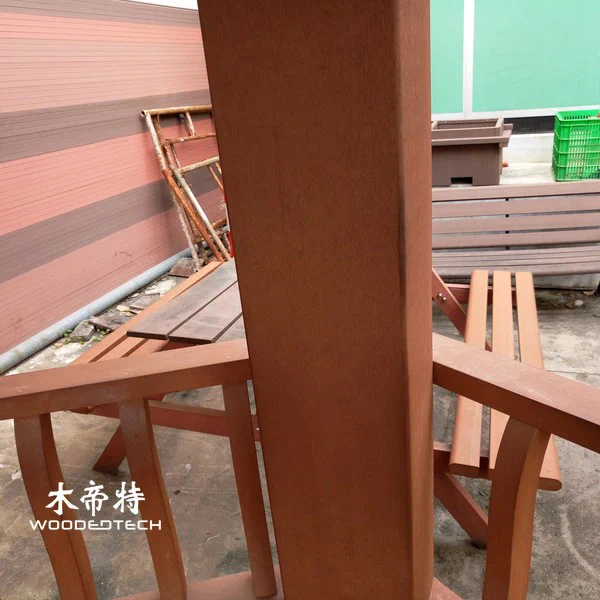
Plastic can be made to look like natural wood through carefully controlled WPC extrusion, surface texturing, and finishing processes. For outdoor wood plastic composite products, achieving realistic grain patterns, consistent color, and long-term weather resistance requires coordination between material formulation, extrusion conditions, mold design, cooling calibration, and post-extrusion treatment.
1. Material Mixing and Pelletizing
Outdoor WPC typically combines wood flour with thermoplastics such as HDPE, PP, or PVC, depending on the product design. Wood flour provides a natural appearance and texture, while the polymer forms the continuous matrix that binds the materials together. Coupling agents improve adhesion between wood fibers and plastic, while lubricants, pigments, UV stabilizers, and processing aids help maintain production stability and outdoor durability.
Before compounding, wood flour must be dried to a controlled moisture level appropriate for the formulation. Excess moisture can cause bubbles, rough surfaces, and internal voids. High-speed mixing distributes additives evenly, and compounding equipment blends the ingredients into a consistent melt. Depending on the production line, the compound is either pelletized for subsequent extrusion or processed directly through a suitable extrusion system. Consistent feeding and uniform dispersion are essential for stable color and surface quality.
2. Extrusion Temperature Control and Mold Design
The extrusion process determines how well the composite maintains its shape and accepts a wood-like finish. Barrel temperatures, screw speed, feeding rate, and melt pressure must be adjusted to suit the polymer, wood content, and equipment configuration. Excessive temperatures can degrade wood fibers and cause discoloration, while insufficient heat may result in poor fusion, rough surfaces, or weak profiles.
The extrusion die must distribute the material evenly across the profile, whether producing solid decking boards, hollow sections, or exterior wall cladding. Die geometry, flow channels, and calibration dimensions affect thickness, dimensional accuracy, and surface consistency. For products requiring realistic grain patterns, manufacturers can integrate texturing rollers or embossing equipment downstream of the die. Proper synchronization between extrusion speed and embossing pressure helps create continuous grain details without distorting the profile.
3. Cooling Calibration and Wood-Grain Surface Treatment
After leaving the die, the hot WPC profile passes through a calibration system that establishes its final dimensions. Vacuum calibration, controlled cooling, and appropriately positioned water tanks help prevent warping, shrinkage, and uneven thickness. Cooling must be gradual and consistent enough to preserve dimensional stability without slowing production unnecessarily.
Industrial wood-look finishing can involve several techniques:
- Embossing: Presses wood-grain patterns into the surface, creating tactile texture and improving visual realism.
- Brushing and sanding: Remove surface irregularities and expose selected wood-fiber features for a more natural appearance.
- Color blending: Combines complementary pigments or surface colors to reproduce the tonal variation of timber.
- Co-extrusion: Applies a protective outer polymer layer that can provide enhanced color stability, stain resistance, and weather protection.
- Surface printing: Adds decorative grain patterns where the material formulation and printing system are compatible.
For outdoor applications, UV resistance, water exposure, abrasion, and slip performance should be evaluated alongside appearance. A realistic grain pattern alone does not guarantee long-term durability.
4. Common Production Problems and Applications
Common defects include surface bubbles, rough extrusion lines, inconsistent color, visible die marks, warped profiles, and uneven embossing. Moisture control, stable feeding, correct temperature settings, optimized die flow, and synchronized embossing pressure are the primary corrective measures. Manufacturers should also inspect finished profiles for dimensional tolerances, surface defects, color consistency, and mechanical performance before packaging.

These techniques are widely used in outdoor WPC decking, exterior wall cladding, fencing, pergolas, louvers, and decorative panels. For B2B buyers, the most suitable process depends on the required grain depth, color variation, production volume, environmental exposure, and target price. A well-controlled finishing system helps manufacturers deliver consistent wood-like aesthetics while retaining the low-maintenance advantages of composite materials.
FAQ
Q: Which finishing technique creates the most realistic wood grain on WPC decking?
A: Embossing produces tactile grain patterns, while color blending adds visual depth. Combining both techniques can create a more convincing timber appearance.
Q: Why do WPC profiles develop bubbles or rough surfaces during extrusion?
A: Excess moisture in the wood flour, poor material dispersion, unsuitable processing temperatures, or unstable extrusion conditions can cause these defects.
Q: Is co-extrusion suitable for outdoor wood-look products?
A: Yes. Co-extrusion can add a protective outer layer that improves resistance to stains, moisture, and weathering when the materials and process are properly selected.
Related Articles
 wpc co extrusion decking surface treatment improves appearance durability and outdoor weather resistance performance
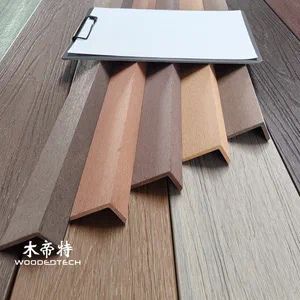 Composite Decking Colours Available: A Guide for Commercial Buyers
 How WPC Panel Texture Influences Durability, Aesthetics, and Manufacturing Quality
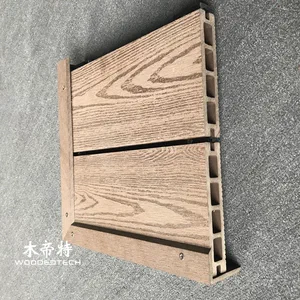 Composite Deck Flooring Options for Residential Gardens Patios Balconies and Commercial Outdoor Areas
Related Products
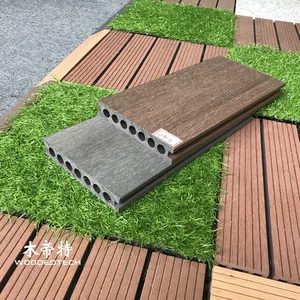 GD13823-2 Wood Versus Composite Decking Features Seven Round Holes with Wood Grain and Brushed Textures on Opposite Sides
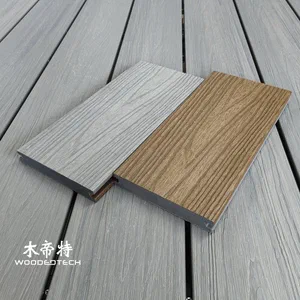 Second Generation Two Color Co Extruded 3D Embossed 3DGD14023S Composite Wood Deck Boards Feature an Extremely Realistic Antique Wood and Teak Grain Texture
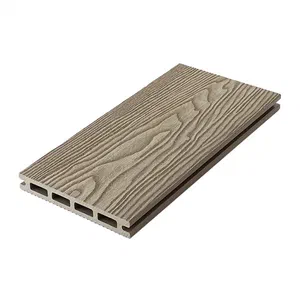 3D14521.5 First Generation 3D Embossed Plastic Wood Decking Boards Combine Realistic Three Dimensional Texture with Long Lasting Outdoor Performance