
How to Cut Composite Deck Boards for Clean and Accurate Installation Results

Composite deck boards need clean, accurate cutting to achieve a professional installation and reduce waste on site. This guide is aimed at B2B buyers, contractors, and trade distributors who want reliable results when working with composite decking on commercial and residential projects.
Key Cutting Features
Composite decking boards are denser than timber, so the cutting method matters. Use a fine-tooth carbide blade, secure the board firmly, and cut at a steady speed to avoid chipping, overheating, or rough edges. For long production runs, consistent marking and measuring are just as important as the saw itself.
- Clean edge finish with reduced splintering
- Better accuracy for straight runs, corners, and trims
- Compatible with circular saws, miter saws, and table saws
- Suitable for capped and uncapped composite decking profiles
- Helps installers save time and minimize on-site rework
Main Specifications
Composite deck boards are typically supplied in standard trade lengths and can be trimmed to fit joists, picture frames, stair treads, and perimeter details. The exact cutting approach depends on board structure, cap layer thickness, and site layout.
- Material: wood plastic composite
- Surface types: smooth, embossed, grooved, or capped
- Common uses: decking, stairs, edging, and decorative borders
- Cutting tools: carbide-tipped blades recommended
- Installation focus: dry-fit first, then cut and fasten
- Finish requirement: clean ends for hidden fastening and neat joints

For overseas buyers, the practical value is simple: accurate cutting supports faster installation and a better finished appearance. It also reduces material loss, which matters when handling bulk orders, export projects, or repeat procurement for contractors and distributors.
Typical Applications
Composite deck board cutting is used across a wide range of outdoor projects. It is especially useful where precise dimensions and consistent appearance are needed, including:
- Residential balconies and patios
- Hotel and resort terraces
- Pool decks and garden walkways
- Commercial outdoor seating areas
- Public landscape platforms and viewing decks
- Retail and hospitality exterior spaces
Buyers usually look for boards that are easy to fabricate, stable in performance, and suitable for large-scale installation. When the material is cut correctly, the final deck looks more uniform, fits more accurately around posts and walls, and delivers a more professional result for end customers.
FAQ
Q: What blade is best for cutting composite deck boards? A: A fine-tooth carbide-tipped blade works best for clean edges and reduced chipping. It also helps maintain cutting speed on denser capped profiles.
Q: Can composite deck boards be cut with standard woodworking tools? A: Yes, most standard saws can handle composite decking if fitted with the right blade. Stable clamping and steady feed pressure are important for accuracy.
Q: Why is accurate cutting important for composite decking installation? A: Accurate cuts improve fit, reduce waste, and make the finished deck look more professional. They also simplify fastening and edge detailing.
Related Articles
Related Products
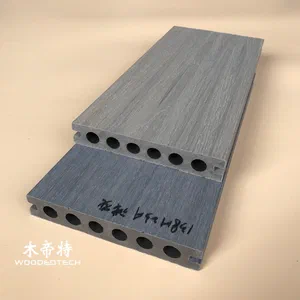 GD13823 Composite Decking Material Features Six Small Round Holes to Reduce Weight While Maintaining Structural Strength
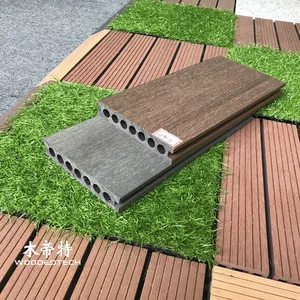 GD13823-2 Wood Versus Composite Decking Features Seven Round Holes with Wood Grain and Brushed Textures on Opposite Sides
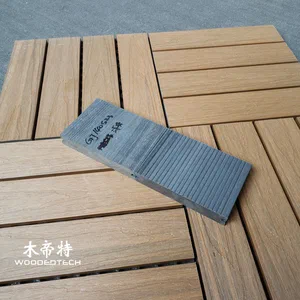 GD14023S Composite Deck Materials Feature a Solid Structure and Side Grooves for Better Adaptability in Extremely Cold Climates