How To Choose The Right Wpc Decking Price For Your Outdoor Flooring Needs

Choosing the right WPC decking price starts with understanding what you are really buying, not just the number on the quotation. Overseas buyers should compare material grade, surface treatment, core structure, warranty terms, and factory capability before making a decision.
Check the supplier first
A reliable supplier should be able to explain its product range, production process, and export experience in clear terms. Ask whether they are a direct factory or trading company, how long they have produced WPC products, and what markets they already serve. A serious manufacturer will usually provide factory photos, loading records, test reports, and samples without hesitation.
Price differences often reflect more than labor cost. Some suppliers use higher recycled content, thinner boards, unstable formulas, or weak quality control to offer a lower quote. That may look attractive at first, but it can lead to fading, cracking, swelling, or inconsistent dimensions after installation.
Compare specifications line by line
Do not compare only by square meter price. Confirm the full specification before you judge value:
- Board size, thickness, and usable coverage
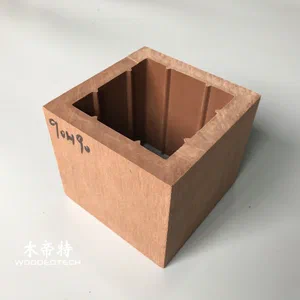
- Surface type such as embossed, grooved, or co-extrusion
- Density, weight, and raw material composition
- Color stability, slip resistance, and UV resistance
- Accessories, clips, joists, and fasteners included or excluded
A lower price may be based on a thinner profile or a narrower width, which changes the real cost of the project. For outdoor flooring, buyers should also check expansion performance, water absorption, and load-bearing requirements based on the local climate and installation method.

Evaluate factory capability
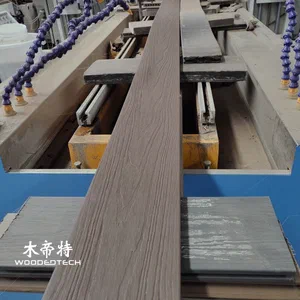
A good factory does not just produce; it controls consistency. Visit the production line if possible, or request a live video inspection showing mixing, extrusion, cooling, embossing, cutting, and packing. Check whether the factory has a stable QC process, proper warehousing, and enough capacity to handle repeat orders on time.
For large projects, ask for batch traceability and third-party testing. That matters when you need to manage claims later or replace specific lots. If the supplier cannot clearly identify how each batch is controlled, the risk is too high for commercial procurement.
Avoid common purchasing risks
The most common mistake is buying on price alone and confirming details too late. Buyers should lock in product drawings, tolerances, color samples, packaging requirements, and payment terms before production starts. It is also wise to specify what happens if the delivered goods do not match the approved sample.
Another risk is misunderstanding the application. A decking product for a residential balcony may not suit a resort boardwalk, poolside area, or high-traffic public space. The right WPC decking price is the one that matches the project use, not the cheapest quotation on paper.
FAQ
Q: Why do WPC decking prices vary so much between suppliers? A: Differences usually come from raw materials, board structure, surface treatment, and quality control. Lower prices often mean a compromise in one of those areas.
Q: What documents should I ask a WPC supplier for? A: Request product specifications, test reports, sample photos, warranty terms, and factory information. For export orders, packing details and loading records are also useful.
Q: How can I tell if a quotation is too low to be reliable? A: Compare the full specification, not just the unit price. If the board is thinner, lighter, or missing accessories, the quote may not reflect the real project cost.