
How to Choose good quality composite decking for Long-Lasting Use
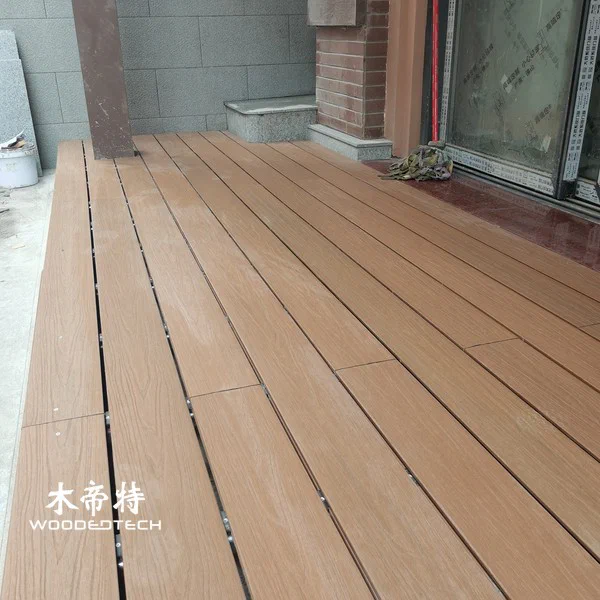
Choosing good quality composite decking starts with the product structure, not the price tag. For B2B buyers, the right board should deliver stable performance, consistent supply, and long service life in commercial or residential projects.
What Defines Good Composite Decking
A reliable composite board balances wood fiber, polymer, and protective surface treatment. Look for a dense core, even color, and a cap layer that resists moisture, stains, and UV fading. In practice, capped composite decking usually performs better than older uncapped options because it holds its appearance longer and needs less maintenance.
Material consistency matters just as much as surface quality. Boards should have uniform thickness, clean edges, and low dimensional variation so installers can achieve a neat finish across larger project areas. If you are sourcing for a hotel, boardwalk, terrace, or retail site, ask for product data on slip resistance, water absorption, and thermal stability before placing a bulk order.
Check Performance, Not Just Appearance
A board that looks attractive in a sample box may still fail under real use. Long-lasting decking needs strong resistance to warping, cracking, mold, and surface wear. For outdoor projects, especially in humid or high-traffic environments, ask whether the product is tested for weather resistance and whether it uses co-extrusion or full capping for extra protection.
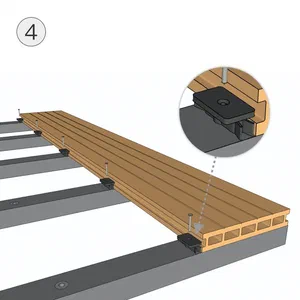
Installation also affects lifespan. Matching decking with proper joists, spacing, and fastening systems reduces movement and helps prevent premature damage. A good supplier should provide clear installation guidance and support for commercial applications, not just product sales.
Evaluate Supplier Capability

It also helps to compare sample boards under the same conditions. Check how they feel, how firmly the cap layer bonds to the core, and whether the finish remains consistent after scratching or exposure to sunlight. If you are buying for multiple sites, choose a supplier that can keep the same specification available for future replenishment.
Balance Cost and Service Life
Low-cost decking can become expensive if it fades early, needs frequent replacement, or causes installation issues. The smarter approach is to compare total lifecycle cost, including maintenance, labor, and downtime. For most commercial buyers, a higher-grade product with better durability offers stronger long-term value than the cheapest option on paper.
FAQ
Q: What is the most important factor when choosing composite decking? A: Durability and surface protection matter most. A board that resists moisture, UV, and wear will deliver better long-term value.
Q: Is capped composite decking better than uncapped decking? A: Yes, for most outdoor and commercial projects. The capped surface adds extra protection against staining, fading, and moisture.
Q: What should B2B buyers ask a supplier before ordering? A: Ask about material composition, testing standards, batch consistency, lead times, and installation support. These details help avoid costly project problems.
Related Articles
Related Products
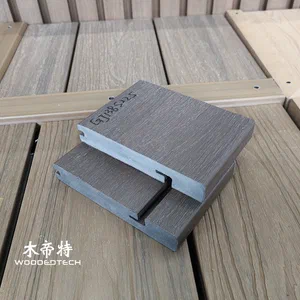 GD13822.5S Fully Capped Solid Starter Wood Polymer Composite Decking Provides a Stable Starting Structure for the First Decking Board
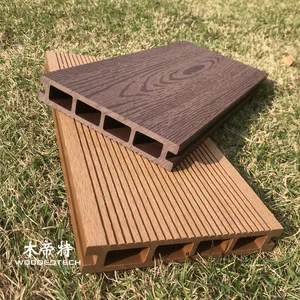 D14025-4 Composite for Decking Provides Stable Performance and Reliable Quality as a Popular Choice for Outdoor Projects
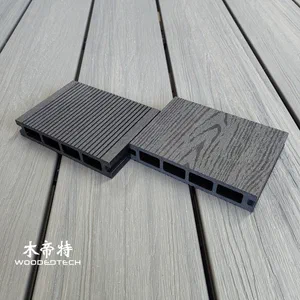 D14025-4 WPC Decking Boards Feature a Flat Wood Grain Surface with Black Ebony Heartwood Ring Grain for Outdoor Applications