
How to Choose a Reliable WPC Panel Company for Industrial Projects
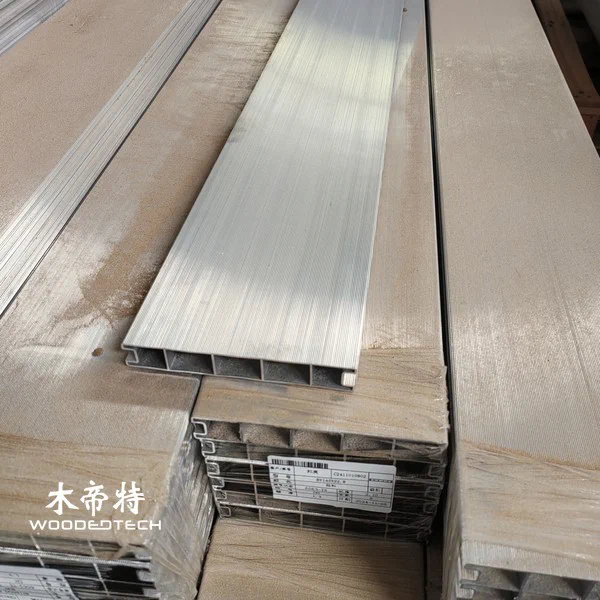
Selecting a reliable WPC panel company is essential for overseas buyers managing commercial buildings, industrial facilities, infrastructure developments, and large-scale outdoor projects. The right supplier should offer consistent product quality, stable manufacturing capacity, clear technical specifications, and dependable export services. Evaluating these factors before placing an order helps reduce purchasing risks, control project costs, and avoid delays during installation.
1. Check the Manufacturer’s Experience and Production Capabilities
The first step is to distinguish a genuine WPC manufacturer from a trading company. A manufacturer with its own production facility generally has better control over raw materials, extrusion processes, product dimensions, and quality management. This is particularly important for industrial projects requiring large quantities of WPC panels with consistent specifications.
When evaluating a potential supplier, overseas buyers should review:
- Factory location and production facility.
- Number and types of extrusion production lines.
- Experience in manufacturing outdoor WPC panels.
- Monthly production capacity and delivery lead times.
- In-house quality inspection procedures.
- Previous experience with international projects.
A factory visit, either in person or through a live video inspection, can provide valuable insight into actual production conditions. Buyers should ask to see raw material storage, extrusion equipment, surface treatment processes, finished product warehouses, and packaging areas.
Production capacity also deserves careful attention. A supplier may be able to produce samples quickly but struggle to fulfill a large industrial order within the required schedule. Confirm that the factory can maintain consistent output throughout the entire production period.
2. Evaluate Raw Materials and Product Quality
WPC panels are generally manufactured using a combination of wood fiber or wood flour, thermoplastics, and processing additives. The quality and proportion of these materials directly affect the finished product’s strength, dimensional stability, weather resistance, and service life.
A reliable WPC panel company should be willing to explain its material composition and manufacturing process rather than simply describing its products as premium quality.
For outdoor applications, buyers should pay particular attention to:
- UV resistance: Important for preventing excessive fading and surface degradation under prolonged sunlight.
- Water resistance: Helps reduce moisture absorption and swelling in outdoor environments.
- Dimensional stability: Reduces the risk of excessive expansion, contraction, or deformation.
- Impact resistance: Relevant for commercial and industrial locations exposed to regular physical contact.
- Surface durability: Determines how well the panel maintains its appearance during long-term use.
- Color consistency: Important when purchasing multiple production batches for one project.
For demanding applications, consider co-extrusion WPC panels with a protective outer layer. This construction can improve surface protection and resistance to staining, moisture, and weather exposure, depending on the product design and tested performance.

Do not rely entirely on product descriptions or photographs. Request physical samples and relevant test reports. If the project has specific performance requirements, arrange independent laboratory testing before approving mass production.
3. Confirm Technical Specifications Before Ordering
Unclear specifications are a common source of disputes between overseas buyers and WPC suppliers. Even products with similar appearances can have significant differences in structure, weight, material composition, and installation requirements.
Before requesting a quotation, prepare a technical specification sheet covering the intended application and required product performance.
Important details include:
- Panel dimensions, including length, width, and thickness.
- Solid or hollow internal structure.
- Material composition and surface treatment.
- Color, texture, and wood grain finish.
- Weight per meter or square meter.
- Tolerances for dimensions and color variation.
- UV and moisture resistance requirements.
- Fire performance requirements where applicable.
- Installation accessories and fixing methods.
For industrial projects, it is also important to confirm whether the WPC panels are intended for exterior walls, decorative facades, partitions, ceilings, or other applications. Different installation environments require different product structures and performance characteristics.
Buyers should request technical drawings, installation instructions, and product data sheets. If custom extrusion profiles are required, confirm the mold design, tooling costs, development time, and ownership arrangements before production begins.
A signed sample or approved reference sample can serve as a practical quality benchmark for subsequent production batches.
4. Verify Certifications, Testing, and Quality Control
Certifications and laboratory reports help overseas buyers assess whether a supplier’s products meet the requirements of their destination market. However, buyers should verify that the documents are genuine, current, and relevant to the specific WPC panel being purchased.
Depending on the project location and application, relevant documentation may include ISO 9001 quality management certification, material test reports, fire performance test results, UV aging reports, and environmental compliance documentation.
For commercial and industrial construction projects, fire performance deserves particular attention. Requirements vary by country, building type, and installation location. A supplier should be able to provide test documentation for the actual product configuration rather than relying on reports for unrelated materials.
It is equally important to understand the factory’s quality control process. A professional manufacturer should inspect raw materials, monitor extrusion parameters, check finished dimensions, and conduct final inspections before shipment.
For large orders, buyers can establish an agreed inspection standard covering appearance, dimensions, color consistency, packaging, and quantity. Third-party pre-shipment inspections can provide additional confidence before the balance payment is released.
5. Compare Pricing, MOQ, and Export Experience
Price is an important purchasing factor, but choosing the lowest quotation does not necessarily produce the lowest total project cost. Significant price differences may reflect variations in material quality, product weight, manufacturing processes, packaging standards, or quality control.
When comparing quotations from different WPC panel suppliers, make sure the specifications are equivalent. Check whether the quoted price includes customized colors, special surface finishes, accessories, packaging, and tooling costs.
Also confirm the minimum order quantity (MOQ), sample charges, production lead time, payment terms, and quotation validity.
For overseas projects, export experience is another important consideration. A dependable supplier should understand international shipping procedures, export documentation, container loading, and packaging requirements.
Discuss the following details before confirming the purchase:
- Incoterms, such as FOB, CIF, or EXW.
- Port of loading and estimated shipping schedule.
- Export packing and container loading arrangements.
- Commercial invoices and packing lists.
- Certificate of origin and other required documents.
- Payment milestones and production arrangements.
Buyers should also clarify how the manufacturer handles production delays, defective products, missing accessories, and quality claims. These arrangements should be documented in the purchase contract rather than left to verbal agreements.
6. Identify Common Purchasing Risks Before Signing a Contract
Several purchasing mistakes can create unnecessary costs and delays in industrial WPC projects. One common problem is selecting a supplier based only on attractive product images or low prices without checking the actual factory and product samples.
Another risk is failing to confirm technical details before mass production. Small differences in panel thickness, connection design, or surface finish can affect installation efficiency and the appearance of completed buildings.
To reduce these risks, overseas buyers should follow a structured purchasing process:
- Verify the supplier’s business identity and manufacturing capabilities.
- Request samples and review technical documentation.
- Confirm specifications in writing before production.
- Approve a pre-production sample for customized orders.
- Agree on quality standards and inspection procedures.
- Confirm delivery schedules and payment conditions.
- Arrange pre-shipment inspection for large orders.
Buyers should also avoid making full payments before production without appropriate contractual safeguards. Clear payment milestones and documented quality requirements provide better protection for both parties.
7. Choose a Long-Term WPC Manufacturing Partner
For industrial projects, selecting a WPC panel company should involve more than comparing individual product quotations. A reliable manufacturing partner needs to combine material consistency, technical expertise, production capacity, competitive pricing, and responsive communication.
A factory capable of supporting custom extrusion, OEM manufacturing, stable bulk production, and international shipping can offer greater value to distributors, contractors, developers, and building material importers.
Before making a final decision, evaluate the supplier through samples, factory verification, technical documentation, and a clearly defined trial order. These steps help establish whether the manufacturer can meet both current project requirements and future purchasing needs.
Working with a capable WPC manufacturer from the beginning makes it easier to maintain consistent product standards, coordinate deliveries, and manage installation requirements across large projects. This is the foundation of a dependable supply relationship in the international WPC building materials market.
Related Articles
Related Products
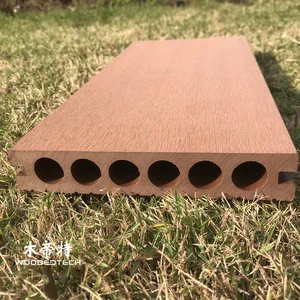 The D14025-5 Wood Composite Panels Feature a Classic Round Hole Design with Optional Embossed Wood Grain and Grooved Surfaces for Outdoor Durability
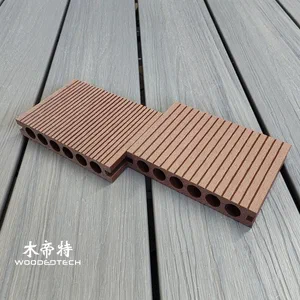 D14025-5 First Generation Large And Small Groove Redwood Color WPC Panel Material With Popular Outdoor Appearance
 F30028 Wide WPC Panel Sheet Supports Carving Applications and Combination into Larger Outdoor Structures