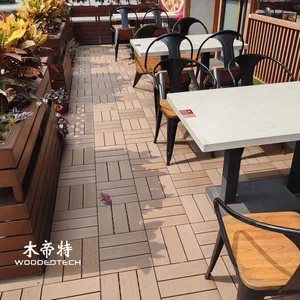
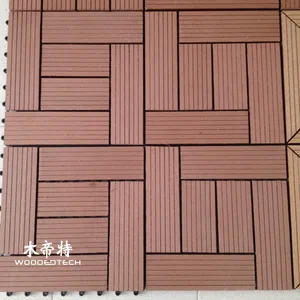
How Composite Interlocking Deck Tiles Streamline Large-Scale Outdoor Flooring Projects
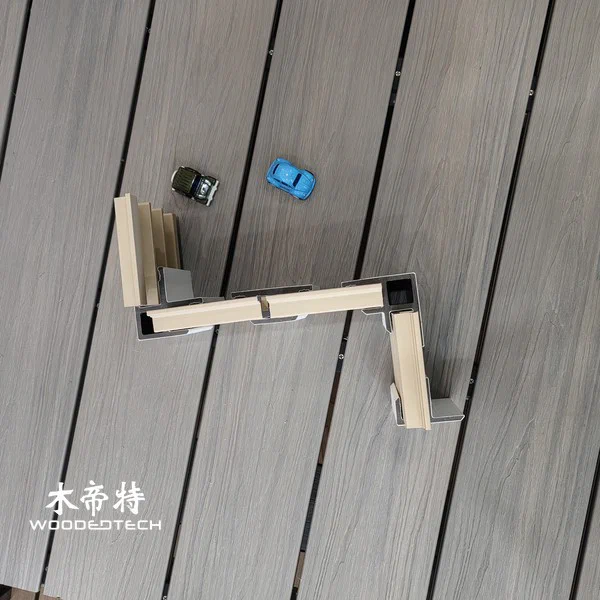
Composite interlocking deck tiles offer architects and landscape designers a practical way to deliver large-scale outdoor flooring projects with greater installation efficiency, consistent appearance, and manageable long-term maintenance. Made from wood plastic composite (WPC), these modular flooring systems combine a wood-like finish with weather-resistant performance, making them suitable for commercial terraces, public spaces, hospitality developments, rooftop gardens, and residential landscape projects.
Why Interlocking Deck Tiles Work for Large-Scale Projects
Traditional outdoor decking often requires extensive substructure preparation, precise board alignment, and time-consuming fastening. Composite interlocking deck tiles simplify many of these steps through a modular design. Individual tiles connect using integrated locking bases, allowing installers to cover large surfaces without fixing every unit directly to the ground.
For landscape contractors managing tight construction schedules, this installation method can reduce labor requirements and make project coordination easier. Tiles can be installed in manageable sections, which is particularly useful when working around columns, drainage channels, access points, and irregular architectural boundaries.
Modular construction also offers flexibility during future maintenance. If one section becomes damaged or needs access for underground utilities, installers can remove and replace selected tiles rather than dismantling an entire deck. This is an important advantage for commercial properties where minimizing operational disruption matters.
Key Applications in Commercial and Landscape Design
Architects use WPC interlocking tiles across a variety of outdoor environments because they provide a consistent flooring appearance without the maintenance demands associated with traditional timber.
Common applications include:
- Commercial terraces: Create attractive outdoor seating and circulation areas for offices, shopping centers, and mixed-use developments.
- Rooftop gardens: Establish comfortable walking surfaces in landscaped rooftop environments, subject to structural load and drainage requirements.
- Hotel and resort spaces: Improve the appearance of poolside areas, outdoor lounges, balconies, and recreational zones.
- Public landscapes: Provide modular flooring for courtyards, pedestrian areas, and outdoor gathering spaces.
- Residential developments: Finish apartment balconies, patios, garden walkways, and shared outdoor amenities.
Designers can combine different tile colors, grain patterns, and installation directions to define functional zones. For example, a hospitality project might use darker tiles around seating areas and lighter finishes along pedestrian routes. Consistent module dimensions also help maintain visual continuity across extensive outdoor surfaces.
Material Selection: What Should Project Buyers Evaluate?
Not all composite interlocking deck tiles offer the same performance. Selecting the right product requires evaluating material composition, structural design, surface treatment, and environmental conditions.
WPC typically combines wood fibers or wood flour with thermoplastic polymers and processing additives. The resulting material provides a wood-inspired appearance while reducing common timber maintenance concerns, including regular staining and painting.
When comparing products, project teams should examine several factors:
- Material composition: Check the wood-plastic ratio and polymer quality. Consistent raw materials contribute to reliable manufacturing and product performance.
- Surface treatment: Embossed wood-grain textures can create a more natural appearance. Textured surfaces may also improve underfoot grip, although slip resistance should be verified through relevant test reports.
- Base construction: The interlocking support base should provide stable connections and adequate support under expected pedestrian loads.
- Weather resistance: Evaluate resistance to moisture, ultraviolet exposure, temperature changes, and repeated outdoor use.
- Dimensional stability: Thermal expansion and contraction should be considered, particularly in areas exposed to strong sunlight and significant temperature fluctuations.
- Color consistency: Large installations require reliable color matching between production batches to maintain a uniform appearance.
For projects near swimming pools or in frequently wet environments, designers should prioritize suitable drainage, slip-resistance performance, and compatibility with the intended installation conditions.
Installation Planning for Large Outdoor Flooring Areas
Although interlocking tiles simplify installation, large-scale projects still require careful preparation. A modular connection system cannot compensate for an unstable or poorly drained foundation.
The first step is assessing the existing substrate. Concrete slabs, properly prepared paved surfaces, and other stable bases may provide suitable installation conditions, depending on the manufacturer’s specifications. The surface should be sufficiently level, structurally sound, and free from standing water.
Drainage is particularly important. Outdoor flooring should allow rainwater to escape rather than trapping moisture beneath the tiles. Designers should account for existing drainage outlets, surface gradients, and ventilation requirements when preparing the layout.
Accurate quantity calculations also help prevent unnecessary material costs. Buyers should consider:
- Total installation area and individual tile dimensions.
- Additional quantities for cutting, edge finishing, and replacement stock.
- Expansion allowances around walls and fixed structures.
- Transition details at doorways, stairs, and changes in flooring height.
- Access requirements for drainage systems and underground utilities.
For larger developments, preparing a sample installation before full deployment can help verify connection quality, appearance, installation speed, and compatibility with site conditions.
Long-Term Maintenance and Lifecycle Considerations
One reason WPC interlocking deck tiles appeal to commercial landscape projects is their relatively straightforward maintenance. Unlike natural timber, they generally do not require routine painting, staining, or wood-preservative treatment.
Regular cleaning usually involves removing leaves, dust, and other surface debris, followed by washing with water and a suitable cleaning solution. Areas exposed to food spills, pool chemicals, or heavy pedestrian traffic may require more frequent inspection.

Project managers should also establish a maintenance schedule covering connection stability, surface wear, drainage performance, and localized damage. Although WPC products are designed for outdoor use, their service life depends on material quality, installation conditions, exposure, and maintenance practices.
Lifecycle evaluation should consider more than the initial purchase price. Installation labor, replacement requirements, cleaning costs, and expected service life all influence the overall project investment. Products with reliable manufacturing quality and documented performance may offer better long-term value than cheaper alternatives with uncertain specifications.
Working with the Right WPC Tile Manufacturer
For distributors, landscape contractors, and developers purchasing materials in volume, supplier selection is another important part of project planning. A dependable manufacturer should provide clear product specifications, consistent production standards, installation guidance, and sufficient supply capacity for large orders.
Before placing a bulk order, request physical samples and technical documentation covering dimensions, material composition, load performance, water absorption, UV resistance, and relevant slip-resistance testing. It is also worth confirming minimum order quantities, production lead times, packaging arrangements, and replacement-part availability.
For projects with specific architectural requirements, customized composite tiles can provide additional flexibility in color, surface texture, dimensions, and connection design. However, custom specifications should be tested and approved before mass production begins.
Composite interlocking deck tiles give landscape professionals a modular approach to creating attractive, functional outdoor flooring at scale. By combining appropriate material selection, sound substrate preparation, effective drainage, and dependable manufacturing support, project teams can achieve outdoor environments that are easier to install, maintain, and adapt over time.