
Horizontal Composite Fence Panels: A Guide to Industrial Specifications and Applications
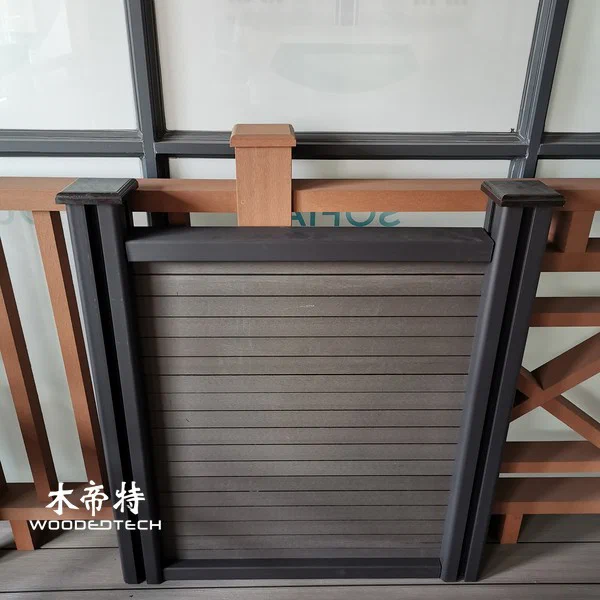
Horizontal composite fence panels are engineered WPC components designed to provide privacy, weather resistance, structural stability, and a consistent architectural appearance. Their performance depends not only on the wood-plastic composite formulation but also on profile geometry, internal cavity layout, reinforcement ribs, and surface texture. For manufacturers, importers, and project contractors, understanding these design factors is essential when selecting industrial specifications and developing reliable fencing systems.
Understanding Horizontal Composite Fence Panel Specifications
A horizontal composite fence system typically consists of extruded WPC boards installed between supporting posts, often with aluminum channels or structural frames. Unlike traditional timber fencing, WPC panels are manufactured through controlled extrusion, allowing profile dimensions, wall thickness, internal structures, and surface finishes to be customized for different applications.
Common industrial specifications include:
- Profile width and thickness
- Overall panel length
- Wall thickness and cavity dimensions
- Material density and weight per meter
- Flexural strength and impact resistance
- Thermal expansion characteristics
- UV and moisture resistance
- Surface texture and color consistency

For commercial projects, specifications should be determined by installation height, wind exposure, support spacing, privacy requirements, and local building regulations. A wider board may reduce the number of horizontal rows required, while a thicker profile can improve rigidity. However, increasing material dimensions without optimizing the internal structure can unnecessarily increase production costs.
How Profile Geometry Influences Strength and Cost
Profile geometry is one of the most important factors in WPC extrusion mold design. The cross-sectional shape determines how efficiently the material distributes loads, how much raw material is consumed, and how easily the finished panels fit into the supporting structure.
A rectangular profile offers straightforward extrusion and relatively simple installation. Its dimensions can be adjusted to balance stiffness, appearance, and material consumption. However, a poorly designed profile may experience excessive bending when installed across long spans.
More complex profiles can incorporate interlocking edges, concealed fixing grooves, and integrated connection features. These designs improve alignment and reduce visible gaps between horizontal boards. They can also simplify installation by reducing the need for additional fasteners or finishing components.
From a manufacturing perspective, profile geometry must also account for melt flow, cooling rates, die balance, and dimensional stability. Uneven material distribution can cause warping, surface defects, or inconsistent wall thickness. A well-designed extrusion die helps maintain consistent dimensions while reducing production waste.
Hollow and Solid Structures: Weight, Strength, and Material Efficiency
Hollow and solid structures serve different purposes in horizontal composite fence applications.
Hollow WPC profiles contain internal cavities that reduce material consumption and finished product weight. They are commonly used for residential privacy fences, garden boundaries, and commercial landscape projects where lightweight handling and economical production are important.
Their main advantages include:
- Lower material consumption per meter
- Reduced transportation and handling costs
- Easier installation over long fence runs
- Efficient use of raw materials
However, hollow profiles require carefully designed cavity dimensions and wall thicknesses. Excessively thin walls can reduce impact resistance and make screw fixing less reliable. Large unsupported cavity sections may also increase the risk of local deformation under concentrated loads.
Solid WPC profiles contain more material throughout their cross-section. They generally provide greater resistance to localized impact and offer more substantial fixing areas. This makes them suitable for applications requiring higher mechanical robustness or frequent contact.
The trade-off is increased weight, higher raw material consumption, and potentially greater transportation costs. Solid construction is not automatically stronger in every loading condition; profile geometry, material formulation, and support spacing remain important.
For many fencing projects, hollow profiles with optimized internal reinforcement provide a practical balance between mechanical performance and cost efficiency.
Rib Design and Internal Reinforcement
Internal ribs are important structural features in hollow composite fence panels. They connect profile walls, support the cross-section, and help control deformation under bending and impact loads.
A profile with appropriately positioned ribs can achieve better stiffness without requiring the same material volume as a thick-walled design. Rib spacing, thickness, orientation, and connection points all influence structural performance.
Common configurations include:
- Single central rib: Provides basic internal support and helps divide a large cavity.
- Multiple parallel ribs: Improve wall stability and distribute loads across the profile.
- Cross-rib structures: Connect internal walls and provide additional resistance to deformation.
- Asymmetrical reinforcement: Allows material distribution to be adjusted according to the expected loading direction.
More ribs do not necessarily mean better performance. Excessive reinforcement increases material consumption and can complicate extrusion by restricting material flow. Thick ribs may also cool differently from surrounding walls, creating internal stress and dimensional inconsistencies.
When designing an extrusion mold, engineers should evaluate rib-to-wall thickness ratios, material flow balance, cooling conditions, and the possibility of shrinkage. Prototype extrusion and mechanical testing are valuable for confirming whether the selected reinforcement layout delivers the intended results.
Surface Patterns and Their Influence on Applications
Surface design affects the appearance, maintenance requirements, and perceived quality of horizontal composite fence panels. It also influences extrusion mold complexity and production costs.
Common surface treatments include wood-grain textures, brushed finishes, embossed patterns, and smooth surfaces.
Wood-grain embossing creates a natural timber appearance suitable for residential gardens, outdoor privacy fencing, and landscape projects. Brushed textures provide a subtle decorative effect, while smooth finishes offer a clean, contemporary appearance for commercial and architectural applications.
Surface patterns can influence several practical considerations:
- A textured surface can help disguise minor scratches and everyday marks.
- Deep embossing may collect dust and require more detailed cleaning.
- Consistent surface patterns improve the visual uniformity of large fence installations.
- Complex embossing rollers or mold components can increase tooling costs and production requirements.
For manufacturers, surface texture must be coordinated with extrusion temperature, line speed, cooling, and calibration. Poor process control can lead to inconsistent embossing depth, surface distortion, or uneven color distribution.
Installation Performance and Industrial Applications
Horizontal composite fence panels are used in residential boundaries, commercial properties, industrial facilities, public landscaping, and outdoor leisure developments. Their installation performance depends on more than the board itself.
Profile dimensions must match the post channels, connection systems, and supporting frame. Interlocking profiles can improve alignment and create a more continuous privacy barrier, while conventional flat-edge boards offer flexibility for different fixing arrangements.
Thermal expansion is another critical consideration. WPC materials expand and contract with temperature changes, so installers must follow manufacturer recommendations for expansion gaps, fastening positions, and end clearances.
For exposed locations, wind load calculations should determine appropriate post spacing, panel dimensions, and structural reinforcement. Higher fences and installations in strong-wind environments may require stronger posts, closer supports, or engineered reinforcement.
Manufacturers developing wholesale composite fence panels should therefore consider the complete installation system rather than optimizing individual boards in isolation. Compatibility between profiles, aluminum posts, connectors, and fixing accessories helps reduce installation time and prevents avoidable site problems.
Selecting the Right WPC Extrusion Profile
The most suitable profile depends on the intended application, performance requirements, and target production cost. Residential fencing may prioritize lightweight hollow structures, attractive wood-grain surfaces, and convenient interlocking connections. Commercial and industrial projects may require thicker walls, optimized rib reinforcement, and more demanding mechanical specifications.
Before finalizing an extrusion mold, manufacturers should evaluate:
- Required bending and impact performance
- Profile weight and material consumption
- Wall thickness and rib configuration
- Extrusion stability and cooling behavior
- Surface finish and color consistency
- Installation compatibility and expansion allowance
- Production efficiency and tooling maintenance
A properly engineered horizontal composite fence panel balances structural performance, material efficiency, manufacturing stability, and installation convenience. Careful cross-sectional design allows WPC manufacturers to develop products that meet different market requirements without relying on unnecessary material thickness or excessive reinforcement.
FAQ
Q: Are hollow or solid WPC fence panels better for outdoor fencing?
A: Hollow profiles are generally more economical and easier to handle, while solid profiles offer greater resistance to localized impact. The best choice depends on structural requirements, installation conditions, and budget.
Q: How do internal ribs improve composite fence panel strength?
A: Internal ribs support the profile walls, distribute loads, and reduce deformation. Their spacing and thickness must be optimized to balance stiffness, material consumption, and extrusion stability.
Q: Can horizontal composite fence panels be customized?
A: Yes. Manufacturers can customize profile dimensions, cavity structures, rib layouts, surface patterns, colors, and connection features to meet specific project and installation requirements.
Related Articles
 Composite decking hardware: Industrial solutions for 2026
 Composite Decking 4 x 4 Provides Flexible Structural Options for Outdoor Construction Projects
 2x6 composite decking provides a practical size option for residential and commercial outdoor decks
 WPC hollow decking offers lightweight outdoor flooring solutions with customizable surface textures
Related Products
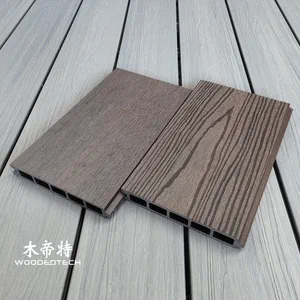 3DGL18024 Composite Fence Panels Feature Premium Co Extruded 3D Embossed Rosewood Grain Texture with Realistic Natural Wood Fibers
 F35055 Extra Wide Thick Plastic Wood Panels Are Suitable for Outdoor Tabletop Surface Applications
 Y5030-2 Hollow Structure Composite Deck Joist Provides Lightweight Support for Modern Decking Projects