
Evaluating Composite Connection Performance for Structural Reliability and Efficiency

Composite connection performance depends on more than material strength or fastener selection. In wood plastic composite (WPC) profiles, cross-sectional geometry, hollow or solid construction, internal rib arrangements, and surface patterns all influence structural stability, material consumption, connection strength, and installation efficiency. For manufacturers and project buyers, evaluating these design factors during extrusion mold development helps produce profiles that meet load requirements without unnecessary weight or production costs.
How WPC Profile Design Affects Connection Performance
The overall profile design determines how loads travel through a WPC component and how effectively it connects to adjacent parts. Decking boards, wall panels, fencing components, and railing profiles each have different structural requirements. A profile designed for surface appearance alone may not provide sufficient support around screws, clips, or interlocking joints.
From an extrusion mold design perspective, wall thickness, cavity position, edge geometry, and connection details must work together. For example, a decking board with a wide unsupported span may experience excessive deflection even when its material composition is suitable. Adding structural support in the right locations can improve stiffness without increasing the entire profile’s wall thickness.
Connection zones deserve particular attention. Screw channels, clip grooves, tongue-and-groove edges, and overlapping joints should have enough material to resist local pressure and repeated loading. If these areas are too thin, fasteners may loosen or the profile may crack during installation. If they are unnecessarily thick, material consumption and cooling time increase.
Hollow and Solid Structures: Balancing Strength and Weight
Hollow WPC profiles are widely used because they reduce material consumption while maintaining useful structural performance. Internal cavities lower product weight, simplify handling, and can reduce extrusion material costs. They are particularly suitable for decking, wall cladding, decorative panels, and other applications where the profile geometry can distribute loads efficiently.
However, hollow construction requires careful cavity design. Large unsupported surfaces may deform under concentrated loads, while uneven wall thickness can cause inconsistent cooling and dimensional instability. The position and size of internal cavities should be determined by the expected loading direction and the location of connection points.
Solid WPC profiles provide more material throughout the cross-section. This generally offers better resistance to localized compression and provides greater flexibility for screw fastening, cutting, and machining. Solid structures are useful for stair treads, heavy-duty decking, railing components, and areas exposed to higher mechanical loads.
The trade-off is higher material consumption, greater product weight, and potentially longer cooling cycles. Solid construction is not automatically stronger in every application, just as hollow construction is not automatically less durable. The appropriate choice depends on load requirements, support spacing, connection methods, and the intended installation environment.
Internal Rib Design and Structural Reinforcement

Internal ribs are among the most important features in hollow WPC extrusion profiles. They connect opposing walls, support the outer surfaces, and help distribute loads across the cross-section. A well-designed rib structure can improve bending stiffness and reduce deformation without requiring a solid profile.
The number, thickness, spacing, and orientation of ribs all influence performance. Closely spaced ribs generally provide more support, but excessive rib density increases material consumption and can complicate extrusion and cooling. Widely spaced ribs reduce weight but may allow the outer walls to flex under concentrated pressure.
Rib thickness also needs to be balanced with the surrounding wall thickness. Large differences can create uneven cooling and shrinkage, potentially leading to warping, internal stress, or dimensional variation. Consistent wall thickness is therefore an important consideration when designing the extrusion die.
For profiles with screw-based connections, ribs should ideally align with fastening zones. This provides additional support where installation forces are concentrated and helps reduce the risk of local crushing. For clip-installed decking, ribs can instead be positioned to improve overall stiffness while preserving sufficient space for the fastening system.
Surface Patterns and Their Influence on Installation
Surface patterns affect both product appearance and practical connection performance. Wood-grain textures, grooves, embossed finishes, and anti-slip patterns are common in WPC decking and cladding. Although these features primarily serve decorative or functional purposes, their design can also influence installation.
Deep grooves may reduce the effective thickness of the outer surface and create areas where stress concentrates. If grooves are positioned too close to screw channels or clip engagement areas, they may weaken the surrounding material. Surface patterns should therefore be developed alongside the structural cross-section rather than added without considering the profile’s mechanical requirements.
For decking applications, anti-slip grooves can improve walking safety, while side grooves provide space for concealed clips. The dimensions of these grooves must match the selected fastening accessories. Poor dimensional compatibility can lead to loose connections, difficult installation, uneven board spacing, or excessive pressure on the profile edges.
Embossing depth and pattern consistency also matter during extrusion. Complex surface designs may require more precise mold calibration and process control. Manufacturers should evaluate whether the visual improvement justifies the additional tooling and production requirements.
Connection Geometry, Installation Efficiency, and Manufacturing Cost
A reliable WPC connection system should be considered during the initial profile design stage. Common solutions include concealed clips, stainless steel screws, tongue-and-groove joints, and mechanical interlocking structures. Each method places different demands on the profile cross-section.
Concealed clip systems require accurately controlled side grooves and consistent board dimensions. Screw-fixed systems need adequate material around fastening locations to prevent splitting or pull-out. Interlocking systems depend on precise male-and-female geometry to maintain alignment and resist movement.
Dimensional tolerances are especially important because WPC materials expand and contract with temperature changes. Connection designs must allow appropriate movement while maintaining secure engagement. Installation clearance, board spacing, and compatibility with support joists should be verified before mass production.
From a cost perspective, the best profile is not necessarily the one using the least material. A lightweight design that causes installation difficulties, frequent breakage, or connection failures can increase total project costs. Likewise, excessive wall thickness and unnecessary reinforcement may raise raw material expenses without delivering meaningful performance improvements.
Manufacturers should evaluate several factors together:
- Material consumption per meter of profile.
- Bending stiffness and resistance to localized loading.
- Screw-holding and clip-retention performance.
- Dimensional consistency after extrusion and cooling.
- Installation time and compatibility with accessories.
- Tooling complexity, production speed, and rejection rates.
Why Extrusion Mold Design Requires Integrated Testing
Profile drawings provide an important starting point, but actual connection performance must be verified through testing. Prototype extrusion allows manufacturers to identify problems that may not be visible in a cross-sectional drawing, including uneven wall thickness, cavity deformation, poor joint fit, and inconsistent surface dimensions.
Useful evaluation methods include bending tests, fastener pull-out tests, clip-retention tests, dimensional inspections, and repeated installation trials. For outdoor applications, temperature cycling and moisture exposure should also be considered because environmental changes can affect profile dimensions and connection stability.
For custom WPC extrusion projects, mold designers should coordinate profile geometry, material formulation, fastening accessories, and installation requirements before finalizing the die. Adjustments to rib positions, cavity dimensions, connection grooves, or wall thickness are generally easier to implement during mold development than after mass production begins.
A well-engineered WPC profile balances structural performance, weight, manufacturing efficiency, and installation convenience. By optimizing hollow and solid sections, internal ribs, surface patterns, and connection geometry as one integrated design, manufacturers can develop composite products that deliver dependable connections while controlling material use and long-term project costs.
Related Articles

Related Products
 GD13823-3 Composite Boards for Decking Are Available in Multiple Stock Colors with 3 Meter Lengths and Single Piece Delivery
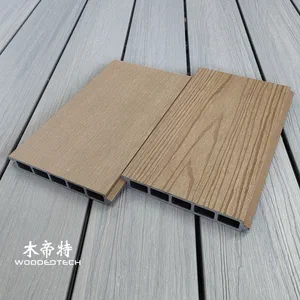 3DGL18024 WPC Longboard Fence Features Premium Co Extruded 3D Embossed Teak Wood Grain Texture with Realistic Natural Wood Fibers
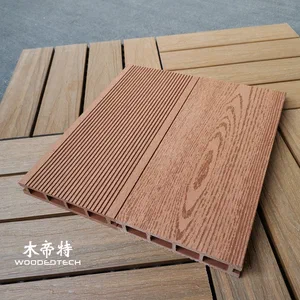 The Classic D14025-4 Red Wood WPC Wood Sheet Features a Timeless 2D Flat Wood Grain Design That Remains Popular After Twenty Years