
Engineering Considerations for Composite Deck Around Inground Pool Projects
A composite deck around an inground pool must be designed to withstand constant moisture, temperature changes, pool chemicals, and frequent foot traffic. Successful WPC pool decking projects require careful material selection, structural planning, drainage design, and surface safety considerations to ensure long-term performance in residential and commercial environments.
1. Selecting the Right Composite Decking for Pool Environments
Poolside environments place different demands on decking materials than ordinary residential gardens or patios. Deck boards are regularly exposed to splashing water, wet footwear, direct sunlight, sunscreen, cleaning agents, and pool treatment chemicals. A suitable wood plastic composite decking system should be selected according to its intended exposure conditions rather than appearance alone.
For inground pool projects, capped composite decking is often worth considering. Its protective outer layer helps reduce moisture absorption, staining, and surface deterioration. Co-extrusion decking can provide additional protection through a durable polymer shell, making it a practical option for projects where frequent water exposure and low maintenance are priorities.
When evaluating materials, project engineers should consider:
- Slip resistance under wet conditions, including barefoot use.
- Resistance to chlorine, saltwater, sunscreen, and common pool-cleaning products.
- UV stability to minimize fading and surface degradation.
- Dimensional stability under changing temperatures.
- Resistance to mold, mildew, and moisture-related damage.
- Surface comfort for barefoot users during hot weather.
It is important to distinguish water resistance from waterproof performance. Although WPC boards generally offer good moisture resistance, their cut ends, internal structure, fasteners, and supporting components still require appropriate protection and installation.
2. Structural Planning Around Inground Pools
The structural layout is one of the most important considerations when installing a composite deck around an inground pool. Unlike a standard garden deck, the installation must accommodate the pool’s shape, surrounding concrete structures, drainage channels, and potential maintenance access points.
Before installation, engineers should inspect the pool perimeter, existing ground conditions, concrete coping, and available support locations. The deck substructure must be designed to carry expected pedestrian loads, furniture loads, and other project-specific requirements.
Aluminum joists or suitable treated structural framing can be considered depending on the environment, design requirements, and manufacturer specifications. In areas with persistent moisture, the use of corrosion-resistant fasteners and compatible connectors is particularly important.
Another critical issue is the connection between the composite deck and the pool coping. Deck boards should not be rigidly fixed to the pool shell or coping unless the pool and decking system have been specifically engineered for that connection. Independent movement between the pool structure and deck should be accommodated through an appropriate expansion joint or separation detail.
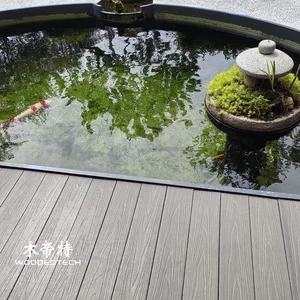
For curved inground pools, installers can use carefully planned board layouts, adjustable framing, and custom-cut perimeter boards to create a clean transition. A consistent border or picture-frame design can improve the finished appearance while providing a practical way to manage irregular pool geometry.
3. Drainage, Ventilation, and Expansion Control
Effective drainage is essential for every outdoor WPC decking installation around a swimming pool. Standing water can create slippery conditions, encourage biological growth, and increase the exposure of the supporting structure to moisture.
The substructure should be designed to maintain adequate drainage beneath the boards. Depending on site conditions, this may involve a properly graded base, drainage channels, suitable joist spacing, and sufficient clearance between the deck surface and underlying ground.

Decking should never obstruct existing pool drainage outlets or inspection points. Engineers should coordinate the decking layout with the site’s drainage system before construction begins.
Thermal expansion is another important consideration. Composite boards expand and contract as temperatures change, with movement varying according to material formulation, board dimensions, color, and installation conditions.
Professional installers should follow the manufacturer’s specified requirements for:
- End-to-end board spacing.
- Side-to-side board gaps.
- Perimeter expansion clearance.
- Joist spacing and fastening positions.
- Ventilation beneath the decking.
- Expansion joints around fixed structures.
Dark-colored decking can experience higher surface temperatures under direct sunlight, making expansion planning and barefoot comfort especially important in exposed pool areas.
4. Slip Resistance, Safety, and Barefoot Comfort
Safety is a primary design requirement for swimming pool surroundings. A visually attractive composite deck is not necessarily suitable for wet environments. Engineers should evaluate the actual slip-resistance performance of the selected product under relevant wet-use conditions.
Textured or embossed WPC decking surfaces may provide improved traction compared with smooth finishes, but surface texture alone does not guarantee slip resistance. Project specifications should request applicable wet-slip test data and verify that the product meets local building and pool safety requirements.
The deck layout should also minimize unnecessary level changes, sharp edges, and exposed fasteners. Where steps or raised transitions are required, consistent riser heights, secure handrails, and clearly defined nosings help improve accessibility and reduce trip hazards.
For residential gardens, a continuous deck surface can create a comfortable connection between the pool, outdoor seating, and landscaped areas. In hotels, resorts, and commercial swimming facilities, designers should pay greater attention to high-traffic circulation routes, accessible access points, and maintenance requirements.
5. Application Suggestions for Different Pool Projects
The appropriate WPC solution depends on the project’s scale, climate, expected usage, and architectural style.
Residential swimming pools benefit from composite decking that creates a natural transition between the house, garden, and pool. Light or medium-colored boards can help create a visually open space, while matching composite steps and railing systems provide a consistent outdoor design.
For hotels and resorts, capped composite decking is a practical option for larger poolside terraces, outdoor lounges, and guest relaxation areas. Commercial specifications should prioritize durability, consistent product quality, replaceable components, and maintenance access. The installation should also account for furniture movement, cleaning equipment, and higher pedestrian traffic.
Public parks and recreational swimming facilities require a more performance-focused approach. Engineers should consider heavier usage, accessibility, drainage capacity, vandal resistance, and local public-facility safety standards. Where the deck connects to landscaped areas, composite edging, benches, and matching outdoor structures can create a coordinated environment.
For balconies overlooking swimming pools or waterfront landscapes, lightweight decking systems may be considered where the supporting structure permits them. However, structural loading, waterproofing membranes, drainage outlets, and building regulations must be checked before installation. Decking must not interfere with the balcony’s primary waterproofing system.
6. Installation Quality and Long-Term Maintenance
Even high-quality composite decking can experience premature problems if installation details are overlooked. A professional installation plan should include material inspection, substructure preparation, board layout, fastening specifications, perimeter detailing, and final drainage checks.
Before construction, confirm that all components are compatible with the selected WPC decking system. Mixing boards, clips, joists, and accessories from different manufacturers without verified compatibility can lead to installation and performance problems.
Routine maintenance is relatively straightforward. Regular cleaning with water and a suitable manufacturer-approved cleaning solution helps remove dirt, sunscreen residue, and organic deposits. Poolside surfaces should also be inspected periodically for loose fasteners, damaged boards, blocked drainage areas, and signs of excessive movement.
For B2B buyers, contractors, landscape architects, and project developers, requesting technical data sheets, installation manuals, wet-slip test reports, and relevant chemical-resistance information before procurement can significantly reduce project risks.
A well-engineered composite deck around an inground pool is more than an attractive outdoor surface. Its performance depends on matching the WPC material to the exposure conditions, designing a stable and well-drained substructure, allowing for thermal movement, and selecting a surface suitable for wet pedestrian environments. These considerations help create reliable poolside spaces for private residences, hotels, commercial landscapes, and public recreational facilities.
Related Articles

Related Products
 D15035 Hollow Square Hole WPC Deck Offers Double Grooved Surfaces with Unique Thickness Design for Outdoor Applications
 Y5030-2 Hollow Structure Composite Deck Joist Provides Lightweight Support for Modern Decking Projects
 Y6040S Extra Large Thick Solid I Shaped Composite Deck Joist Offers Strong Support for Outdoor Structures