
Does composite decking warp and how can quality materials reduce outdoor deformation
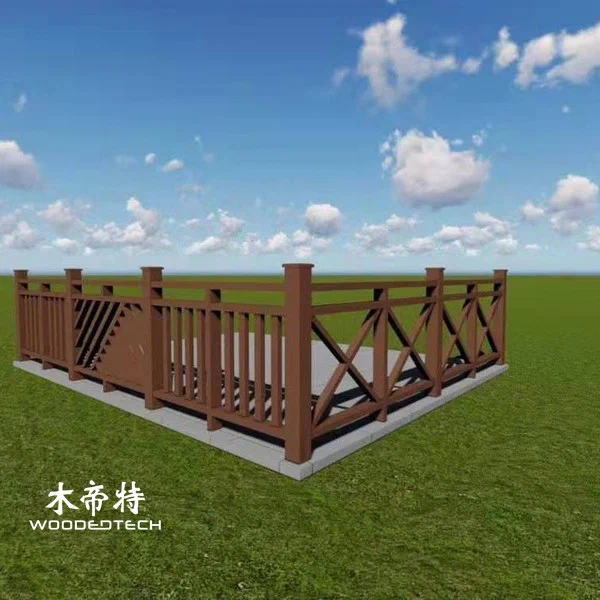
Does composite decking warp? It can, but warping is usually a materials and process issue rather than a product inevitability. In a well-controlled WPC factory, correct formulation, stable extrusion, and strict inspection greatly reduce outdoor deformation and improve long-term service life.
Why outdoor WPC decking deforms
Composite decking is built from wood powder, polymer, and additives, so each ingredient affects shrinkage, thermal movement, and moisture response. When the formula is unbalanced or the raw materials are unstable, boards may bow, cup, twist, or develop end lift after installation.
Wood powder quality is the first control point. Fine, dry, and clean wood flour with consistent mesh size disperses better in the polymer, while excessive fiber length, metal contamination, or moisture above factory limits can create internal stress and voids. In practice, we inspect incoming wood powder for moisture content, particle size distribution, ash content, and foreign matter before it enters the mixer.
Polymer selection and additive control
HDPE and PVC behave differently under heat and weather exposure. HDPE-based WPC usually offers good impact resistance and easier extrusion, while PVC-based products can provide better dimensional stability and surface hardness when the formula and processing window are well controlled. Either system can warp if the polymer melt index, fusion quality, or cooling rate is inconsistent.
Additives are not small details; they are performance drivers. Coupling agents improve bonding between wood flour and resin, lubricants stabilize processing, UV absorbers slow surface aging, antioxidants protect against heat degradation, and foaming agents must be controlled carefully to avoid weak internal structure. Pigments also matter because poor dispersion can create color streaks and uneven heat absorption, which increases differential expansion in outdoor use.
What quality standards a factory should check
A professional Guangdong WPC factory should treat raw material control as a gate, not a formality. Common inspection methods include:
- Moisture testing of wood powder and finished profiles
- Melt flow and density verification for polymers
- Color masterbatch dispersion checks
- Laboratory bending and impact tests on sample boards
- Dimensional stability testing after heat and water conditioning
- Accelerated weathering and UV aging tests for outdoor grades
- Surface flatness, thickness, and straightness checks on every batch
For outdoor decking, the key quality targets are low water absorption, stable bending strength, controlled length shrinkage, and no visible warp after heat cycling. Many buyers ask for factory test reports based on internal standards aligned with ASTM or EN methods, plus batch traceability from raw material lot to finished board.
How modifiers improve durability
Modifiers are what help a product survive real outdoor stress. Impact modifiers reduce brittleness in cold weather, mineral fillers can improve stiffness and lower thermal movement when dosed properly, and processing aids help the profile form a dense, uniform skin. For co-extruded products, a strong outer cap further improves stain resistance, UV resistance, and color retention, which directly reduces surface aging that can lead to deformation.
The factory also needs to control extrusion temperature, screw speed, die design, and cooling calibration. Even excellent raw materials can produce warped boards if the profile is cooled unevenly or stacked before it is fully stabilized.
Practical buyer guidance
If you want decking that stays straight outdoors, ask for the formulation basis, moisture limit of wood flour, weathering test data, and loading method after extrusion. A reliable supplier should also explain how they prevent internal stress, not just how they improve appearance. Good raw materials, controlled processing, and disciplined inspection are what keep composite decking flat in real weather.

FAQ
Q: What is the main reason composite decking warps? A: The most common causes are unstable raw material ratios, excess moisture in wood powder, and uneven extrusion cooling. Installation errors can add stress, but poor manufacturing is usually the root cause.
Q: Is HDPE or PVC better for outdoor WPC durability? A: Both can perform well when formulated correctly. HDPE is often valued for toughness, while PVC can offer stronger dimensional stability and surface hardness.
Q: How does a factory test warping resistance? A: Factories usually use heat-cold cycling, water absorption tests, bending tests, and straightness checks after conditioning. These tests show whether the board can hold shape in outdoor use.
Related Articles
 Composite decking instructions help installers complete outdoor flooring projects correctly
 Composite decking spacing guidelines ensure proper installation and long term outdoor performance
 Composite wood deck sealer helps maintain the appearance and performance of outdoor decking
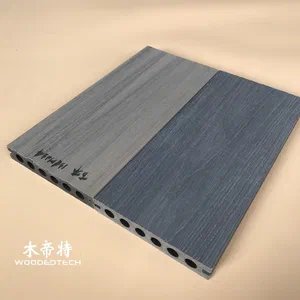 Joists for composite decking provide stable support systems for outdoor deck installation
Related Products
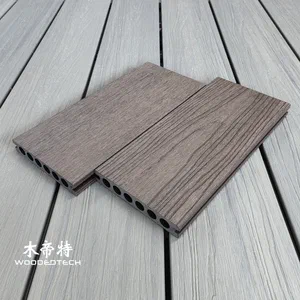 3DGD13823 Second Generation 3D Embossed Rosewood Composite Balcony Decking Delivers Ultra Realistic Wood Grain Texture and a Premium Natural Wood Experience
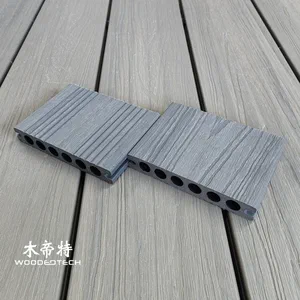 GD13823-3 Light Grey Premium Co Extrusion WPC Composite Decking Offers LG Texture and Excellent UV Resistance for Outdoor Spaces
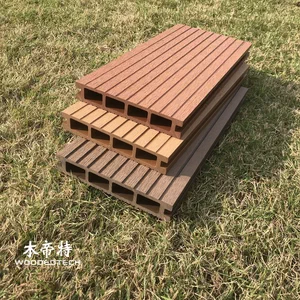 D14025-3 Square Hole Double Sided Grooved WPC Board Factory Producing Outdoor Decking Boards With Good Slip Resistance