
Deska Kompozytowa WPC: Industrial Applications, Benefits and Specifications
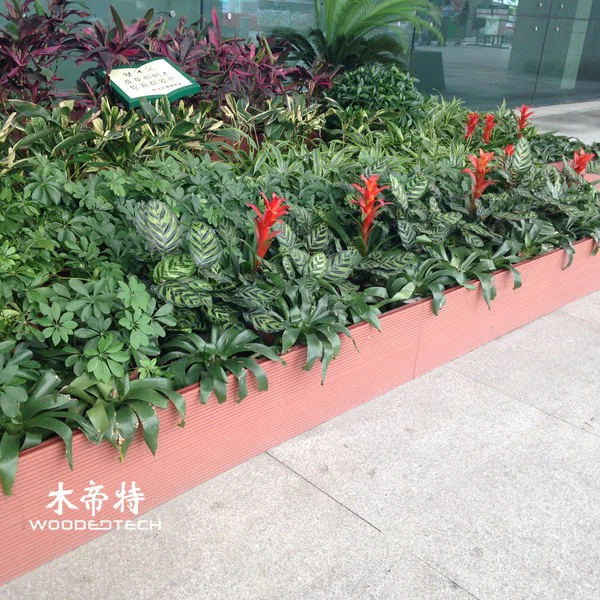
Outdoor WPC (wood-plastic composite) products are used in residential, commercial, hospitality, and public environments where attractive appearance, weather resistance, and manageable maintenance are important. From garden decking and hotel pool surrounds to public park walkways and commercial landscape features, WPC provides a practical alternative to traditional timber for many exterior applications.
Residential Gardens and Outdoor Living Spaces
Residential gardens are among the most common applications for WPC decking. Homeowners use composite boards to create garden platforms, outdoor dining areas, patios, pathways, and seating zones. Compared with untreated timber, WPC generally requires less routine maintenance and does not need regular painting or staining.
For garden projects, hollow WPC decking can be a cost-effective choice for standard residential installations, while solid boards are worth considering for areas exposed to heavier loads or more demanding use. Matching WPC garden benches, planter boxes, privacy screens, and pergolas can create a consistent outdoor design.
Application suggestions:
- Use wood-grain or embossed decking for a natural timber appearance.
- Select UV-resistant materials for gardens with prolonged sun exposure.
- Provide adequate drainage and ventilation beneath the decking.
- Choose compatible WPC fencing and pergolas to create coordinated outdoor spaces.
Commercial Landscapes, Hotels, and Resorts
Commercial landscapes require materials that can withstand frequent pedestrian traffic while maintaining an attractive appearance. WPC decking is suitable for outdoor walkways, restaurant terraces, hotel courtyards, resort gardens, and landscaped recreational areas.
Hotels and resorts often use WPC products around outdoor lounges, garden restaurants, rooftop terraces, and recreational facilities. Consistent board dimensions and coordinated colors help designers achieve a professional appearance across large outdoor spaces. Co-extrusion decking is particularly useful for projects requiring an additional protective surface layer and improved resistance to staining and moisture penetration.
For commercial projects, application engineers should evaluate expected foot traffic, installation span, support spacing, and maintenance requirements before selecting a product. Solid or reinforced profiles may be more appropriate for heavily used areas, depending on the manufacturer’s tested load capacity.

Recommended solutions include:
- Co-extrusion WPC decking for demanding outdoor environments.
- WPC wall cladding for exterior decorative features.
- WPC pergolas and privacy screens for hotel relaxation areas.
- Composite benches and planters for landscaped commercial spaces.
Swimming Pool Areas and Waterfront Applications
Swimming pool surrounds require careful material selection because decking is regularly exposed to water, cleaning chemicals, humidity, and temperature changes. Outdoor WPC decking can provide a timber-like appearance without the same maintenance requirements as conventional wood.
However, water resistance should not be confused with guaranteed slip resistance. Poolside installations should use boards with tested wet-condition slip performance and suitable surface textures. Embossed or grooved decking may improve surface traction, but actual performance depends on the profile, finish, footwear, and maintenance conditions.
For poolside projects, consider the following specifications:
- Select WPC products tested for water absorption and dimensional stability.
- Confirm slip-resistance performance using an appropriate test method.
- Use corrosion-resistant stainless steel or approved fixing systems.
- Allow sufficient drainage and ventilation beneath the boards.
- Follow the manufacturer’s installation requirements for expansion gaps.
For coastal resorts and waterfront properties, additional attention should be given to salt exposure, metal fastener compatibility, and long-term weathering performance.
Balconies, Rooftop Terraces, and Urban Spaces
WPC decking is also suitable for residential balconies, apartment terraces, rooftop gardens, and outdoor entertainment areas. Its consistent appearance and availability in different colors make it useful for contemporary architectural designs.
For balconies, lightweight hollow profiles or interlocking WPC deck tiles can simplify installation, especially where the existing floor cannot accommodate a traditional raised decking structure. However, the total installed weight must be checked against the building’s permitted loading capacity.
Rooftop applications require particular attention to waterproofing membranes, drainage outlets, wind exposure, and access for maintenance. The decking support system should not damage the underlying waterproof layer. Where adjustable pedestals are used, their load distribution and compatibility with the roof structure must be verified.
WPC wall panels and exterior louvers can complement balcony flooring by providing decorative screening, privacy, and partial shading.
Parks, Walkways, and Public Facilities
Public parks, pedestrian paths, waterfront promenades, outdoor fitness areas, and community recreation facilities are further applications for outdoor WPC products. These environments often experience frequent use and exposure to changing weather conditions.
WPC park benches, boardwalks, landscape platforms, decorative fencing, and outdoor seating can help create visually consistent public spaces. Recycled wood-plastic composite materials may also support sustainability objectives by incorporating recycled polymer and wood resources.
For public infrastructure, product selection should be based on documented mechanical performance rather than appearance alone. Important considerations include load-bearing capacity, bending strength, impact resistance, wear resistance, fire performance where required, and long-term dimensional stability.
Public facilities should also consider accessibility requirements, drainage, edge detailing, and the replacement of individual boards. Modular installation systems can make future repairs easier and reduce maintenance disruption.
Key Specifications for Outdoor WPC Applications
Different environments require different WPC product specifications. A residential garden deck does not necessarily need the same structural performance or surface protection as a commercial boardwalk or hotel pool surround.
| Specification | Application consideration |
|---|---|
| Material composition | Wood fiber, polymer type, additives, and stabilizers |
| Density | Influences board weight and mechanical performance |
| Flexural strength | Important for decking spans and pedestrian loads |
| Water absorption | Relevant to wet and humid environments |
| UV resistance | Important for exposed outdoor installations |
| Slip resistance | Essential for poolside and public walking areas |
| Dimensional stability | Helps manage temperature and moisture changes |
| Surface treatment | Embossing, brushing, or co-extrusion protection |
| Fire performance | Must meet applicable project and local requirements |
Buyers should request relevant test reports and confirm the applicable standards for their destination market. Depending on the product and intended application, useful references may include ASTM D7032 for composite decking and guardrail systems, ASTM D6109 for flexural properties, and EN 15534 for wood-plastic composites.
It is also important to distinguish between laboratory test results and actual installation performance. Board thickness, joist spacing, fastening methods, substructure quality, and local climate all influence the finished structure.
Choosing the Right WPC Solution for Each Project
A successful outdoor WPC installation starts with matching the product profile to the environment. Residential gardens may prioritize appearance and affordability, while hotels and commercial landscapes often require stronger surface protection and consistent performance under frequent use. Pool areas demand particular attention to wet slip resistance, whereas balconies and rooftops require careful consideration of weight, drainage, and waterproofing.
For manufacturers, distributors, contractors, and project developers, providing application-specific product recommendations is an important part of delivering reliable WPC solutions. A professional selection process should consider material composition, mechanical test results, environmental exposure, installation details, and local building requirements. With the right specifications and installation system, WPC decking, cladding, fencing, pergolas, and outdoor furniture can serve a wide range of residential and commercial projects.
Related Articles
Related Products
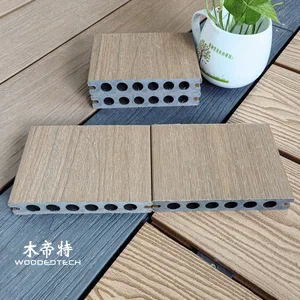 GD13823 Double Sided Flat Surface Co Extruded WPC Decking Features a Popular Width and Thickness with Round Hollow Structure
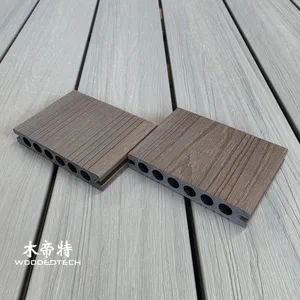 Purple Sandalwood GD13823-3 Co Extruded WPC Outdoor Decks with Round Holes Are Available in Stock in 3 Meter Lengths Year Round
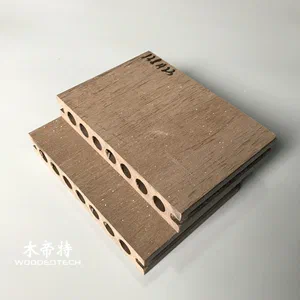 D13823 Round Hole Double Sided Flat WPC Bamboo Decking Boards With Strong Quality And Various Wood Grain Surface Treatments