
Comprehensive Cost Guide: market price of capped composite decking
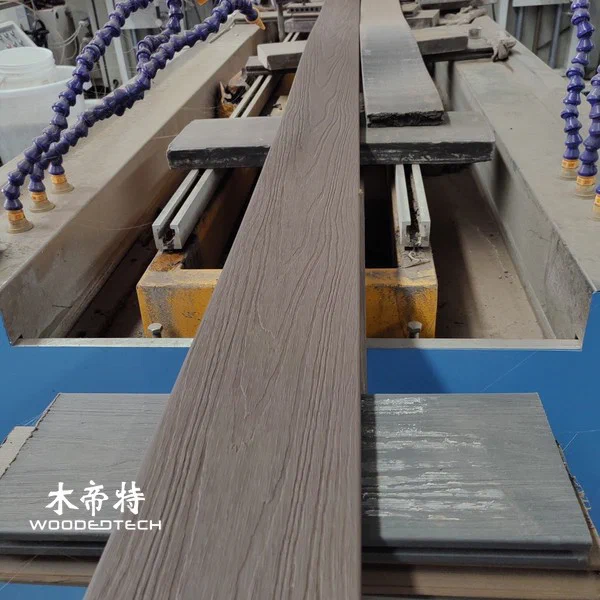
The market price of capped composite decking depends on material grade, cap thickness, surface treatment, order volume, and whether the product is sold direct from the factory or through a distributor. For industrial buyers, the real comparison is not just unit price, but total installed value, service life, and consistency across large orders.
What Drives Market Price
Capped composite decking usually sits above uncapped composite decking because the protective cap improves stain resistance, color stability, and moisture protection. Prices also move with core composition: higher wood-plastic content, denser boards, and better UV stabilizers typically increase cost, while hollow profiles can reduce price compared with solid boards.
Order quantity matters as much as specification. Bulk purchases for projects, wholesalers, and contractors often receive lower per-square-meter pricing than small retail orders. Shipping terms, packaging requirements, and destination market also affect the final landed cost, especially for export buyers who need stable supply and predictable lead times.
Typical Price Positioning
In the current market, capped composite decking is usually priced in the mid-to-high range of outdoor flooring products. Entry-level boards may be used for cost-sensitive projects, while premium fully capped systems are chosen for commercial decks, resorts, public walkways, and residential developments where appearance retention is important.
Buyers should compare like for like. A lower-priced board with thinner capping, weaker color control, or short warranty coverage may look attractive at quotation stage but perform poorly over time. For B2B procurement, it is better to evaluate thickness, slip resistance, fade resistance, and test data together with the quoted price.
How To Evaluate Supplier Quotes
When reviewing capped composite decking price offers, ask for a full specification sheet, not just a number per board. Check board dimensions, weight, surface finish, warranty terms, and whether accessories such as joists, clips, and fascia boards are included. If the product is exported, confirm the HS code, packaging format, and documentation support.
A reliable supplier should also explain production consistency, color matching for repeat orders, and whether the boards are co-extrusion decking or another capped structure. These details help buyers avoid hidden costs during installation and after-sales maintenance.
For project purchasing, the best approach is to compare total project cost rather than board price alone. A slightly higher-priced capped board can lower replacement risk, reduce maintenance, and improve client satisfaction over the full life of the deck.
FAQ

Q: What is the main factor behind price differences? A: Core quality, cap thickness, surface technology, and order volume are the biggest drivers. Shipping and packaging also affect export pricing.
Q: How can buyers get the best value? A: Request full technical specifications, compare landed cost, and choose a supplier with stable production and proven export experience.
Related Articles
Related Products
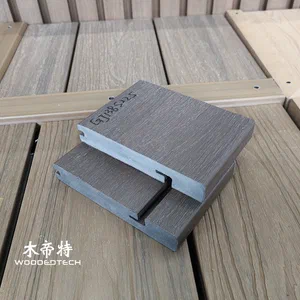 GD13822.5S Fully Capped Solid Starter Wood Polymer Composite Decking Provides a Stable Starting Structure for the First Decking Board
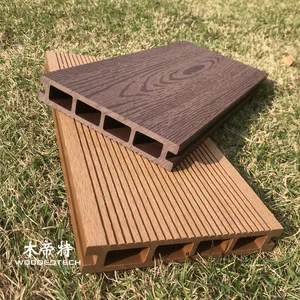 D14025-4 Composite for Decking Provides Stable Performance and Reliable Quality as a Popular Choice for Outdoor Projects
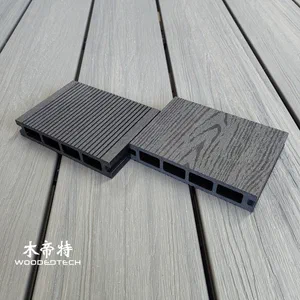 D14025-4 WPC Decking Boards Feature a Flat Wood Grain Surface with Black Ebony Heartwood Ring Grain for Outdoor Applications