
Composite Wood Decking Cost: 2026 Pricing, Factors, and Industry Insights
Composite wood decking costs in 2026 depend on material composition, board construction, surface technology, manufacturing origin, and installation requirements. For international buyers, understanding the difference between material prices and total project costs is essential when comparing suppliers, evaluating import opportunities, and selecting products for residential or commercial developments.
2026 Composite Wood Decking Price Overview
The global composite decking market continues to develop as property owners, contractors, distributors, and landscape designers look for alternatives to traditional timber. Wood plastic composite (WPC) decking has become an established option because it combines wood fibers or wood flour with thermoplastics to create an outdoor material that generally requires less maintenance than natural wood.
For 2026 purchasing estimates, buyers can use the following indicative international price ranges as preliminary budgeting references. Actual quotations vary by supplier, order volume, destination, specifications, and trade terms.
| Product category | Indicative material price (USD/m²) |
|---|---|
| Entry-level hollow composite decking | $20–$35 |
| Standard solid composite decking | $30–$50 |
| Capped composite decking | $40–$70 |
| Co-extrusion composite decking | $50–$90 |
| Premium architectural decking | $70–$120+ |
These figures are illustrative market estimates, not verified global averages or fixed supplier quotations. They generally exclude installation, substructure, shipping, customs duties, and taxes. Buyers should also compare prices per square meter rather than relying exclusively on individual board prices, as board dimensions and coverage vary.
Key Factors That Influence Composite Decking Cost
Material composition is one of the most important pricing factors. WPC decking commonly combines recycled or virgin plastics with wood flour, wood fibers, and processing additives. The plastic type, wood-to-plastic ratio, stabilizers, and manufacturing consistency all affect production costs and finished-product performance.
Board structure also influences pricing. Hollow boards generally use less material and are often more economical for residential applications. Solid boards typically consume more raw material and may be preferred for projects requiring particular structural characteristics. However, the appropriate choice depends on engineering requirements, joist spacing, load ratings, and installation conditions rather than board weight alone.

Surface technology creates another pricing difference. Traditional uncapped decking is often positioned in the entry-level segment, while capped composite decking features an additional protective polymer layer. Co-extrusion technology can provide improved surface protection, color consistency, and resistance to moisture and staining. These features can justify a higher purchase price in demanding outdoor environments.
Other cost considerations include UV resistance, slip resistance, fire performance, dimensional stability, color options, embossing, custom profiles, and quality-control standards. Buyers importing composite decking should request technical datasheets and independent test reports rather than assuming that a higher quotation automatically indicates better product quality.
Global Industry Trends: Decking, Cladding, Fencing, and Pergolas
The composite outdoor building materials industry is moving toward integrated product solutions rather than standalone decking boards. Buyers increasingly want coordinated materials for decks, exterior walls, garden boundaries, privacy screens, and outdoor structures.
Several developments are shaping international demand in 2026:
- North America: Residential renovation, backyard improvements, pool surrounds, and replacement of aging timber decks continue to support demand. Capped composite decking and premium railing systems are particularly relevant to customers seeking reduced maintenance.
- Europe: Environmental considerations, recycled content, product traceability, and compliance with construction standards influence purchasing decisions. Suppliers that can provide documented material specifications and reliable performance testing have a competitive advantage.
- Asia-Pacific: Urban development, hospitality construction, residential landscaping, and expanding distribution networks create opportunities for WPC decking, wall cladding, and fencing. The region is also an important manufacturing base.
- Middle East: Hotels, resorts, commercial landscapes, and outdoor leisure developments create demand for UV-resistant decking, pergolas, decorative screens, and weather-resistant exterior materials.
These regional differences matter when developing product portfolios. A distributor targeting North American residential projects may prioritize capped decking and railing, while a commercial landscaping supplier in the Middle East may place greater emphasis on heat resistance, UV stability, and coordinated pergola systems.
Industry forecasts also indicate room for expansion. One 2026 market report estimates that the global composite decking and railing market will increase from approximately $5.54 billion in 2026 to $8.19 billion in 2031, representing an estimated annual growth rate of 8.1%. Different research providers use different market definitions, so these figures should be treated as forecasts rather than directly comparable measurements.
How Related WPC Products Create New Business Opportunities
Composite decking is increasingly connected to a broader outdoor product ecosystem.
WPC wall cladding offers opportunities in residential facades, commercial buildings, hospitality developments, and garden renovation. Textured finishes, wood-grain effects, fluted profiles, and co-extrusion surfaces help manufacturers serve customers looking for decorative exterior materials with reduced maintenance requirements.
Composite fencing is another promising category. Privacy fencing, horizontal fence panels, aluminum-framed composite fencing, and modular boundary systems can complement decking projects. Distributors can increase average order values by supplying complete outdoor packages instead of individual boards.
Pergolas and gazebos create additional opportunities in outdoor living projects. Composite pergola systems, adjustable louvers, decorative screens, and coordinated decking materials appeal to developers and homeowners seeking consistent exterior designs.
Landscape products also offer room for product diversification. Composite benches, planters, garden partitions, and outdoor flooring tiles can help wholesalers expand their product ranges without moving into entirely unrelated markets.
For manufacturers, the commercial advantage lies in developing compatible product collections with consistent colors, dimensions, finishes, and installation accessories.
Future Market Opportunities and Purchasing Strategies
One important opportunity is the growth of premium, performance-oriented products. As buyers become more familiar with composite decking, purchasing decisions increasingly involve lifecycle cost rather than initial board price alone. Products offering better surface protection, reliable dimensional stability, and tested slip resistance can compete beyond the lowest-price segment.
Sustainability represents another opportunity, particularly for manufacturers using recycled plastics and responsibly sourced wood fibers. However, environmental claims need supporting documentation. Recycled-content percentages, material traceability, and relevant environmental certifications can help international suppliers establish credibility with professional buyers.
Manufacturing customization is also becoming commercially valuable. OEM and private-label services allow distributors to develop proprietary colors, board profiles, embossed textures, and packaging. Custom composite extrusion profiles can help suppliers serve specialized applications and reduce direct price comparisons with standard products.
For importers and wholesalers, procurement decisions should account for more than the factory quotation. A practical landed-cost calculation should include:
- Product purchase price and manufacturing specifications.
- Packaging, container loading, and inland transportation.
- International freight and cargo insurance.
- Import duties, customs clearance, and applicable taxes.
- Local warehousing, distribution, and installation accessories.
- Expected warranty obligations and after-sales costs.
Trade policy deserves particular attention. Import duties can change the economics of sourcing from different manufacturing countries, and tariff classifications should be verified for the actual product rather than assumed from its commercial description.
For 2026, the strongest business opportunities are likely to come from combining competitive composite decking costs with dependable quality, coordinated outdoor product categories, and responsive supply chains. Buyers should evaluate manufacturers through production capacity, quality-control procedures, technical documentation, sample consistency, and delivery performance. Suppliers that can support decking, WPC wall cladding, fencing, pergolas, and landscape products through one coordinated sourcing relationship are well positioned to serve the growing demand for complete outdoor building solutions.
Related Articles


Related Products
 GD13820 M Shape Co Extruded Composite Deck Planks Feature a Special Profile Design for Distinctive Outdoor Decking Applications
 GD13823-3 Composite Boards for Decking Are Available in Multiple Stock Colors with 3 Meter Lengths and Single Piece Delivery
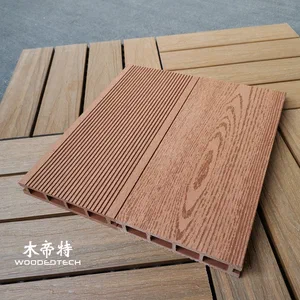 The Classic D14025-4 Red Wood WPC Wood Sheet Features a Timeless 2D Flat Wood Grain Design That Remains Popular After Twenty Years