Composite Stair Risers: Industrial Applications, Benefits, and Selection Criteria
Composite stair risers are used in commercial, industrial, and outdoor construction to create durable, low-maintenance stair systems with a consistent finish. Made from wood plastic composite (WPC) or other engineered composite materials, they can be specified for exterior access stairs, public walkways, commercial terraces, and landscape steps when the product design matches the expected loads and environmental conditions.
Industrial and Commercial Applications
In industrial facilities, composite stair risers can be used in designated access areas, service platforms, external stairways, and pedestrian circulation routes. Their resistance to moisture, rot, and insect damage makes suitable WPC grades useful in exposed environments where traditional timber may require frequent maintenance. However, standard decorative WPC profiles should not be assumed suitable for heavy industrial loads, emergency escape stairs, or regulated industrial access systems without verified structural performance and code compliance.
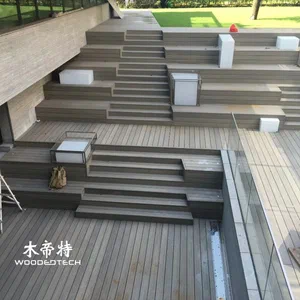
Commercial properties such as hotels, resorts, office complexes, and shopping centers can use composite risers to maintain a coordinated appearance across outdoor stairs, entrance steps, raised terraces, and landscaped paths. For hospitality projects, wood-look finishes offer a warm visual effect without the regular painting or staining associated with timber. Select colors and surface textures that complement the decking, handrails, and surrounding architecture.
Residential Gardens, Balconies, and Pool Areas
For residential gardens, WPC stair risers work well alongside composite decking on garden steps, patio transitions, and raised outdoor seating areas. Matching the riser profile to the deck boards creates a uniform finish and helps conceal the supporting stair structure. In balcony applications, confirm that the product is approved for the intended installation, with adequate drainage, ventilation, and allowance for thermal expansion.
Swimming pool areas require particular attention to slip resistance, water drainage, and long-term exposure to pool chemicals. Composite stair systems should use compatible treads and risers, with a suitable slip-resistant walking surface and secure fastening. Avoid assuming that a water-resistant material is automatically slip-proof. For hotels, parks, and public leisure facilities, specify products tested for the intended wet-use conditions and expected pedestrian traffic.
Benefits and Material Selection Criteria
The main benefits of composite stair risers include reduced routine maintenance, resistance to decay, consistent appearance, and compatibility with many outdoor composite decking systems. Recycled wood fibers and polymers may also contribute to material efficiency, depending on the manufacturer’s formulation and documented recycled content.
When selecting composite stair risers, evaluate the following factors:
- Load capacity and structural support: Confirm that the complete stair assembly meets project loading requirements.
- Weather resistance: Check UV stability, moisture performance, temperature limits, and suitability for the local climate.
- Dimensions and compatibility: Match the riser height, tread depth, profile, and fixing method to the stair design.
- Safety and compliance: Verify applicable building codes, fire-performance requirements, slip resistance, and accessibility provisions.
- Installation and maintenance: Allow for expansion gaps, proper drainage, ventilation, and manufacturer-approved fasteners.

For large projects, request technical datasheets, installation instructions, test reports, and samples before final specification. Confirm whether the risers are load-bearing components or decorative covers, as this distinction directly affects their safe application.
FAQ
Q: Can composite stair risers be used outdoors?
A: Yes, suitable outdoor-rated products can be installed in gardens, commercial landscapes, pool areas, and exterior access stairs when installed according to manufacturer requirements.
Q: Are WPC stair risers suitable for industrial applications?
A: They may suit selected pedestrian access and service areas, but structural capacity, fire performance, and regulatory compliance must be verified for each application.
Q: What should buyers check before ordering composite stair risers?
A: Confirm dimensions, material composition, load requirements, weather resistance, slip resistance, fixing details, and compatibility with the intended stair system.