
Composite Railing Brackets: Selection Criteria and Industrial Applications
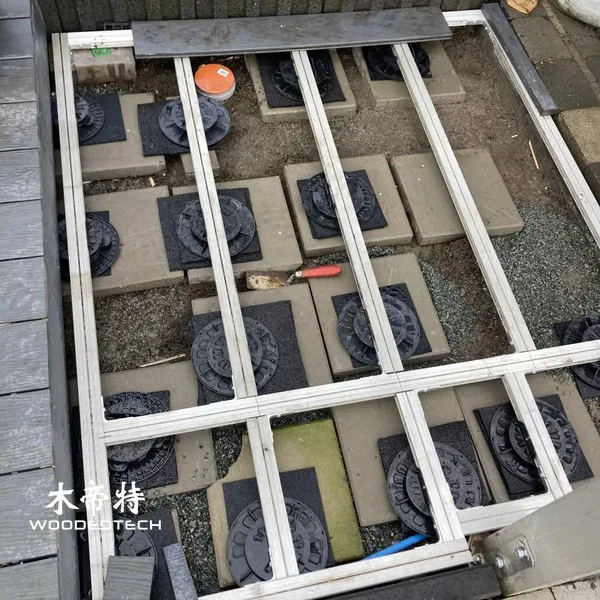
Composite railing brackets are essential connection components in railing systems, securing posts, rails, and structural members while maintaining alignment and stability. Selecting the right brackets requires evaluating material compatibility, load capacity, corrosion resistance, dimensional accuracy, and installation requirements. For WPC railing manufacturers, bracket design and extrusion profile geometry must work together to deliver reliable performance across residential, commercial, and industrial applications.
Understanding Composite Railing Bracket Requirements
Composite railing brackets connect different parts of a railing system, including top rails, bottom rails, posts, and supporting structures. Unlike decorative accessories, these components directly influence the stability and service life of the finished installation.
When selecting brackets for wood plastic composite railing, buyers should consider several technical factors:
- Load-bearing capacity: Brackets must withstand expected vertical loads, horizontal pressure, and repeated use.
- Material compatibility: The bracket should work with the dimensions and mechanical properties of the WPC profile.
- Corrosion resistance: Outdoor installations require materials and surface treatments suitable for moisture, temperature changes, and environmental exposure.
- Dimensional accuracy: Consistent dimensions ensure secure connections and reduce installation adjustments.
- Installation efficiency: Pre-drilled holes, standardized fixing positions, and suitable fastening accessories can simplify assembly.
For manufacturers developing complete railing systems, bracket specifications should be established alongside the extrusion profile design rather than treated as a separate purchasing decision.
Material Selection and Structural Performance
The material used for composite railing brackets affects strength, durability, cost, and maintenance requirements. Common choices include aluminum, stainless steel, and reinforced engineering plastics.
Aluminum brackets are widely used in outdoor railing systems because they combine relatively low weight with good structural performance and corrosion resistance. They are particularly suitable for applications where easy handling and efficient installation are important. Powder coating or anodizing can provide additional surface protection and allow manufacturers to coordinate bracket finishes with different railing colors.

Stainless steel brackets offer excellent mechanical strength and corrosion resistance, making them suitable for demanding environments such as coastal properties, commercial walkways, and public facilities. However, their higher material and processing costs should be considered when developing cost-sensitive product ranges.
Reinforced polymer brackets can offer advantages in weight reduction, electrical insulation, and design flexibility. Their suitability depends on resin selection, reinforcement content, temperature resistance, and long-term mechanical performance. They should be validated through appropriate load and environmental testing before being specified for structural connections.
For WPC railing projects, material selection should also account for contact between dissimilar materials. Appropriate fasteners, isolation measures, and drainage details can help reduce corrosion and moisture-related problems.
How WPC Profile Design Influences Bracket Selection
WPC extrusion profile geometry plays an important role in determining bracket dimensions and connection methods. Hollow and solid structures create different requirements for fastening, load transfer, and installation.
Hollow WPC profiles reduce material consumption and overall product weight. They are often used for railing components where efficient extrusion and easier handling are priorities. However, fastening directly into a hollow section may provide insufficient resistance to screw pull-out. Brackets should therefore connect through reinforced sections, internal support inserts, or designated fastening zones.
Solid WPC profiles provide more material around fixing points and can offer greater local fastening support. They may be suitable for railing posts and heavily loaded connection areas. The trade-off is higher material consumption, greater weight, and potentially higher production costs.
Rib design is another important consideration. Internal ribs can improve profile stiffness without requiring a completely solid cross-section. Their position and thickness should be coordinated with bracket fixing locations to ensure that fasteners engage sufficiently strong sections. Poorly positioned ribs may interfere with screw installation or create localized stress concentrations.
From an extrusion mold engineering perspective, wall thickness, rib spacing, cooling behavior, and material distribution must be considered together. Consistent extrusion dimensions help brackets fit accurately and reduce assembly problems during mass production.
Surface Patterns and Connection Accuracy
WPC railing profiles are available with wood-grain embossing, brushed finishes, smooth surfaces, and other decorative patterns. Although these treatments mainly influence appearance, they can also affect bracket positioning and contact conditions.
Deep embossed textures may create uneven contact surfaces when a bracket is designed to clamp directly against the profile. This can lead to localized pressure, small gaps, or reduced connection stability. Flat fixing zones are therefore recommended around important bracket interfaces.
Co-extrusion technology provides another option for improving the appearance and weather resistance of WPC railing components. A protective outer layer can enhance surface durability and color stability, while the structural core provides the main profile geometry. Bracket dimensions should account for the final finished profile rather than the uncoated core dimensions.
Manufacturers should maintain consistent tolerances for profile width, height, wall thickness, and fixing positions. These details are especially important for standardized railing kits supplied to overseas distributors and installation contractors.
Industrial Applications and Cost Considerations
Composite railing brackets are used in a wide range of projects, from residential balconies and garden decks to commercial buildings, hotels, public walkways, and recreational facilities.
For residential projects, lightweight aluminum brackets can provide a practical balance between appearance, corrosion resistance, and installation convenience. Commercial installations generally require more attention to mechanical performance, connection consistency, and maintenance requirements. Coastal and high-moisture environments may require stainless steel hardware or additional protective treatments.
Cost evaluation should consider more than the purchase price of individual brackets. Buyers should assess the complete connection system, including fasteners, reinforcement inserts, machining, installation labor, and expected maintenance. A bracket with a higher unit price may reduce overall project costs if it improves assembly efficiency and minimizes replacement requirements.
For OEM and wholesale buyers, standardized bracket dimensions and compatibility across multiple WPC railing profiles can also simplify inventory management. Developing a modular connection system allows manufacturers to offer different railing styles without redesigning every fixing component.
Integrating Bracket Design with WPC Extrusion Manufacturing
A reliable composite railing system begins with coordination between extrusion profile design, mold engineering, and bracket development. Manufacturers should define bracket connection points during the initial product design stage, allowing hollow cavities, internal ribs, and reinforcement zones to be positioned around actual fastening requirements.
Prototype testing should include dimensional inspection, screw pull-out testing, connection strength evaluation, and environmental exposure assessment. Where the railing is intended for regulated or public applications, the complete assembly should also undergo project-specific structural testing in accordance with applicable local building codes.
For international buyers sourcing wholesale composite railing products, working with a manufacturer capable of coordinating WPC extrusion, custom profile development, and accessory production can reduce compatibility issues and shorten product development cycles. A well-engineered bracket is not simply a fitting; it is part of an integrated railing system designed for consistent manufacturing, efficient installation, and dependable long-term performance.
Related Articles
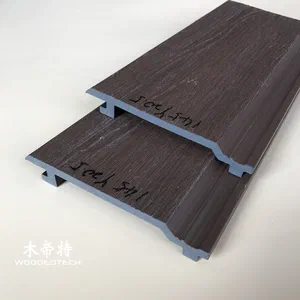 Composite Decking Rails: Key Considerations for Industrial Projects
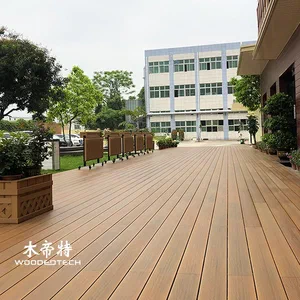 best composite railing Solutions for Industrial Projects in 2026
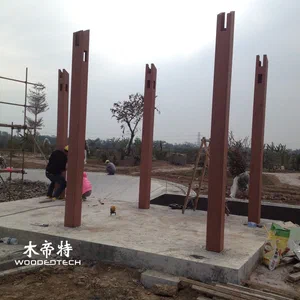 Composite Balcony Decking: Key Benefits and Selection Criteria for Commercial Projects
 Composite Deck Posts: Industrial Applications, Material Benefits, and Selection Criteria
Related Products
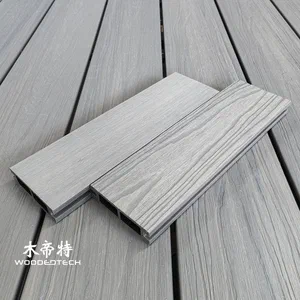 3DGL9024 Composite Railing Kits Feature Premium Co Extruded 3D Embossed Antique Wood Grain Texture with Realistic Natural Wood Fibers
 10' composite deck railing allows customized styles and dimensions for various landscape and building projects
 Composite deck railing adds attractive colors and aesthetic value to municipal landscape applications