
Composite Decks and Railings: Performance, Durability, and Industry Standards
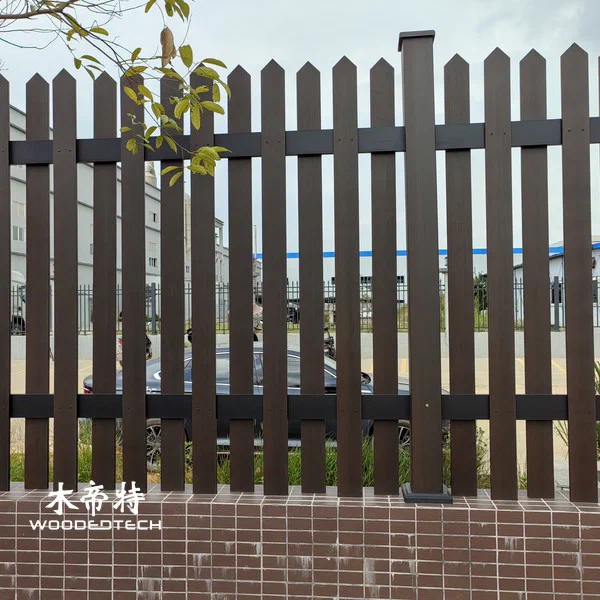
Composite decks and railings must withstand continuous exposure to sunlight, rain, temperature changes, moisture, and everyday loading. Before shipment, outdoor wood plastic composite (WPC) products should undergo a structured quality inspection covering dimensional accuracy, density, impact resistance, water absorption, color stability, bending strength, and surface appearance. These tests help manufacturers verify product consistency, reduce installation problems, and ensure that composite decking and railing systems meet the requirements of their intended applications.
1. Dimensional Accuracy: Checking Manufacturing Consistency
Dimensional accuracy is one of the first checks performed on composite decking boards and railing profiles. Even small variations in thickness, width, length, or profile geometry can create installation difficulties, uneven joints, and inconsistent gaps between components.
Quality inspectors use calibrated measuring instruments, including digital calipers, micrometers, steel measuring tapes, and thickness gauges. Measurements are taken at multiple positions along each sample to identify variations caused by extrusion instability, cooling conditions, or cutting errors.
The main dimensions checked include:
- Board width, thickness, and overall length
- Wall thickness of hollow decking profiles
- Railing post dimensions and internal structures
- Groove depth and spacing
- Profile straightness and cross-sectional consistency
Inspectors compare the measured values against approved product drawings, customer specifications, and manufacturing tolerances. For international orders, dimensional requirements should be agreed upon before mass production rather than relying on general industry assumptions.
For composite decks and railings, consistent dimensions are particularly important because different components must fit together without excessive adjustment during installation.
2. Density Testing: Evaluating Material Uniformity
Density provides useful information about the consistency of WPC formulations and extrusion processes. Outdoor composite products typically combine wood fiber or wood flour with thermoplastics and additives. Changes in the proportions, mixing quality, or extrusion conditions can affect the finished material’s density.
During inspection, technicians cut representative samples and measure their mass and volume. For regular solid specimens, density is calculated by dividing mass by volume. Hollow profiles require an appropriate method that accounts for the actual material volume rather than simply using the external dimensions.
The results are compared with the manufacturer’s approved production specifications.
Density testing can help identify:
- Inconsistent raw material mixing
- Excessive internal voids
- Poor extrusion compaction
- Unexpected differences between production batches
- Potential weaknesses in the finished profile
However, higher density does not automatically mean better composite decking quality. A well-designed hollow board may perform better than a poorly manufactured solid board. Density should therefore be evaluated alongside mechanical performance and profile design.
3. Impact Resistance: Assessing Resistance to Sudden Loads
Outdoor decking and railing products may experience accidental impacts from dropped tools, outdoor furniture, gardening equipment, and other objects. Impact resistance testing helps determine whether a product is likely to crack, chip, or fracture under sudden loading.
A common laboratory approach uses a controlled falling-weight impact test. A specified weight is released from a predetermined height onto the sample, and inspectors examine the resulting damage. Depending on the product and applicable test method, impact energy, cracking, deformation, and failure characteristics may be recorded.
For WPC decking boards, testing should consider both the exposed surface and the structural profile. Hollow boards and solid boards can respond differently to impact because their internal geometries are not the same.
Railing components also require attention, particularly posts, connectors, and handrail sections. Since railing systems contribute to fall protection, their structural safety cannot be established through impact testing alone. Appropriate system-level loading tests and applicable building code requirements must also be considered.
A consistent testing procedure allows manufacturers to compare production batches and identify material or processing changes that could reduce product reliability.
4. Water Absorption: Measuring Moisture Resistance
Moisture exposure is a major consideration for outdoor composite decks and railings. Rainwater, humidity, standing water, and repeated wetting and drying can influence the physical properties of WPC materials.
Water absorption testing measures how much moisture a sample takes in under controlled conditions.
The typical procedure involves:
- Preparing samples with specified dimensions.
- Drying them under controlled laboratory conditions until a stable initial mass is obtained.
- Recording the initial dry mass.
- Immersing the samples in water for a specified period and temperature.
- Removing surface water and measuring the final mass.
- Calculating the percentage increase in mass.
The water absorption rate can be calculated using:
Water absorption (%) = [(Wet mass - Dry mass) / Dry mass] × 100

Lower water absorption generally indicates better moisture resistance, although results depend on the formulation, surface structure, and test conditions.
Inspectors should also check for swelling, warping, surface deterioration, and changes in mechanical performance after water exposure. For co-extruded decking, the protective outer layer should be inspected for damage that could expose the underlying core.
It is important to remember that low water absorption does not automatically make a product waterproof. Installation details, drainage, ventilation, and expansion gaps remain essential to long-term performance.
5. Color Stability: Evaluating Resistance to UV Exposure
Outdoor composite products are exposed to sunlight throughout their service life. Ultraviolet radiation can gradually affect pigments, polymers, and surface additives, potentially causing fading, discoloration, or uneven appearance.
Color stability testing helps manufacturers evaluate how well decking boards and railing components maintain their original appearance under simulated outdoor conditions.
Accelerated weathering equipment, such as xenon-arc or fluorescent UV testing chambers, can expose samples to controlled light, temperature, and moisture cycles.
Inspectors typically evaluate:
- Initial color consistency between samples
- Color changes after accelerated exposure
- Surface fading and discoloration
- Differences between exposed and protected areas
- Surface cracking, chalking, or degradation
Color differences can be measured using a spectrophotometer and expressed as a color difference value, such as ΔE.
Testing duration, exposure conditions, and acceptance limits should be established according to the relevant standard and product requirements. Accelerated laboratory testing is useful for comparative evaluation, but it cannot provide an exact prediction of outdoor service life.
For manufacturers supplying different colors of composite decking, color stability testing is especially important because dark and light finishes may respond differently to heat and sunlight.
6. Bending Strength: Verifying Structural Performance
Bending strength is an important mechanical property for composite decking boards because these products must support people, furniture, and other loads without excessive deformation or fracture.
A typical bending test uses a universal testing machine equipped with a three-point or four-point bending fixture. The sample is positioned across two supports, and a controlled load is applied until the specified deformation or failure point is reached.
The test can record:
- Maximum load before failure
- Flexural strength
- Flexural modulus
- Deflection under specified loading
- Failure characteristics
The results help manufacturers assess whether their WPC formulations and extrusion processes provide consistent mechanical performance.
For hollow decking boards, the internal structure, wall thickness, and support spacing can significantly influence bending behavior. Therefore, test specimens should reflect the actual commercial profile rather than relying on unrelated material samples.
Composite railings require additional structural evaluation. Posts, handrails, balusters, brackets, and connection systems must be assessed as an assembled system under relevant horizontal and vertical loads. Local building regulations may impose specific requirements for guardrail height, load resistance, and connection strength.
Passing a material bending test alone does not demonstrate that a complete railing installation complies with building codes.
7. Appearance Inspection: Final Quality Control Before Shipment
Appearance inspection is the final opportunity to identify visible manufacturing defects before outdoor WPC products are packed and dispatched.
Inspectors usually perform visual checks under consistent lighting conditions, comparing finished products with approved samples, drawings, and customer requirements.
Common inspection points include:
- Scratches, dents, cracks, and chipped edges
- Uneven colors or visible color differences
- Surface bubbles, holes, and extrusion marks
- Inconsistent wood-grain embossing
- Deformation, twisting, and uneven cutting
- Contamination, stains, and rough surface areas
- Damaged protective coatings or co-extruded layers
For composite railing systems, inspectors should also verify component compatibility, surface finish, hole positioning, connector quality, and accessory quantities.
A practical pre-shipment inspection should include random sampling from finished production batches. The sampling plan, acceptable quality limits, defect classifications, and inspection criteria should be agreed upon before production begins.
Manufacturers should also retain inspection records, including product identification, batch numbers, measurement results, photographs, and test reports. These documents provide traceability if a customer reports quality problems after delivery.
Industry Standards and Pre-Shipment Quality Documentation
Testing procedures should be selected according to the product’s intended market, construction application, and material composition. ASTM and EN standards provide commonly used frameworks for evaluating composite decking and related building products. Depending on the market and application, relevant references may include ASTM D7032 for wood-plastic composite decking and guardrail systems, ASTM D6109 for flexural properties of plastic lumber and shapes, and EN 15534 for wood-plastics composites.
Not every test applies to every product, and a standard’s scope should be checked before claiming compliance. Railing systems may also need independent evaluation against applicable structural loading and building code requirements.
A reliable pre-shipment quality report should contain:
- Product specifications and approved drawings
- Raw material and production batch information
- Dimensional measurement records
- Density and water absorption results
- Impact and bending test results
- UV weathering and color comparison records
- Appearance inspection photographs
- Packaging condition and final inspection status
For international buyers, requesting these records before shipment provides a clearer picture of manufacturing consistency than relying on product samples or promotional claims alone.
A dependable composite decking and railing supplier should be able to explain its testing methods, demonstrate repeatable production quality, and provide traceable inspection documentation. These practices help buyers reduce the risk of receiving inconsistent products and support better performance across outdoor residential, commercial, and landscaping projects.
Related Articles
Related Products
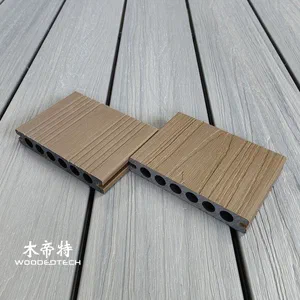 GD13823-3 Teak TK Co Extruded Decking Is a Popular Choice from Composite Decking Suppliers for Outdoor Flooring Projects
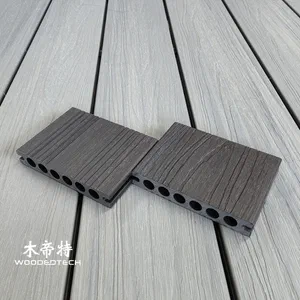 GD13823-3 Walnut WN Co Extruded Decking Features a Dark Rich Color That Helps Resist Visible Dirt and Stains
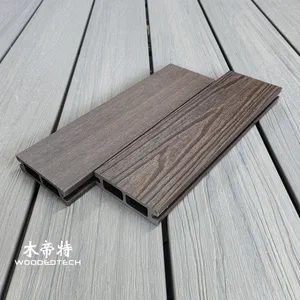 3DGL9024 Composite Decks and Railings Feature Premium Co Extruded 3D Embossed Rosewood Grain Texture with Realistic Natural Wood Fibers