
Composite Decking vs Wood Decking: A Commercial Buyer’s Guide to Performance and Cost
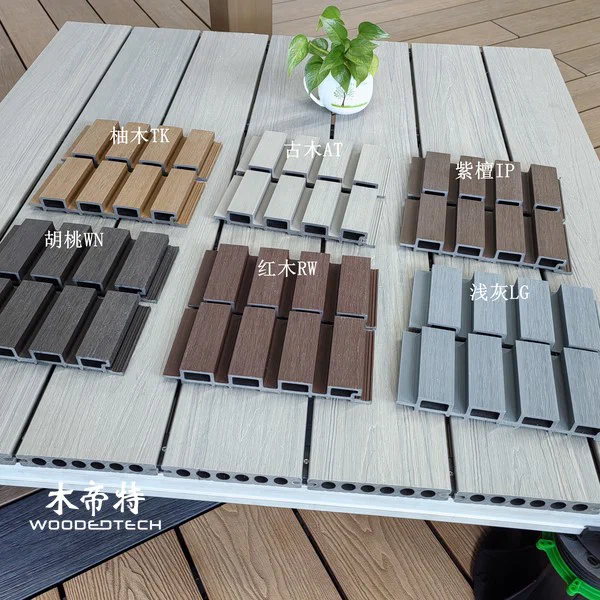
Outdoor decking selection has a direct impact on a commercial project’s installation budget, maintenance workload, service life, and long-term operating costs. Composite decking and natural wood both offer attractive outdoor finishes, but they perform differently under moisture, sunlight, temperature changes, and heavy foot traffic. For commercial buyers, the right choice depends on the total lifecycle cost rather than the initial material price alone.
1. Composite Decking vs Natural Wood: Understanding the Differences
Wood plastic composite (WPC) decking combines wood fibers or wood flour with thermoplastics and additives. It is manufactured into boards designed to provide a wood-like appearance with improved resistance to common outdoor conditions. Depending on the product, formulations, surface treatments, and manufacturing processes, WPC decking can offer more consistent dimensions and lower routine maintenance requirements than traditional timber.
Natural wood decking uses solid timber, including pressure-treated pine, cedar, hardwood, and tropical species such as teak and ipe. Its natural grain, texture, and appearance remain attractive for hotels, resorts, residential developments, and landscape projects. However, timber is a natural material that responds to moisture and environmental changes. It can absorb water, expand, shrink, crack, warp, and develop surface discoloration over time.
For commercial applications, the distinction is practical. WPC provides more predictable maintenance requirements, while natural wood offers authentic material character but generally requires more frequent care. Buyers should evaluate the intended service environment, expected traffic, and available maintenance resources before choosing either option.
2. Performance Comparison: WPC, Timber, Aluminum, and Other Materials
Different exterior decking materials serve different project requirements. Comparing their performance helps purchasing teams avoid selecting a product based solely on appearance or price.
| Material | Main Advantages | Main Disadvantages |
|---|---|---|
| WPC decking | Low routine maintenance, wood-like appearance, moisture resistance | Thermal expansion, potential fading, surface scratching |
| Natural timber | Authentic grain, natural appearance, repairable surfaces | Rot, insects, splintering, regular treatment |
| Pressure-treated wood | Relatively affordable, widely available | Chemical treatment requirements, weathering, maintenance |
| Aluminum decking | Lightweight, corrosion-resistant when properly specified, non-combustible | Higher initial cost, metallic appearance, heat transfer |
| PVC decking | No wood fibers, moisture resistance, low maintenance | Plastic appearance, thermal movement, product quality variations |
| Natural stone | Durable, premium appearance, strong wear resistance | Heavy weight, higher installation costs, potentially slippery surfaces |
| Ceramic or porcelain tiles | Color stability, easy cleaning, wide design selection | Requires suitable substrate and installation, impact damage risk |
WPC decking is particularly suitable for outdoor terraces, balconies, poolside areas, commercial walkways, and hospitality landscaping where buyers want a wood-like finish without continuous timber treatment. However, not all composite products offer the same performance. Board density, polymer content, protective caps, UV stabilizers, and internal structure influence durability.
Aluminum is worth considering for projects with strict fire-performance requirements or demanding structural specifications. It does not rot or suffer insect damage, although surface coatings, corrosion resistance, thermal behavior, and slip resistance still need evaluation.
Natural stone and porcelain are alternatives when a project prioritizes a mineral finish and high surface hardness. Their greater weight and installation requirements can make them less practical for certain elevated decks and balcony structures.
3. Maintenance Requirements and Long-Term Operating Costs
Maintenance is one of the biggest differences between composite decking and natural wood. Timber decking typically requires regular cleaning, inspection, sanding, staining, or sealing. The frequency depends on the wood species, climate, exposure, and protective treatment. In commercial environments, these activities can create additional labor costs and temporarily restrict access to outdoor spaces.

WPC decking generally requires less intensive maintenance. Routine care usually involves sweeping away debris and washing the surface with water and an appropriate cleaning solution. Buyers should still inspect the installation for loose fasteners, drainage problems, damaged boards, and movement at joints.
Capped composite decking adds a protective polymer layer around the board, helping reduce moisture absorption, staining, and surface fading compared with many uncapped products. Co-extrusion technology can provide additional surface protection, although actual performance depends on the cap material, thickness, bonding quality, and manufacturing standards.
A realistic maintenance budget should account for:
- Routine cleaning and labor.
- Protective coatings and surface treatments.
- Replacement of damaged or deteriorated boards.
- Inspection of fasteners and supporting structures.
- Access restrictions during maintenance.
- Disposal and replacement costs at the end of service life.
For properties with large decking areas, such as hotels, shopping centers, and public facilities, reducing maintenance frequency can create meaningful operational savings.
4. Initial Purchase Price vs Lifecycle Cost
Natural softwood is often cheaper to purchase than premium composite decking. This can make timber attractive for projects with tight upfront budgets or relatively short service requirements. However, the initial material quotation does not represent the full cost of ownership.
WPC decking generally involves a higher initial material investment than basic pressure-treated timber. In return, buyers may save on staining, sealing, sanding, and premature board replacement. Premium capped composite products can cost more than standard WPC, but their protective surfaces may be valuable in exposed commercial environments.
A commercial lifecycle cost assessment should include five major elements:
- Material purchase: Compare the cost per square meter, including board specifications and required accessories.
- Installation: Consider substructure materials, joists, clips, fasteners, labor, and site preparation.
- Maintenance: Estimate annual cleaning, inspection, treatment, and repair expenses.
- Replacement: Evaluate expected service life under the actual environmental and traffic conditions.
- Disposal: Include removal, transportation, and waste-management costs.
For example, a low-cost timber deck may become more expensive over time if it needs repeated refinishing and board replacement. A composite installation may offer a lower total cost over the same evaluation period, particularly where labor is expensive.
However, this outcome is not guaranteed. Buyers should request documented product specifications, warranty conditions, installation instructions, and realistic service-life information rather than assuming every WPC product will outperform timber.
5. How to Select the Right Decking for Commercial Projects
Material selection should begin with the project’s operating conditions. Coastal developments need materials and fasteners suitable for salt exposure. Poolside installations require appropriate slip resistance and resistance to repeated wetting. Rooftop terraces need careful consideration of structural loading, drainage, ventilation, and thermal movement.
For high-traffic commercial areas, buyers should examine abrasion resistance, impact resistance, load-bearing requirements, surface texture, and the manufacturer’s recommended joist spacing. Fire classification and local building-code compliance should also be checked, especially for hotels, commercial buildings, and public facilities.
When sourcing WPC decking, procurement teams should request samples and compare the actual surface finish, dimensions, color consistency, and structural characteristics. It is also important to establish whether the boards are solid, hollow, uncapped, or fully capped, since these configurations have different performance and pricing implications.
Supplier evaluation should extend beyond the product quotation. Manufacturing consistency, quality-control procedures, production capacity, technical support, replacement-board availability, and export experience all influence the reliability of a long-term supply arrangement.
6. Making a Cost-Effective Material Investment
Composite decking is a strong option for commercial buyers who prioritize reduced routine maintenance, consistent appearance, and long-term outdoor usability. Natural wood remains relevant where authentic timber aesthetics, traditional construction, and lower initial material costs are more important. Aluminum, PVC, stone, and porcelain provide alternatives for projects with specific structural, fire, moisture, or design requirements.
The most cost-effective choice is the material that meets the project’s technical requirements while controlling installation, maintenance, and replacement expenses throughout its expected service life. Comparing complete lifecycle costs, rather than relying on purchase price alone, gives developers, contractors, distributors, and procurement teams a more reliable basis for selecting exterior decking.
Related Articles
Related Products
 GD13820 M Shape Co Extruded Composite Deck Planks Feature a Special Profile Design for Distinctive Outdoor Decking Applications
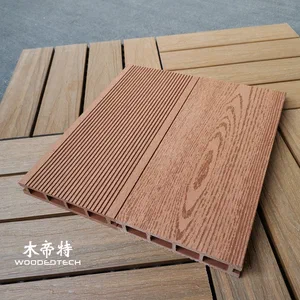 The Classic D14025-4 Red Wood WPC Wood Sheet Features a Timeless 2D Flat Wood Grain Design That Remains Popular After Twenty Years
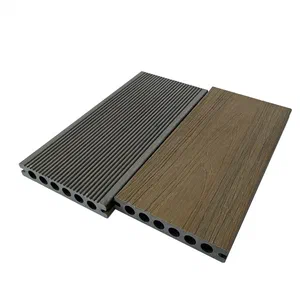 GD14023 Composite Decking Versus Wood Decking Features a Round Hole Structure with Semi Capped Co Extrusion