
Composite Decking Sq Ft Price: 2026 Cost Analysis for B2B Buyers
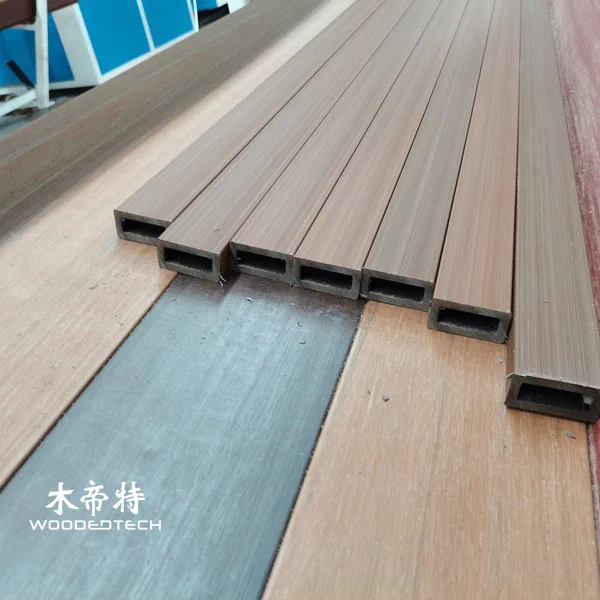
Composite decking sq ft price in 2026 depends on board construction, material composition, surface treatment, production volume, and supplier location. For B2B buyers, wholesale material prices typically vary significantly between hollow, solid, capped, and co-extruded WPC decking. Understanding these cost factors helps importers, distributors, contractors, and project developers compare quotations and calculate the actual cost of supplying composite decking.
2026 Composite Decking Price Per Square Foot
When evaluating composite decking cost, buyers should distinguish between the factory price of decking boards and the complete installed cost. A manufacturer’s quotation may cover only the boards, excluding substructure materials, accessories, packaging, international freight, import duties, and installation.
For international wholesale purchasing, indicative 2026 material price ranges can be used for preliminary budgeting. Actual quotations depend on specifications, order quantities, raw material costs, and destination markets.
| Composite decking type | Indicative material price (USD/sq ft) |
|---|---|
| Hollow WPC decking | $1.50–$3.00 |
| Solid WPC decking | $2.50–$4.50 |
| Capped composite decking | $3.00–$5.50 |
| Co-extrusion composite decking | $3.50–$6.50 |
| Premium customized WPC decking | $5.00–$8.00+ |
These figures are planning estimates rather than fixed market quotations. Buyers should request current factory pricing based on board dimensions, profile weight, surface finish, and order volume.
Hollow composite decking generally offers a lower entry price because it uses less material per board. It is suitable for residential outdoor areas and projects where the installation structure meets the manufacturer’s load requirements. Solid decking uses more material and typically provides greater mass and a different structural performance profile, making it relevant for applications requiring heavier-duty boards.
Capped and co-extruded products usually command higher prices because of their protective outer layers and additional manufacturing processes.
What Determines Composite Decking Cost?

Material composition is one of the most important factors affecting the square-foot price. WPC decking commonly combines wood flour or wood fiber with thermoplastic polymers and processing additives. The proportion and quality of these ingredients influence board density, dimensional stability, surface appearance, and weather resistance.
A manufacturer using consistent raw materials and controlled formulations may offer better long-term product performance than a supplier competing solely on low initial pricing. Buyers should evaluate material specifications, production consistency, and test reports rather than comparing quotations by price alone.
Board dimensions also affect the final cost. Common specifications include different widths, thicknesses, lengths, and internal profile structures. Thicker boards and heavier profiles generally consume more raw material, increasing the cost per linear foot. However, square-foot pricing also depends on the actual usable coverage width.
Surface treatment is another pricing consideration. Standard brushed finishes, wood-grain embossing, and 3D embossed textures involve different processing requirements. Protective polymer caps and co-extrusion layers add further manufacturing costs but can improve resistance to moisture, staining, fading, and everyday wear.
Color selection can also influence wholesale pricing. Standard production colors are often more economical, while custom colors may require additional formulation work, production adjustments, or minimum order quantities.
How to Calculate the Real Cost Per Square Foot
For importers and project contractors, the factory price is only the starting point. A reliable purchasing budget should include all expenses required to deliver usable decking materials to the project location.
A practical landed-cost calculation is:
Landed cost per sq ft = (Product cost + Packaging + Freight + Insurance + Import duties + Handling fees) ÷ Total usable coverage area.
For example, consider a wholesale order containing 10,000 sq ft of composite decking:
| Cost item | Estimated cost |
|---|---|
| Factory product cost at $3.20/sq ft | $32,000 |
| Packaging and loading | $800 |
| International freight and insurance | $3,500 |
| Import duties and handling | $2,000 |
| Total landed cost | $38,300 |
The resulting landed cost is $3.83 per sq ft, before local warehousing, installation labor, and additional project expenses.
This calculation helps buyers avoid underestimating procurement budgets. It also makes it easier to compare suppliers operating under different shipping terms, such as FOB, CIF, and DDP.
Another important consideration is installation waste. Decking projects may require additional boards for cutting, trimming, pattern alignment, and replacement. Depending on the layout and installation method, buyers can include an additional 5%–10% material allowance in their purchasing calculations.
Wholesale Pricing: Why Order Quantity Matters
For B2B buyers, purchasing volume has a direct influence on the final composite decking price. Larger orders allow manufacturers to optimize raw material purchasing, extrusion schedules, machine utilization, and packaging operations.
Small trial orders generally have higher unit costs because production setup and handling expenses are distributed across fewer boards. Full-container orders can offer more competitive pricing, particularly when buyers select standard profiles and colors.
When requesting a wholesale quotation, provide the following information:
- Required decking profile and dimensions
- Hollow, solid, capped, or co-extruded construction
- Preferred colors and surface textures
- Total square footage or container quantity
- Required board lengths and packaging specifications
- Destination port and preferred shipping terms
- Estimated annual purchasing volume
For distributors and private-label buyers, long-term supply agreements can also help stabilize procurement costs. Consistent product specifications reduce the need for repeated production adjustments and simplify inventory management.
Choosing the Right WPC Decking Manufacturer
A competitive composite decking price should be supported by reliable manufacturing capabilities. International buyers need a supplier that can maintain consistent product quality across repeat orders while meeting the technical requirements of different markets.
Before placing a bulk order, evaluate the manufacturer’s extrusion equipment, raw material sourcing, quality inspection procedures, and customization capabilities. Ask for product samples to assess surface texture, color consistency, dimensions, and connection compatibility.
Relevant technical documentation may include water absorption, flexural strength, slip resistance, dimensional stability, and UV weathering test results. Testing should follow appropriate standards for the intended market and application.
Manufacturers offering OEM and ODM services can also support custom colors, board profiles, embossed patterns, and branded packaging. These options are particularly valuable for importers developing their own composite decking product lines.
A well-managed WPC factory should be able to explain how its production process affects board performance and pricing. Transparent quotations, realistic lead times, and clear quality requirements provide a stronger foundation for long-term cooperation than the lowest initial offer.
Making a Better Purchasing Decision in 2026
The best composite decking price per square foot is not necessarily the lowest factory quotation. B2B buyers should compare material specifications, product performance, landed costs, production capacity, and supplier reliability before selecting a manufacturer.
For distributors, contractors, and building material wholesalers, balancing initial purchasing costs with expected product service life can improve project profitability. Requesting comparable samples and detailed quotations from several manufacturers is a practical way to identify the right product for each market.
Working directly with an experienced wood plastic composite decking manufacturer can also reduce unnecessary sourcing costs, improve customization flexibility, and support more consistent supply. With accurate specifications and a clear understanding of total procurement expenses, buyers can make more informed composite decking investments in 2026.
Related Articles
 How Much Does Composite Decking Cost per Square Metre? A B2B Guide
 Composite Decks Cost: 2026 Pricing Analysis and Key Industrial Factors
 Composite Decking Cost vs Wood: Evaluating Procurement and Lifecycle Expenses
 Composite Pricing Strategies: Key Factors for Industrial Procurement and Cost Management
Related Products
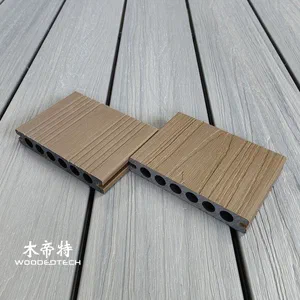 GD13823-3 Teak TK Co Extruded Decking Is a Popular Choice from Composite Decking Suppliers for Outdoor Flooring Projects
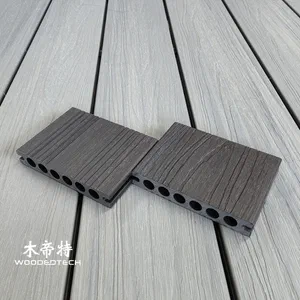 GD13823-3 Walnut WN Co Extruded Decking Features a Dark Rich Color That Helps Resist Visible Dirt and Stains
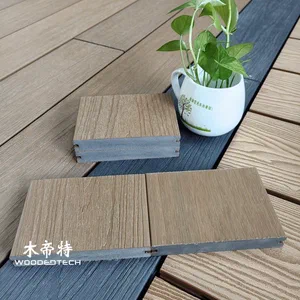 The GD14020S Composite Decking on Sale Features a Solid Core Structure Designed to Withstand Extreme Outdoor Temperature Changes and Freezing Conditions