
Composite Decking Sizes: Standard Dimensions and Specifications for B2B Buyers
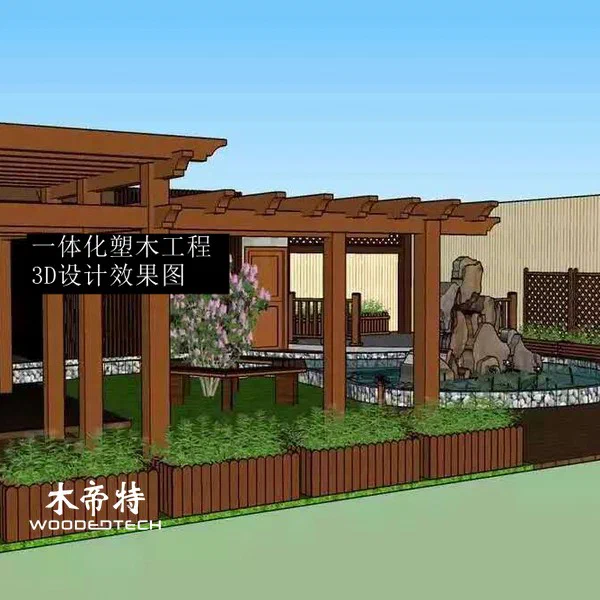
Composite decking sizes are not defined by board width and thickness alone. For B2B buyers, the right dimensions depend on profile geometry, hollow or solid construction, internal rib arrangements, surface design, material formulation, and installation requirements. Understanding these factors helps importers, distributors, contractors, and project developers select decking boards that balance structural performance, material consumption, production cost, and installation efficiency.
1. Standard Composite Decking Dimensions
Composite decking manufacturers typically offer several standard dimensions to suit residential, commercial, and landscaping applications. Although specifications vary by manufacturer and market, common dimensions provide a useful starting point for procurement.
Typical WPC decking dimensions include:
| Specification | Common Dimension Range |
|---|---|
| Board width | 135–150 mm |
| Board thickness | 20–25 mm |
| Board length | 2.2–5.8 m |
| Surface thickness | Depends on construction |
| Weight | Depends on profile and density |
For example, a 140 × 25 mm decking board is a common configuration for outdoor applications. Narrower profiles may suit decorative installations, while wider boards can reduce the number of boards required to cover a given area.
Length selection also affects shipping and installation. Longer boards reduce the number of end joints, but increase handling requirements and may create transportation challenges. For international orders, buyers should compare available lengths with container loading efficiency and local project dimensions.
These dimensions should be treated as reference ranges rather than universal standards. Buyers should always confirm actual production tolerances, usable coverage width, and dimensional consistency with the manufacturer before placing bulk orders.
2. How Hollow and Solid Structures Affect Performance
The internal structure is one of the most important considerations in WPC extrusion mold design. Two decking boards with identical external dimensions can have significantly different weights, mechanical properties, and manufacturing costs.
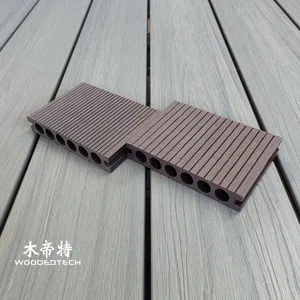
Hollow composite decking uses internal cavities to reduce material consumption. This design makes boards lighter and generally lowers raw material costs. It also improves handling efficiency, particularly for large commercial orders where total shipment weight matters.
However, cavity dimensions must be carefully engineered. Excessively large hollow sections can reduce bending resistance and make boards more vulnerable to localized loads. Wall thickness, cavity spacing, and the distribution of supporting material all influence structural stability.
Solid composite decking contains more material throughout its cross-section. It generally offers greater resistance to localized impact and provides a more substantial profile. This makes it suitable for applications involving heavier loads or demanding installation conditions.
The trade-off is higher material consumption, increased product weight, and potentially greater transportation costs.

For B2B buyers, the decision should be based on intended application rather than assuming that heavier boards always deliver better value. Hollow profiles can perform reliably when properly engineered, while solid profiles may offer advantages where additional structural support is required.
3. Internal Rib Design and Structural Strength
Internal ribs connect the upper and lower walls of hollow decking profiles. Their arrangement determines how efficiently the board distributes loads and maintains its shape.
Common rib configurations include:
- Vertical ribs: Provide direct support between the upper and lower surfaces and help resist compression.
- Multiple narrow ribs: Distribute loads across several internal support points and improve structural stability.
- Grid-like structures: Create multiple connected chambers, helping balance stiffness and material consumption.
- Reinforced edge structures: Improve support around fastening areas and reduce the risk of edge damage.
Rib thickness and spacing must be considered together. Increasing rib thickness can improve local strength, but excessive reinforcement adds material and may increase extrusion resistance.
The extrusion mold must also maintain consistent material flow through narrow rib sections. Poor flow balance can cause uneven wall thickness, internal stress, deformation, or dimensional inconsistency.
A well-designed profile does not simply maximize the number of ribs. It uses an efficient arrangement to achieve the required load performance with controlled material consumption.
4. Surface Patterns and Their Influence on Installation
Surface patterns affect more than appearance. They also influence slip resistance, cleaning requirements, wear behavior, and the manufacturing process.
Common surface treatments include:
- Wood-grain embossing: Creates a natural timber appearance and supports premium product positioning.
- Grooved surfaces: Provide a traditional decking appearance and can help create defined drainage paths.
- Brushed textures: Produce a relatively subtle surface finish suitable for contemporary outdoor spaces.
- Deep embossed patterns: Add visual depth and texture but require more attention to mold design and cleaning.
Surface geometry can influence installation performance because it affects board orientation, joint alignment, and the positioning of concealed fastening systems.
For example, grooved decking requires compatible clips and fastening arrangements. Buyers should verify groove dimensions, clip engagement depth, and edge spacing before approving a production specification.
Deep surface textures may also require more careful cleaning and maintenance. Manufacturers should evaluate texture depth and consistency to ensure that decorative features do not compromise the usable surface or create unnecessary manufacturing defects.
5. Dimensions, Cost, and Installation Compatibility
Choosing composite decking sizes requires evaluating the relationship between board geometry and the complete installation system.
A wider board may reduce installation time because fewer boards are needed to cover the same area. However, wider profiles may require additional stiffness to control deflection. Thicker boards can provide greater structural capacity, but they also increase material consumption and may require adjustments to fastening details.
The following factors should be included in a purchasing specification:
- Overall width and thickness, including acceptable manufacturing tolerances.
- Actual coverage width after accounting for installation gaps.
- Hollow or solid profile construction and minimum wall thickness.
- Rib configuration and internal chamber dimensions.
- Surface texture, embossing depth, and finish consistency.
- Board length and permitted length tolerances.
- Clip compatibility and recommended joist spacing.
- Expansion gaps and installation requirements for temperature changes.
Thermal expansion deserves particular attention in outdoor WPC decking. Composite materials respond to temperature changes, so installation gaps and fixing arrangements must follow the manufacturer’s tested recommendations. Incorrect spacing can lead to buckling, joint movement, or uneven board alignment.
For distributors and project contractors, these details should be confirmed before production rather than adjusted after shipment.
6. Custom WPC Extrusion Profiles for Different Markets
Standard dimensions are convenient for mass production, but customized profiles can provide better solutions for specific markets and applications.
A professional WPC extrusion mold manufacturer can adjust board width, thickness, chamber geometry, rib placement, edge connections, and surface patterns according to project requirements. This allows buyers to develop products with different weight targets, load capacities, visual characteristics, and installation systems.
Before approving a custom mold, buyers should request cross-sectional drawings, dimensional tolerances, material specifications, and sample profiles. Mechanical testing should evaluate relevant properties such as bending strength, stiffness, impact resistance, and dimensional stability.
It is also important to assess production consistency across multiple extrusion runs. A profile that performs well in one sample may still require mold adjustments to maintain uniform wall thickness and reliable fastening dimensions during continuous manufacturing.
For wholesale buyers, the most commercially effective composite decking specification is not necessarily the thickest, widest, or heaviest option. It is the profile that meets the project’s structural requirements, uses material efficiently, fits the intended installation system, and maintains consistent quality at the target production cost.
Related Articles

Related Products
 GD13820 M Shape Co Extruded Composite Deck Planks Feature a Special Profile Design for Distinctive Outdoor Decking Applications
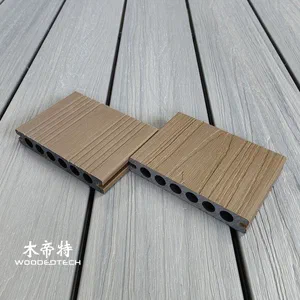 GD13823-3 Teak TK Co Extruded Decking Is a Popular Choice from Composite Decking Suppliers for Outdoor Flooring Projects
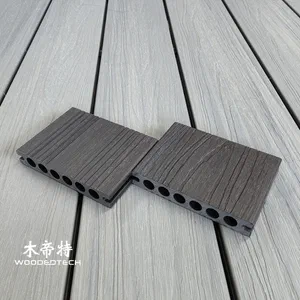 GD13823-3 Walnut WN Co Extruded Decking Features a Dark Rich Color That Helps Resist Visible Dirt and Stains