
Composite Decking Pictures: Industrial Applications, Designs, and Material Specifications
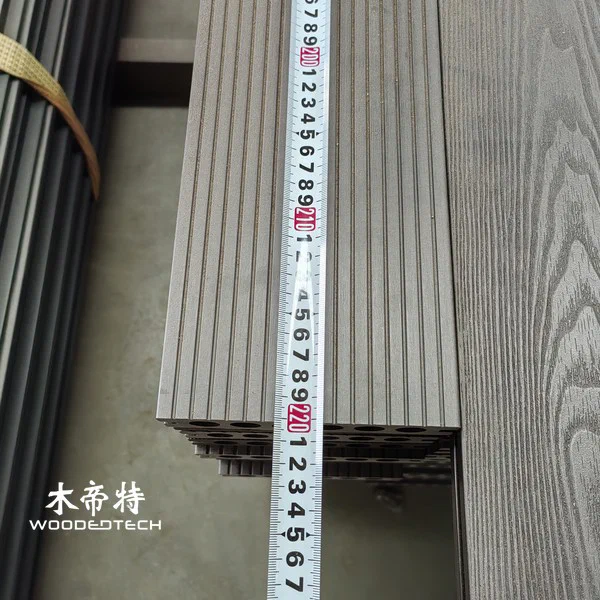
Composite decking pictures help architects, contractors, distributors, and property developers evaluate how wood plastic composite (WPC) materials perform across different industrial and commercial environments. From hotel terraces and public walkways to swimming pool surrounds and commercial outdoor spaces, modern composite decking combines natural wood-inspired aesthetics with durable construction, consistent profiles, and practical installation systems.
Industrial Applications of Composite Decking
Composite decking is increasingly used in commercial landscaping, hospitality projects, public infrastructure, and industrial outdoor areas. Its combination of recycled wood fibers and polymer materials offers an alternative to traditional timber, particularly in environments where regular painting, staining, and surface treatment can increase maintenance costs.
Typical applications include:
- Hotel and resort terraces with high pedestrian traffic.
- Commercial restaurant patios and outdoor dining areas.
- Public parks, waterfront promenades, and pedestrian boardwalks.
- Swimming pool surrounds and recreational facilities.
- Residential developments with shared balconies and rooftop gardens.
- Industrial outdoor platforms and landscaped access areas.
For these projects, material selection should consider expected foot traffic, moisture exposure, UV resistance, load requirements, and local building regulations. Commercial installations may require reinforced substructures, appropriate joist spacing, and tested slip-resistance performance.
Modern Composite Decking Designs and Color Trends
Color selection has a significant influence on the appearance of an outdoor project. Modern composite decking designs increasingly favor natural, architectural color palettes that complement contemporary buildings, landscaping, and exterior furniture.
Popular color options include:
- Light oak and natural teak for warm, welcoming outdoor environments.
- Coffee brown and walnut for sophisticated commercial terraces.
- Charcoal and dark grey for contemporary architectural projects.
- Silver grey and stone-inspired shades for minimalist landscapes.
- Mixed-tone wood finishes for a more natural timber appearance.
The choice of color should reflect the surrounding architecture and intended application. Light colors can create an open, spacious appearance, while darker finishes provide stronger visual contrast against light-colored walls and outdoor furniture.
Beyond color, surface texture is another important design feature. Embossed wood grain, brushed finishes, and realistic timber patterns create visual depth without requiring natural wood maintenance. Three-dimensional embossing can provide a more distinctive appearance, while anti-slip surface treatments may improve traction in suitable outdoor applications.
For large commercial developments, consistent color batches and surface finishes are particularly important. Buyers should request physical samples and confirm production tolerances before placing bulk orders.
Material Specifications and Decking Profiles

Composite decking pictures show the finished appearance, but technical specifications determine whether a product is suitable for a particular project. Buyers should evaluate material composition, board dimensions, profile structure, surface treatment, and mechanical performance.
Common WPC decking specifications include:
| Specification | Typical considerations |
|---|---|
| Material | Wood fibers, polymer, and additives |
| Structure | Solid or hollow profiles |
| Surface | Brushed, embossed, or wood grain |
| Installation | Hidden clips or screw fixing |
| Colors | Teak, walnut, grey, coffee |
| Applications | Residential and commercial outdoor flooring |
Solid composite decking boards are often considered for applications requiring additional mass or specific structural characteristics. Hollow profiles can reduce product weight and material consumption, making them suitable for many standard decking projects when properly engineered and installed.
Co-extrusion technology is another important development. It applies a protective polymer outer layer around the composite core, helping improve resistance to moisture, staining, and surface fading. Actual performance depends on the material formulation, cap thickness, manufacturing quality, and testing conditions.
When comparing suppliers, importers and project contractors should request technical data sheets covering dimensional tolerances, water absorption, bending strength, density, slip resistance, UV performance, and applicable fire classifications. These specifications provide a more reliable basis for comparison than product photographs alone.
Matching Decking with Wall Panels, Fences, and Pergolas
Modern outdoor design increasingly uses coordinated WPC products rather than treating decking as an isolated material. Combining composite flooring with matching wall panels, privacy fences, pergolas, and decorative screens creates a consistent architectural appearance.
Composite wall panels can introduce vertical wood grain patterns or fluted profiles to exterior facades and garden feature walls. Horizontal and vertical arrangements create different visual effects, allowing designers to coordinate wall dimensions with decking board directions.
Composite fences provide privacy and help define outdoor boundaries. Aluminum posts combined with composite infill panels offer a contemporary appearance, while different slat widths and spacing options allow customization for residential developments, hotels, and commercial landscapes.
Pergolas and gazebos extend the usability of outdoor areas by providing shade and creating defined gathering spaces. Modern designs often combine composite decorative elements with aluminum or steel structural components. Depending on the engineering design, adjustable louvers, roof panels, and integrated lighting can further improve functionality.
Modular Designs for Flexible Outdoor Projects
Modular outdoor products are becoming increasingly important for commercial developments and landscaping projects. Standardized decking boards, interlocking tiles, fence panels, and prefabricated pergola components can simplify transportation, installation, and future replacement.
Composite deck tiles are particularly useful for balconies, rooftop terraces, and smaller renovation projects. Their interlocking structure allows installers to create different layouts without constructing a traditional full-scale decking substructure, provided the substrate and drainage conditions are suitable.
For larger developments, modular product systems offer additional advantages:
- Consistent dimensions simplify quantity calculations and procurement.
- Standardized connections help reduce installation complexity.
- Replaceable components make localized repairs easier.
- Coordinated colors support consistent project branding.
- Custom extrusion profiles allow manufacturers to meet specific design requirements.
Manufacturers can also develop custom WPC extrusion profiles for decorative louvers, railing components, planter boxes, outdoor benches, and architectural screens. This approach allows distributors and project developers to build product collections around consistent dimensions, colors, and surface treatments.
Choosing the Right Composite Decking Manufacturer
For importers, wholesalers, contractors, and architectural product distributors, selecting a reliable composite decking manufacturer involves more than comparing prices and appearance. Production capacity, extrusion technology, quality control, customization capabilities, and export experience all influence long-term purchasing decisions.
Before confirming an order, buyers should review product samples, installation instructions, packaging specifications, and independent test reports where applicable. It is also important to confirm the intended application, required board dimensions, substructure design, and local compliance requirements.
A well-developed WPC product range should offer multiple colors, surface textures, profile structures, and matching outdoor accessories. Manufacturers with custom extrusion and OEM capabilities can support projects that require distinctive designs, coordinated product collections, or private-label packaging.
Composite decking pictures provide a useful starting point for evaluating design possibilities, but successful commercial applications depend on matching appearance with measurable material performance. By combining suitable specifications, coordinated outdoor products, and modular installation systems, developers can create attractive outdoor environments designed for practical, long-term use.
Related Articles
Related Products
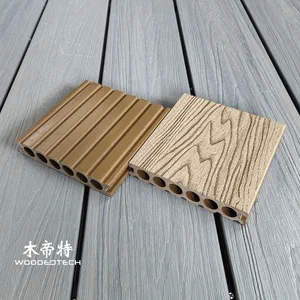
 GD13820 M Shape Co Extruded Composite Deck Planks Feature a Special Profile Design for Distinctive Outdoor Decking Applications
 GD13823-3 Composite Boards for Decking Are Available in Multiple Stock Colors with 3 Meter Lengths and Single Piece Delivery
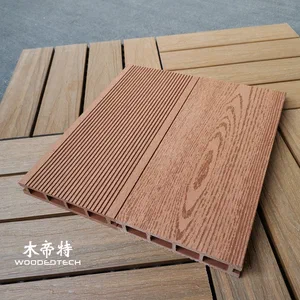 The Classic D14025-4 Red Wood WPC Wood Sheet Features a Timeless 2D Flat Wood Grain Design That Remains Popular After Twenty Years