
Composite Decking Lifespan: Key Factors, Durability, and Long-Term Performance
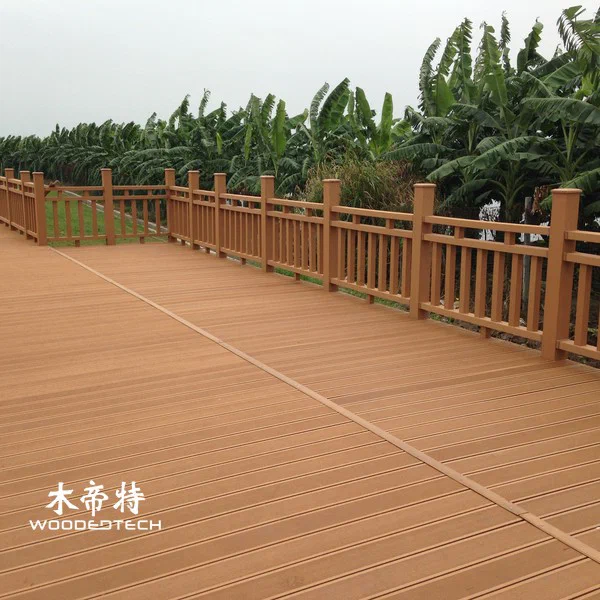
Composite decking lifespan depends on more than the quality of its raw materials. The wood fiber-to-plastic ratio, additive package, manufacturing process, surface protection, and installation conditions all influence how well a deck performs outdoors over time. For WPC manufacturers and buyers, understanding these factors is essential to developing durable products that balance long-term performance with production costs.
1. What Determines the Lifespan of Composite Decking?
High-quality composite decking is designed to withstand outdoor exposure, moisture, temperature fluctuations, and everyday foot traffic. However, not all wood plastic composite (WPC) products offer the same service life. Differences in formulation, raw material selection, processing conditions, and structural design can lead to significant variations in durability.
A well-engineered composite decking board can deliver 15–25 years or more of service under suitable conditions, although actual lifespan depends on product specifications, climate, installation quality, maintenance, and manufacturer testing. This range should be treated as a general industry reference rather than a guaranteed service-life claim.
From a formulation development perspective, long-term durability starts with controlling the interaction between wood fibers and thermoplastic polymers. Wood fibers provide stiffness and a natural appearance, while plastic acts as the binding matrix, helping protect the material against moisture and mechanical stress. Poor compatibility between these components can cause weak bonding, water absorption, surface deterioration, and reduced dimensional stability.
2. Balancing Wood Fiber and Plastic Content
The wood-to-plastic ratio is one of the most important variables in WPC formulation design. A typical outdoor decking formulation contains approximately 50–60% wood fiber and 30–40% plastic, with the remaining percentage allocated to additives. The exact proportions depend on the polymer type, target application, extrusion equipment, and required performance.
Increasing wood fiber content can reduce raw material costs and improve stiffness. However, excessive wood content may increase water absorption, swelling, and the risk of cracking. It can also make processing more challenging if the polymer cannot adequately coat and bind the fibers.
Increasing the plastic ratio generally improves moisture resistance and helps strengthen the bonding structure. However, higher polymer content increases material costs and may affect surface hardness, stiffness, and processing behavior.

For outdoor decking, the objective is not simply to maximize either component. It is to establish a formulation that provides sufficient mechanical strength, low water absorption, stable dimensions, and consistent extrusion quality at a competitive cost.
Manufacturers should also consider wood fiber particle size, moisture content, and distribution. Proper drying and uniform dispersion help prevent internal voids, weak interfaces, and surface defects that may shorten product lifespan.
3. Additives That Improve Long-Term Durability
Even a well-balanced wood-plastic ratio cannot deliver reliable outdoor performance without an appropriate additive package. Additives protect the material during processing and help maintain its properties throughout years of environmental exposure.
Key additives include:
- UV stabilizers: Reduce ultraviolet-related degradation, helping limit fading, surface deterioration, and loss of mechanical properties.
- Antioxidants: Protect polymers against oxidation caused by heat, oxygen, and long-term environmental exposure.
- Coupling agents: Improve the bonding between hydrophilic wood fibers and hydrophobic plastics, reducing interfacial weakness and improving mechanical performance.
- Lubricants: Improve melt flow, reduce processing friction, and support stable extrusion.
- Moisture-control additives: Help manage moisture-related problems during processing and improve the consistency of the final product.
- Pigments and colorants: Provide consistent appearance and help manufacturers develop different decking colors and finishes.
The selection and dosage of each additive should be based on the polymer system, wood fiber characteristics, processing temperature, and intended outdoor environment. Adding more additives does not automatically produce a better product. Excessive loading can increase costs, interfere with compatibility, or negatively affect mechanical properties.
A properly optimized formulation delivers better performance through balanced additive selection rather than unnecessary ingredient loading.
4. Why Co-Extrusion Can Extend Composite Decking Lifespan
Surface protection is another major factor influencing long-term performance. Traditional uncapped composite decking exposes its wood-plastic core directly to the environment. Over time, repeated exposure to moisture, sunlight, dirt, and temperature changes may contribute to staining, fading, and surface wear.
Co-extrusion technology addresses these challenges by combining a structural WPC core with a protective polymer-rich outer layer during manufacturing. This capped structure creates an additional barrier against moisture, UV exposure, stains, and everyday surface damage.
For manufacturers targeting premium outdoor markets, co-extrusion decking can offer several advantages:
- Improved resistance to moisture penetration.
- Better color retention under outdoor exposure.
- Increased resistance to stains and surface wear.
- Reduced maintenance requirements.
- More consistent surface appearance over time.
However, the quality of capped composite decking depends on more than the protective layer itself. The core formulation must provide sufficient structural strength, while the outer layer must achieve reliable adhesion and consistent coverage. Poor bonding between the two layers can lead to delamination, undermining the benefits of co-extrusion.
5. Application-Specific Formulation and Cost Control
A successful WPC development strategy should consider the intended application rather than relying on one universal formulation. Decking requires good flexural strength, impact resistance, slip resistance, and dimensional stability. Outdoor wall cladding places greater emphasis on weather resistance, color stability, and resistance to thermal movement.
Fencing products need adequate impact strength and structural rigidity, while pergolas require carefully engineered profiles that can withstand outdoor exposure and application-specific mechanical loads. Landscape products such as planter boxes, garden benches, and decorative panels also require suitable moisture resistance and structural performance.
Cost control should focus on the total product lifecycle rather than simply reducing raw material expenses. Recycled plastics and properly processed wood residues can help lower material costs and support sustainable manufacturing. However, variations in recycled material quality must be controlled to maintain consistent product performance.
Manufacturers should evaluate material costs alongside extrusion efficiency, production waste, quality rejection rates, maintenance requirements, and expected service life. A slightly more expensive formulation may offer better commercial value if it reduces warranty claims, product failures, and replacement frequency.
6. Testing and Manufacturing Controls for Longer Service Life
Formulation development must be supported by systematic testing. Laboratory evaluation helps manufacturers identify weaknesses before products enter commercial production.
Important performance tests include water absorption, thickness swelling, flexural strength, impact resistance, dimensional stability, accelerated UV weathering, and freeze-thaw resistance where relevant. Surface abrasion and slip-resistance testing are also important for decking applications.
Manufacturing consistency is equally important. Wood fiber moisture, polymer melt temperature, extrusion speed, cooling conditions, and die design must be controlled to prevent internal defects and inconsistent product dimensions.
For manufacturers supplying international markets, testing should follow relevant application-specific standards and customer requirements. Accelerated weathering results are useful for comparing formulations, but they should not be presented as direct proof of a specific number of years of outdoor service.
The most reliable approach is to combine optimized material formulations, controlled extrusion processes, appropriate protective technologies, and real-world exposure testing. When these elements work together, manufacturers can develop composite decking and other outdoor WPC products that maintain their structural integrity, appearance, and functional performance over an extended service life.
Related Articles
 Optimizing Composite Deck Wood for Large-Scale Commercial Construction Projects
 WPC Decking: A Comprehensive Guide to Manufacturing, Performance, and Applications
 WPC Top Decking Selection: Key Buying Criteria for Industrial Projects
 Advancing Material Performance and Manufacturing Standards in Composite Decking Decks
Related Products
 GD13820 M Shape Co Extruded Composite Deck Planks Feature a Special Profile Design for Distinctive Outdoor Decking Applications
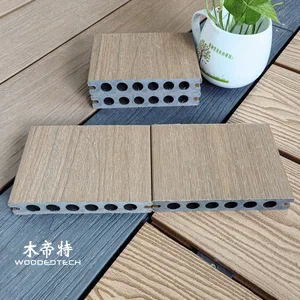 GD13823 Double Sided Flat Surface Co Extruded WPC Decking Features a Popular Width and Thickness with Round Hollow Structure
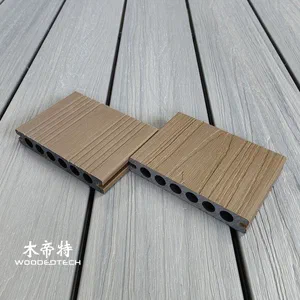 GD13823-3 Teak TK Co Extruded Decking Is a Popular Choice from Composite Decking Suppliers for Outdoor Flooring Projects