
Composite Decking: Industry Trends, Material Innovations, and Market Opportunities
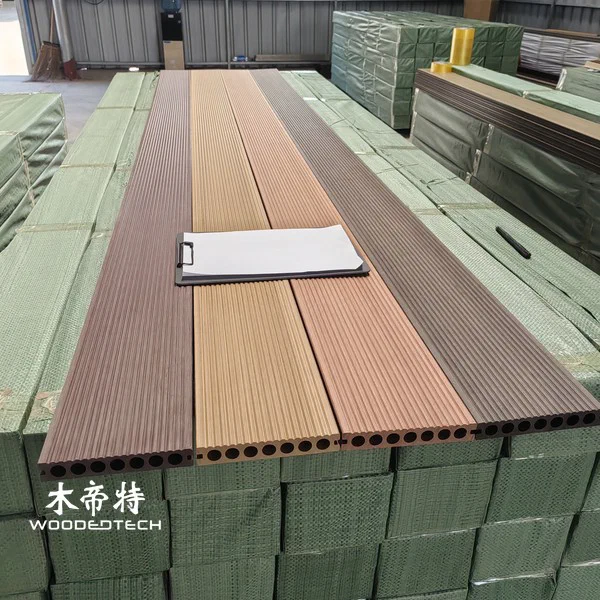
Composite decking is gaining market share as homeowners, commercial developers, and landscape designers look for outdoor building materials that combine durability, attractive appearance, and lower maintenance requirements. Advances in wood plastic composite (WPC) technology are expanding product capabilities, while growing demand for coordinated outdoor spaces is creating new opportunities across decking, wall cladding, fencing, pergolas, and landscape products. For manufacturers, distributors, and international buyers, the next stage of growth will depend on material innovation, product differentiation, and the ability to meet regional construction requirements.
Global Market Trends Driving Composite Decking Growth
The global composite decking industry is benefiting from the continued shift away from traditional timber. Natural wood remains popular for its appearance, but concerns about moisture damage, fading, insect attacks, splintering, and recurring maintenance are encouraging buyers to consider alternative materials. Composite decking offers a practical solution by combining wood fibers or wood flour with thermoplastic polymers to create boards designed for outdoor applications.
North America remains an established market, supported by residential renovation, outdoor living projects, and a mature distribution network. Europe presents opportunities through renovation activity and demand for sustainable construction materials. Meanwhile, Asia-Pacific is emerging as an important growth market, driven by urban development, expanding residential construction, hospitality investment, and increasing interest in modern outdoor spaces. Market research also identifies Asia-Pacific as one of the fastest-growing regions for WPC decking.
Another important development is the expansion of commercial applications. Hotels, resorts, restaurants, waterfront developments, public parks, and recreational facilities increasingly require outdoor surfaces that can withstand frequent use and changing weather conditions. These projects often involve larger orders and create opportunities for suppliers offering complete material systems rather than individual decking boards.
Material Innovations Transforming the Industry
Product innovation is becoming a major competitive factor. Traditional uncapped composite decking is gradually being complemented by capped and co-extruded products that provide improved surface protection. Co-extrusion technology applies a protective polymer layer around the composite core, helping reduce moisture absorption, staining, and surface deterioration.
Modern capped composite decking also offers greater flexibility in surface finishes and colors. Wood-grain textures, embossed patterns, realistic timber effects, and multi-tone finishes allow manufacturers to reproduce the appearance of natural hardwood while maintaining the practical advantages of composite materials.
Several material developments deserve particular attention:
- Co-extrusion technology: Protective outer layers improve resistance to moisture, stains, and everyday wear.
- 3D embossed surfaces: Deep wood-grain textures create a more realistic timber appearance and improve product differentiation.
- Recycled raw materials: The use of recycled plastics and recovered wood fibers can reduce reliance on virgin resources.
- Improved UV resistance: Advanced formulations and protective additives help maintain color stability under prolonged sunlight exposure.
- Enhanced structural designs: Hollow and solid profiles provide different combinations of weight, strength, installation requirements, and cost.
Heat management and slip resistance are also becoming important development priorities, particularly for poolside installations, public spaces, and regions with intense sunlight. Manufacturers that can demonstrate consistent performance through standardized testing will have an advantage when competing for specification-driven projects.
Beyond Decking: Opportunities Across Outdoor Building Materials
The development of composite decking is closely connected to the wider outdoor building materials market. Buyers increasingly prefer coordinated exterior designs in which flooring, fencing, wall cladding, privacy screens, and pergolas share consistent colors and textures.
WPC wall cladding is benefiting from demand for attractive, low-maintenance exterior finishes. Co-extruded wall panels, fluted designs, decorative battens, and wood-grain surfaces give architects and developers more options for residential facades, commercial buildings, balconies, and outdoor entertainment areas. Suppliers can create additional value by offering matching profiles and accessories that simplify installation.
Composite fencing is another promising category. Compared with conventional timber fencing, WPC fence systems can reduce routine maintenance and provide consistent colors and dimensions. Demand is particularly relevant for residential privacy fencing, garden boundaries, pool enclosures, and commercial landscaping. Aluminum posts and framing systems can further improve structural performance and create contemporary designs.
Pergolas and landscape products offer opportunities to expand average project value. Composite pergolas, gazebos, outdoor benches, planter boxes, decorative screens, and sunshade louvers complement decking installations and support complete outdoor living solutions. For manufacturers, developing compatible product collections can strengthen relationships with distributors, contractors, landscape designers, and project developers.

Regional Market Opportunities and Buyer Expectations
Different markets require different product strategies. In North America, established composite decking demand creates opportunities for premium capped boards, railing systems, replacement projects, and complete installation packages. Buyers generally value reliable product quality, warranties, installation guidance, and dependable local inventory.
European buyers place considerable importance on environmental credentials, product traceability, and compliance with relevant construction standards. Manufacturers targeting this region should pay attention to recycled content documentation, material safety information, technical specifications, and environmental product declarations where applicable.
Asia-Pacific offers opportunities across both residential and commercial construction. China has an established WPC manufacturing and export base, while India, Australia, Southeast Asia, and other developing markets provide opportunities through housing, hospitality, and landscaping projects. Product portfolios should reflect local preferences, installation practices, climatic conditions, and purchasing power.
The Middle East also deserves attention. Hotels, luxury residential developments, resorts, and waterfront projects create demand for premium outdoor materials. However, extreme temperatures, strong UV exposure, and sand accumulation make thermal performance, surface durability, and maintenance requirements important purchasing considerations.
Future Market Opportunities for Manufacturers and Exporters
The strongest future opportunities will come from moving beyond price-based competition. Standard composite decking boards are increasingly exposed to competition from multiple international suppliers. Manufacturers need to differentiate through reliable formulations, consistent production quality, advanced surface treatments, and customized product development.
Sustainability will remain an important purchasing consideration, but buyers will increasingly expect measurable evidence rather than general environmental claims. Transparent information about recycled content, material sourcing, product lifespan, and manufacturing practices can help suppliers build credibility with international customers.
Another opportunity lies in OEM and private-label manufacturing. Importers, wholesalers, building material distributors, and established outdoor living brands often need products developed around their own specifications. Offering custom colors, dimensions, extrusion profiles, surface textures, packaging, and branding can create stronger business relationships and improve customer retention.
Digital product presentation will also influence international sales. Detailed technical catalogs, installation instructions, realistic product photography, sample programs, and clear comparison materials help overseas buyers evaluate products before placing bulk orders. Suppliers that combine manufacturing capabilities with responsive communication and reliable export logistics will be better positioned to secure long-term partnerships.
Strategic Outlook for the Composite Outdoor Materials Industry
The future of composite decking will be shaped by the convergence of material technology, sustainable manufacturing, architectural design, and expanding outdoor living applications. Growth opportunities will extend beyond decking boards into integrated WPC solutions covering cladding, fencing, pergolas, railing, and landscape products. Manufacturers that invest in co-extrusion technology, product testing, customization, and coordinated product collections can strengthen their international competitiveness. For global buyers, the most valuable suppliers will be those capable of delivering consistent quality, practical technical support, and dependable supply across the entire outdoor building materials category.
Related Articles

Related Products
 GD13820 M Shape Co Extruded Composite Deck Planks Feature a Special Profile Design for Distinctive Outdoor Decking Applications
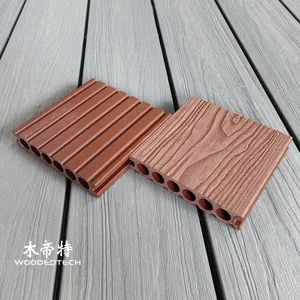
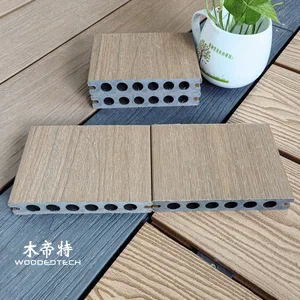 GD13823 Double Sided Flat Surface Co Extruded WPC Decking Features a Popular Width and Thickness with Round Hollow Structure
 GD13823-3 Composite Boards for Decking Are Available in Multiple Stock Colors with 3 Meter Lengths and Single Piece Delivery