
composite decking durability provides long lasting performance for outdoor spaces exposed to changing weather conditions

Composite decking durability starts with the formula, not the surface. For outdoor decking, wall cladding, fencing, pergolas, and landscape products, the right wood plastic composite balance determines how well the product resists moisture, UV, warping, cracking, and daily wear.
Designing the core formula
A high-performance WPC formula usually begins with the right ratio of wood fiber to plastic. More wood fiber can improve stiffness, color depth, and a natural feel, but too much reduces moisture resistance and long-term stability. More plastic improves waterproofing and toughness, but if the ratio is too high, the product may feel less rigid and can raise material cost.
For outdoor applications, many durable formulations stay in a practical middle range, then adjust by product type:
- Decking and stair parts need stronger impact resistance and surface wear control.
- Wall cladding can use a slightly higher filler balance if the profile is protected from foot traffic.
- Fencing and pergolas need dimensional stability, especially in hot sun and wind.
- Landscape items such as planters or benches need better weather sealing and color retention.
Additives decide service life
The base materials are only part of the formula. Additives control how the product performs over years of exposure. A good outdoor WPC package usually includes:
- UV stabilizers to slow fading and surface chalking
- Coupling agents to improve bonding between wood fiber and plastic
- Lubricants to support smooth extrusion and cleaner surface finish
- Antioxidants to improve heat resistance during processing
- Color masterbatch for stable, repeatable appearance
- Moisture inhibitors when the product will face frequent rain or humidity
For premium composite decking durability, capped or co-extruded surfaces add another layer of protection. That outer shell helps resist staining, water uptake, and surface scratches, which is valuable for exposed decks, poolside areas, and commercial walkways.

Matching formula to product and cost
A smart formula is never one-size-fits-all. Deck boards may justify a higher-performance resin system and tighter quality control because they carry loads and see constant traffic. Wall panels and fence boards can often be optimized for lower weight and better cost efficiency without sacrificing outdoor stability. Pergola beams and decorative screens need a balance of strength and straightness, so the profile design and formulation must work together.
Cost control should focus on value, not just the cheapest mix. Recycled content, controlled particle size, and consistent moisture levels in wood flour can reduce waste and keep extrusion stable. Better processing usually lowers hidden costs from breakage, returns, and installation complaints.
Lifespan depends on both chemistry and processing
Even a strong formula will underperform if the compounding and extrusion are poor. Temperature control, mixing uniformity, and moisture management all affect voids, cracking, and surface defects. Long service life comes from stable raw materials, correct additive loading, and profile design that drains water and reduces stress points.
When the formula is right, outdoor WPC products can deliver a long service life with low maintenance, consistent color, and reliable performance across changing weather conditions.
FAQ
Q: What is the biggest factor in composite decking durability? A: The balance between wood fiber, plastic, and additives matters most. Processing quality is the next major factor because it affects density, bonding, and surface integrity.
Q: Should decking and wall cladding use the same WPC formula? A: Not exactly. Decking usually needs higher wear and impact resistance, while wall cladding can be optimized more for stability, appearance, and cost.
Q: Is capped WPC always better for outdoor use? A: It is usually better for stain, water, and UV resistance, especially in exposed areas. The base formula still needs to be well designed, or the cap cannot fully compensate.
Related Articles

Related Products
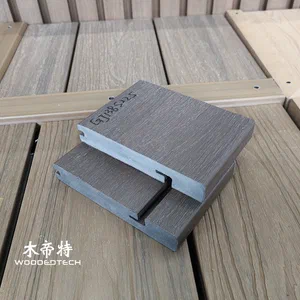 GD13822.5S Fully Capped Solid Starter Wood Polymer Composite Decking Provides a Stable Starting Structure for the First Decking Board
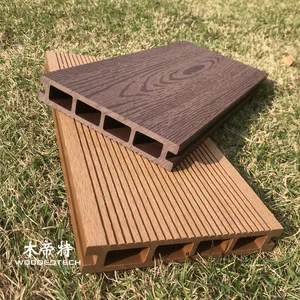 D14025-4 Composite for Decking Provides Stable Performance and Reliable Quality as a Popular Choice for Outdoor Projects
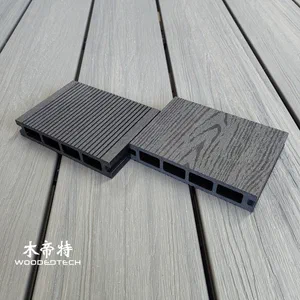 D14025-4 WPC Decking Boards Feature a Flat Wood Grain Surface with Black Ebony Heartwood Ring Grain for Outdoor Applications