
Composite Decking Buy Guide: Key Considerations for B2B Buyers in 2026
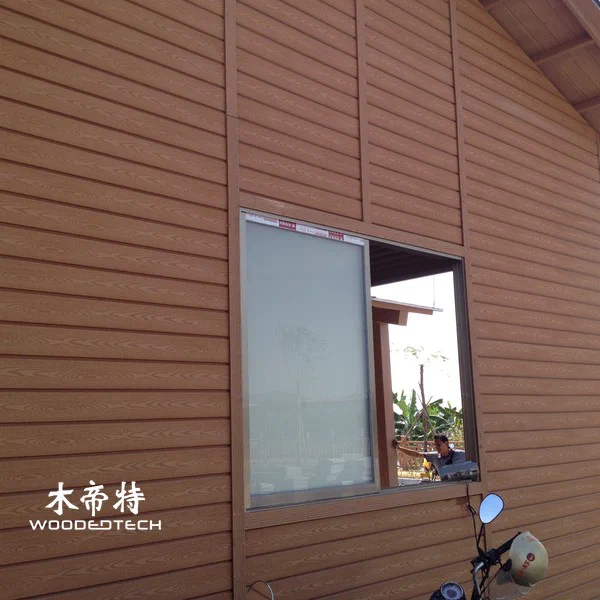
Composite decking procurement in 2026 requires more than comparing prices and product photos. Overseas buyers should evaluate a supplier’s manufacturing capabilities, raw material quality, product specifications, testing standards, and export experience before placing bulk orders. Choosing the right WPC manufacturer helps reduce quality disputes, delivery delays, and long-term maintenance costs.
1. Choose a Manufacturer with Proven Production Capabilities
The first step is to distinguish between a direct manufacturer and a trading company. Both can support international purchasing, but working directly with a WPC factory generally provides better visibility into production processes, customization options, quality control, and manufacturing costs.
A reliable composite decking supplier should have dedicated extrusion production lines, experienced technicians, stable raw material sources, and an established quality management process. Buyers should also check whether the factory manufactures its own decking profiles or outsources production to other facilities.
When evaluating a potential supplier, pay attention to:
- Factory size and actual production capacity.
- Number and condition of extrusion lines.
- Experience manufacturing outdoor WPC decking.
- Raw material sourcing and storage procedures.
- In-house inspection and product testing facilities.
- OEM and private-label manufacturing capabilities.
- Previous export experience and international customer markets.
Request a factory introduction, production videos, product samples, and relevant business documentation. A video factory inspection can help overseas buyers verify whether the supplier has genuine manufacturing facilities and whether its production capacity matches the proposed order volume.
2. Evaluate Material Composition and Product Quality
Not all composite decking products offer the same performance. Their quality depends on the formulation, manufacturing process, surface treatment, and quality of the raw materials.
WPC decking typically combines wood fiber or wood flour with thermoplastic materials and additives. The proportions and quality of these components influence dimensional stability, strength, moisture resistance, and weathering performance.
Buyers should avoid selecting products based solely on their wood-plastic composition percentages. A higher wood content does not automatically mean better quality. Instead, request technical specifications and test reports that demonstrate actual product performance.
Important quality factors include:
- Density and structural strength.
- Water absorption and dimensional stability.
- UV resistance and color retention.
- Slip resistance under wet conditions.
- Resistance to cracking, warping, and fading.
- Surface wear and scratch resistance.
- Resistance to mold and outdoor weather exposure.
For projects in coastal regions, swimming pool areas, or locations with frequent rainfall, moisture resistance and slip performance deserve particular attention.
Buyers should also understand the difference between uncapped and capped composite decking. Uncapped boards have an exposed composite surface, while capped products feature an additional protective polymer layer. Co-extrusion decking is often selected for projects requiring improved surface protection and easier cleaning.

However, capped construction alone does not guarantee superior performance. The quality of the protective layer, bonding process, core formulation, and manufacturing consistency should all be evaluated.
3. Confirm Specifications Before Requesting a Quotation
A common purchasing mistake is requesting a quotation without providing complete product specifications. This often results in inaccurate price comparisons because different suppliers may quote products with different dimensions, structures, materials, and accessories.
Before requesting prices, prepare a clear technical requirement sheet. It should include the following details:
- Product type: hollow, solid, capped, or uncapped decking.
- Board dimensions: width, thickness, and standard length.
- Surface finish: wood grain, embossed, brushed, or smooth.
- Color requirements and available color samples.
- Material composition and density requirements.
- Installation system and compatible accessories.
- Required loading capacity and performance standards.
- Packaging method and labeling requirements.
Board dimensions are particularly important because they influence installation spacing, structural performance, container loading, and overall project costs.
For large commercial projects, buyers should also confirm the recommended joist spacing, expansion gaps, fastening system, and installation conditions. Composite decking expands and contracts with temperature changes, so installation requirements should be considered before finalizing the order.
If a project requires customized profiles, colors, or lengths, confirm whether the supplier can provide tooling development and sample production. Ask about mold costs, minimum order quantities, sample lead times, and ownership of customized tooling.
4. Compare Suppliers Beyond the Quoted Price
Price is important in international purchasing, but the lowest quotation does not necessarily represent the best purchasing decision.
Some suppliers offer attractive prices by using lower-grade raw materials, reducing product thickness, changing material formulations, or providing fewer quality inspections. These differences may not be obvious from product photographs.
When comparing quotations, ensure that all suppliers are pricing products with identical specifications. Evaluate the complete purchasing cost rather than focusing only on the factory price.
Consider these cost components:
- Unit price and minimum order quantity.
- Mold or customization charges.
- Packaging and pallet requirements.
- Inland transportation and export documentation.
- Ocean freight and destination charges.
- Import duties and applicable tariffs.
- Installation accessories and replacement materials.
Buyers should also compare payment terms, production lead times, warranty coverage, and after-sales support.
For container shipments, request a detailed packing list showing board dimensions, quantities, package sizes, and estimated loading capacity. This helps calculate the landed cost per square meter and identify potential differences in loading efficiency.
5. Verify Quality Control and Request Samples
Product samples are an essential part of supplier evaluation. Before confirming a bulk order, request physical samples from shortlisted manufacturers and compare their appearance, dimensions, weight, surface texture, and structural consistency.
For projects with strict performance requirements, request independent laboratory test reports where appropriate. Reports should identify the tested product, testing methods, and relevant results rather than presenting general company certificates without a clear connection to the quoted decking.
A professional WPC factory should have inspection procedures covering incoming raw materials, extrusion production, dimensional tolerances, surface appearance, and finished-product packaging.
It is also important to establish an approved sample as the quality reference for mass production. Record the agreed color, dimensions, surface finish, and other critical characteristics in the purchase contract.
Before shipment, buyers can arrange third-party inspections to verify product quantities, specifications, packaging conditions, and visible defects. For repeat orders, consistent quality control is especially important because even small changes in formulation or production conditions can affect the final product.
6. Check Export Experience and Supply Reliability
A manufacturer may produce good-quality decking but still lack the experience needed to manage international orders efficiently. Overseas buyers should therefore assess the supplier’s export capabilities alongside its manufacturing strength.
Check whether the factory has experience shipping to the destination market and understands the relevant import requirements, labeling rules, packaging standards, and documentation procedures.
Important export documents may include:
- Commercial invoice.
- Packing list.
- Bill of lading.
- Certificate of origin, when applicable.
- Product test reports and technical documentation.
- Other destination-specific compliance documents.
Buyers should also confirm the agreed Incoterms, payment milestones, production schedule, and shipment deadlines in writing.
A dependable supplier should communicate clearly when production issues arise and provide realistic solutions rather than making delivery promises that cannot be supported by actual capacity.
7. Protect Your Purchase with Clear Contract Terms
Even after selecting a suitable manufacturer, buyers should not rely entirely on verbal agreements or informal messaging.
A well-prepared purchase contract should specify the product model, dimensions, material requirements, colors, quantities, packaging, inspection criteria, delivery schedule, payment terms, and warranty conditions.
Pay particular attention to how quality disputes will be handled. Define acceptable tolerances, inspection procedures, responsibility for defective products, and the process for replacement or compensation.
For new supplier relationships, starting with a trial order is often a practical approach. It allows buyers to evaluate product consistency, packaging quality, shipping arrangements, and communication before committing to larger quantities.
Building a reliable supply relationship takes more than finding a competitive quotation. Overseas buyers who verify factory capabilities, confirm technical specifications, inspect samples, and establish clear contractual requirements are better positioned to secure consistent composite decking quality and dependable deliveries throughout 2026.
Related Articles
 Wood Plastic Composite Decking Manufacturer Provides Durable Outdoor Flooring Solutions for Global Markets
 Composite deck manufacturers list helps buyers find reliable global WPC decking suppliers
 Where to Buy Composite Deck Boards: A Guide for Industrial Buyers
 Decking Composite Decking: A B2B Guide to Materials and Market Trends
Related Products
 GD13820 M Shape Co Extruded Composite Deck Planks Feature a Special Profile Design for Distinctive Outdoor Decking Applications
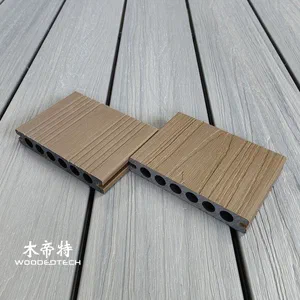 GD13823-3 Teak TK Co Extruded Decking Is a Popular Choice from Composite Decking Suppliers for Outdoor Flooring Projects
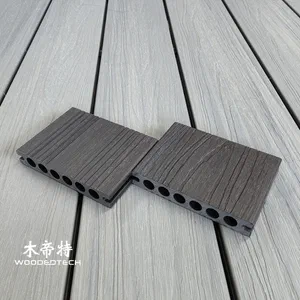 GD13823-3 Walnut WN Co Extruded Decking Features a Dark Rich Color That Helps Resist Visible Dirt and Stains