Composite Decking Breaker Board: 2026 Guide for Industrial Projects
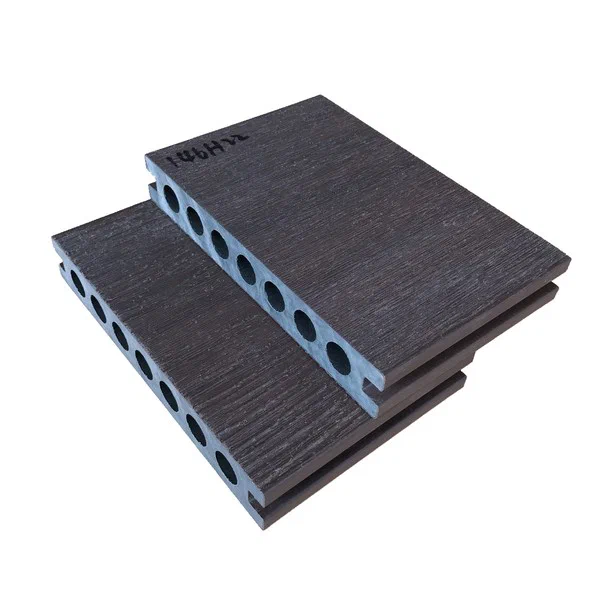
A composite decking breaker board is a key component in large-scale WPC decking installations, helping manage board transitions, improve structural stability, and create clean visual layouts. For industrial projects in 2026, proper breaker board design is essential for commercial landscapes, public spaces, hospitality developments, and high-traffic outdoor environments.
What Is a Composite Decking Breaker Board?
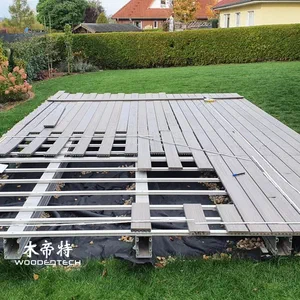
A breaker board is a perpendicular deck board installed between sections of composite decking to divide the surface into different areas. It creates expansion gaps, reduces long continuous runs, and helps installers control movement caused by temperature changes and moisture exposure. In industrial applications, breaker boards also provide a professional appearance by adding pattern variation and improving project durability.

For large projects such as hotels, parks, and public facilities, WPC engineers recommend planning breaker board positions during the initial design stage. The layout should consider deck size, drainage direction, pedestrian flow, maintenance access, and expansion requirements.
Professional Applications for Industrial WPC Decking Projects
Composite decking with breaker board systems is widely used across outdoor commercial environments:
- Hotels and resorts: Create premium outdoor areas for pool decks, walkways, terraces, and guest entertainment spaces. Breaker boards help maintain a neat appearance across large hospitality landscapes.
- Parks and public facilities: Suitable for boardwalks, viewing platforms, seating areas, and recreational zones where long-term weather resistance and safety are required.
- Commercial landscapes: Used around office buildings, shopping centers, and mixed-use developments to build attractive outdoor gathering spaces with reduced maintenance.
- Residential gardens: Ideal for large private gardens, courtyard decks, balconies, and outdoor living areas where a customized deck pattern improves design value.
- Swimming pool areas: Breaker board layouts help divide large pool decking surfaces while supporting drainage, slip resistance, and long-term dimensional stability.
- Balconies and terraces: Provide a clean transition between decking sections while allowing better control of installation details in limited spaces.
Engineering Suggestions for Better Deck Performance
For industrial WPC decking projects, engineers should select breaker board spacing based on board length, climate conditions, and installation requirements. Proper joist support is critical because breaker boards often carry additional fixing points.
Recommended considerations include:
- Use matching composite materials to maintain consistent expansion performance.
- Install adequate joists or double joists beneath breaker board areas.
- Leave correct expansion gaps according to manufacturer specifications.
- Select capped composite decking for projects exposed to frequent moisture, sunlight, or heavy traffic.
- Design drainage paths before installation to prevent water accumulation.
For factories, contractors, and developers, working with an experienced WPC supplier can improve project reliability. Professional suppliers can provide custom decking profiles, installation guidance, color options, and technical support for complex commercial applications.
FAQ
Q: Why are breaker boards needed in large composite decking projects?
A: Breaker boards reduce the impact of thermal expansion, improve deck stability, and create a more organized surface design.
Q: Can breaker boards be used for pool and public decking areas?
A: Yes, they are commonly used in pool decks, parks, hotels, and other high-traffic outdoor spaces to improve performance and appearance.
Q: What support is required under a composite decking breaker board?
A: Additional joist support is recommended to ensure secure fixing and maintain long-term structural stability.
Related Articles
Related Products
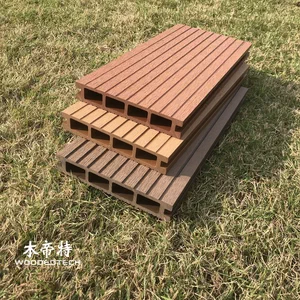 D14025-3 Square Hole Double Sided Grooved WPC Board Factory Producing Outdoor Decking Boards With Good Slip Resistance
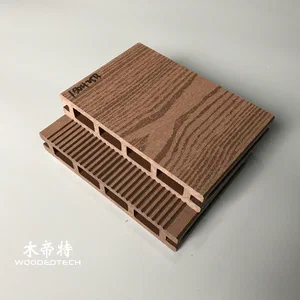 D15025-2 Classic Waterproof Insect Resistant Corrosion Resistant And Termite Resistant Composite Decking Types With Twenty Years Of Sales Experience
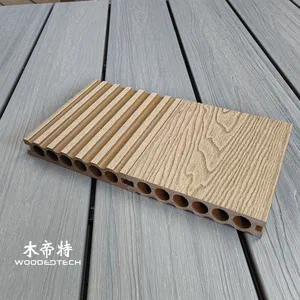 Single Side Embossed Grain 140-25 Round Hole Flooring F Type Teak Color Composite Deck Images For Cost Effective Engineering Projects