
Composite Decking Board Kits: A B2B Guide to Quality, Supply, and Installation
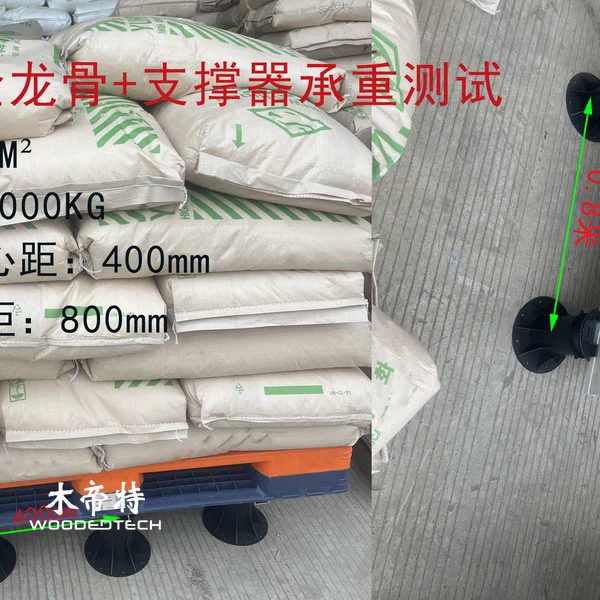
Composite decking board kits provide overseas buyers with a coordinated solution for outdoor flooring projects, combining decking boards, joists, fasteners, clips, and essential installation accessories. For importers, distributors, contractors, and building material wholesalers, choosing the right WPC supplier means looking beyond the board price to evaluate manufacturing capability, product consistency, kit compatibility, and long-term supply reliability.
What Should a Complete Composite Decking Board Kit Include?
A composite decking board kit typically contains the main decking materials and accessories required to build an outdoor deck. The exact package depends on the project design, installation method, and local building requirements.
A standard kit may include:
- WPC composite decking boards in the selected profile and color
- Supporting joists or substructure components
- Stainless steel or coated fixing clips
- Starter clips and end clips
- Matching screws and expansion fasteners
- Edge trims, fascia boards, and finishing accessories
- Installation instructions and layout recommendations
For B2B buyers, the main advantage of purchasing complete kits is better compatibility between components. Ordering boards, clips, and joists from different suppliers can create problems with dimensions, fixing positions, and installation tolerances.
Before requesting quotations, prepare a basic bill of materials based on the intended deck area. Ask suppliers to calculate the required quantities, including cutting allowances and additional fixing accessories. This makes quotations easier to compare and reduces the risk of missing components during installation.
How to Identify a Reliable WPC Decking Manufacturer
The supplier’s manufacturing capability directly affects product quality, delivery consistency, and your ability to handle repeat orders. Overseas buyers should distinguish between actual manufacturers, trading companies, and suppliers that outsource most of their production.
Start by checking the factory’s production equipment and experience with wood plastic composite decking. A professional WPC factory should be able to explain its extrusion process, raw material selection, surface treatment methods, and quality inspection procedures.
Important points to evaluate include:
- Production capacity and the number of extrusion lines
- Experience supplying overseas distributors and project contractors
- Availability of different decking profiles and surface finishes
- Raw material sourcing and production batch control
- In-house inspection and product testing procedures
- OEM, ODM, and private-label manufacturing capabilities

Factory verification should go beyond product photographs and company introductions. Request a live factory video inspection or arrange an independent factory audit when the order value justifies it.
Ask whether the manufacturer produces the decking boards and installation accessories in-house. If certain components come from external suppliers, clarify how their dimensions and quality are controlled.
A reliable manufacturer should also provide clear communication about production lead times, minimum order quantities, packaging methods, and export experience. These details are particularly important for distributors who need predictable replenishment schedules.
Confirm Material Quality and Technical Specifications
Not all composite decking boards have the same performance. Differences in wood fiber content, polymer type, additives, extrusion conditions, and surface treatment can affect durability, appearance, and dimensional stability.
Before placing a bulk order, request a detailed technical datasheet rather than relying on general descriptions such as waterproof, maintenance-free, or weather-resistant.
The following specifications deserve particular attention:
| Specification | What Buyers Should Check |
|---|---|
| Material composition | Wood fiber, plastic type, and additive information |
| Board dimensions | Width, thickness, length, and dimensional tolerance |
| Profile structure | Solid or hollow construction |
| Surface finish | Brushed, embossed, or co-extruded |
| Density and weight | Consistency between production batches |
| Water absorption | Test method and reported results |
| Mechanical performance | Bending strength and load-bearing test data |
| Weather resistance | UV exposure and color stability testing |
| Fire performance | Applicable classification and test reports |
For projects exposed to strong sunlight, rain, or coastal conditions, buyers should pay particular attention to UV resistance, moisture performance, and corrosion resistance of the fixing accessories.
Co-extrusion decking is worth considering for projects where enhanced surface protection and color consistency are priorities. Its protective outer layer can improve resistance to stains, moisture, and everyday wear compared with some conventional uncapped products. However, performance still depends on the actual formulation and manufacturing quality.
Request samples before approving production. Check the surface texture, color, edge finish, board weight, and dimensional accuracy. If the product is intended for commercial projects, independent laboratory reports can provide additional confidence.
Check Kit Compatibility Before Ordering
One common purchasing mistake is treating a composite decking kit as a collection of interchangeable components. In practice, the boards, clips, joists, screws, and finishing accessories must work together.
For example, grooved decking boards require compatible hidden fasteners, while different board profiles may need different clip sizes. Joist spacing also depends on the board structure, installation direction, and expected loading conditions.
Ask the supplier to confirm:
- Whether the clips match the exact decking profile
- Recommended joist spacing for the intended application
- Required expansion gaps between boards and at fixed structures
- Suitable screw materials for the installation environment
- Compatible fascia boards and edge finishing components
- Installation requirements for stairs, corners, and deck boundaries
Thermal expansion is another important consideration. WPC decking expands and contracts with temperature changes, so installers must follow the manufacturer’s specified spacing requirements.
For larger commercial projects, request a layout drawing and installation guide before confirming the order. A technically competent supplier should be able to recommend a suitable component combination instead of simply selling individual products.
Avoid Common Purchasing and Supply Risks
Price differences between WPC suppliers can be significant, but choosing the lowest quotation does not always reduce total purchasing costs. A cheaper board may have inconsistent dimensions, inadequate packaging, poor surface quality, or incompatible installation accessories.
One major risk is specification substitution. A supplier may provide a sample with a particular density, profile, or surface finish but deliver bulk production with different characteristics. To prevent this, attach the approved sample, technical datasheet, and product drawings to the purchase agreement.
Another risk is unclear quotation terms. Buyers should confirm whether prices include joists, clips, screws, trims, packaging, and export-related charges. Compare quotations using the same product specifications and delivery terms rather than looking only at the unit price per board.
Production and shipping arrangements also require attention. Confirm the production schedule, inspection date, packaging specifications, shipping marks, and delivery terms before making the deposit.
For container orders, request loading photographs and a packing list. Proper packaging helps protect board edges and surfaces during transportation and makes warehouse receiving easier.
A pre-shipment inspection is particularly useful for large orders. It can cover dimensions, appearance, color consistency, accessories, quantity, labeling, and packaging condition. Buyers should also agree on acceptable quality standards and procedures for handling nonconforming products before production begins.
Plan for Installation and Long-Term Supply
A good composite decking board kit should be easy to install, but successful installation still depends on proper preparation and workmanship. The supporting structure must be stable, adequately drained, and suitable for the expected loads.
Installers should follow the manufacturer’s guidelines for substructure spacing, fixing methods, ventilation, expansion gaps, and edge finishing. WPC decking should not be installed directly over an unsuitable surface without considering drainage and structural support.
For importers and distributors, installation support is also a valuable part of supplier evaluation. Manufacturers that provide clear technical documents, profile drawings, installation videos, and replacement accessory support can help reduce after-sales problems.
Long-term supply consistency matters just as much as the first shipment. Before establishing a purchasing relationship, discuss repeat-order production controls, color batch management, spare accessory availability, and lead times during peak seasons.
A dependable WPC manufacturer should be able to maintain agreed specifications across multiple production runs and provide practical assistance when customers encounter installation or product-related issues.
For overseas buyers, the best composite decking supplier is not necessarily the one offering the lowest initial price. It is the manufacturer that can deliver consistent product quality, compatible installation kits, transparent specifications, dependable production schedules, and responsive technical support. These factors help protect project budgets, strengthen distributor relationships, and create a more reliable supply chain for future orders.
Related Articles
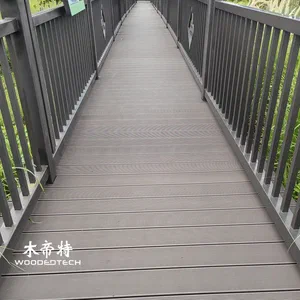
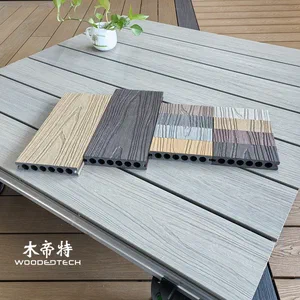
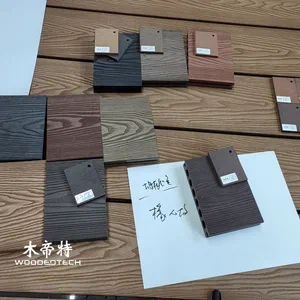
Related Products
 GD13823-3 Composite Boards for Decking Are Available in Multiple Stock Colors with 3 Meter Lengths and Single Piece Delivery
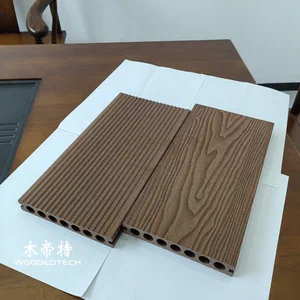 3D15023 First Generation 3D Embossed Composite Deck Boards With Stable Quality And High Performance For Premium Outdoor Projects
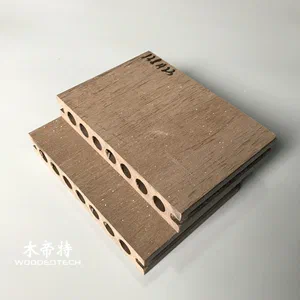 D13823 Round Hole Double Sided Flat WPC Bamboo Decking Boards With Strong Quality And Various Wood Grain Surface Treatments