
Composite Deck Thickness: Key Selection Criteria for Industrial Projects
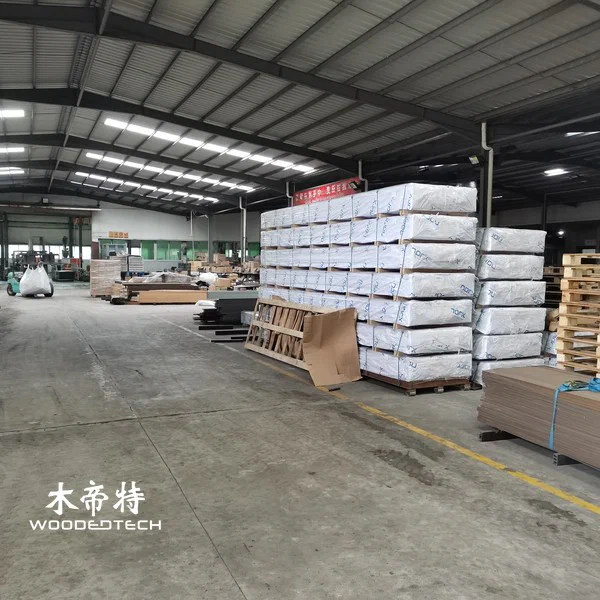
Composite deck thickness is a key selection factor for industrial projects because it affects load-bearing capacity, board deflection, material consumption, and installation reliability. For wood plastic composite (WPC) decking, the right thickness depends on the intended application, joist spacing, profile geometry, material formulation, and expected service loads rather than overall board dimensions alone.
How Deck Thickness Affects Structural Performance
Thicker composite decking generally provides greater bending stiffness when other design variables remain constant. However, increasing thickness does not automatically guarantee better performance. Board strength also depends on the WPC formulation, extrusion quality, internal structure, and distribution of material around the profile.
For industrial walkways, commercial platforms, public terraces, and other high-traffic areas, engineers should evaluate the anticipated live load, concentrated loads, support spacing, and allowable deflection. A thicker board may be appropriate for demanding applications, but structural calculations and product test data should determine the final specification.

Hollow vs. Solid Profiles: Weight, Cost, and Strength
The internal structure of a composite deck board has a direct influence on its performance and production cost. Solid composite decking contains more material per unit length, typically resulting in greater weight and higher material consumption. It can be suitable where impact resistance, edge machining, or a substantial profile is required.
Hollow profiles reduce material usage and board weight, making transportation and manual handling easier. Their performance depends on cavity dimensions, wall thickness, and internal rib design. Poorly supported cavity walls can deform under concentrated loads, while well-designed ribs distribute stress and improve structural stability.
From a WPC extrusion mold design perspective, hollow profiles also require careful control of melt flow, cooling balance, and dimensional consistency. Uneven wall thickness can cause warping, shrinkage differences, and installation problems. Solid profiles simplify internal geometry but may require longer cooling times and greater material consumption.
Rib Design and Surface Patterns
Internal ribs reinforce hollow decking without adding as much material as a solid cross-section. Rib number, thickness, spacing, and orientation influence bending resistance, local compression, and extrusion stability. Excessively thin ribs may be difficult to manufacture consistently, while unnecessarily thick ribs increase weight and cost.
Surface patterns affect grip, appearance, cleaning, and manufacturing complexity. Grooved and embossed finishes can improve traction when properly designed and tested, particularly in wet outdoor environments. Deep grooves, however, may collect debris, while aggressive surface textures can complicate cleaning. Surface design should also account for drainage and wear in high-traffic installations.
Selecting Thickness for Industrial Projects
Before specifying composite deck thickness, compare complete profile designs rather than nominal dimensions alone. Confirm the manufacturer’s load tables, tested span limits, fixing requirements, thermal expansion allowances, and compatibility with the supporting joist system.
For large-volume procurement, a custom composite extrusion profile can be optimized around the required load capacity, target weight, material budget, and installation method. Prototype testing helps verify deflection, dimensional stability, fastening performance, and surface quality before production tooling is finalized.
The best specification balances structural requirements with manufacturing efficiency. A carefully engineered profile can deliver reliable performance without unnecessary material or excessive board weight.
FAQ
Q: Is thicker composite decking always stronger?
A: No. Thickness contributes to stiffness, but material properties, profile geometry, rib placement, and support spacing also determine performance.
Q: Are hollow composite deck boards suitable for industrial projects?
A: Yes, when their structural design, wall thickness, and internal reinforcement meet the project’s loading and span requirements.
Q: How should buyers compare composite deck thickness?
A: Compare tested load capacity, allowable span, deflection, weight per meter, fastening requirements, and total installed cost rather than thickness alone.
Related Articles
 1x8 composite decking provides a versatile board size for residential and commercial deck projects
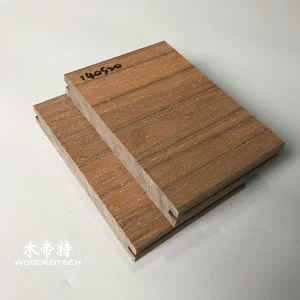 wood plastic composite 4x4 offers strong structural support for outdoor landscaping applications
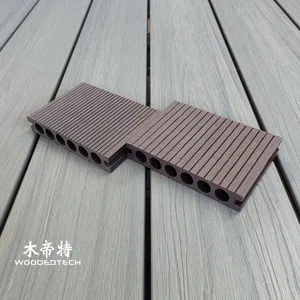 Composite Decking Edging Strips: Industrial Solutions for 2026
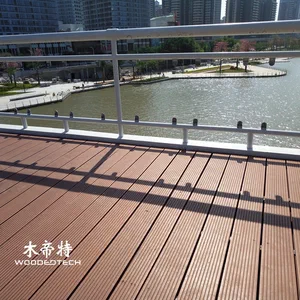 Composite decking hardware: Industrial solutions for 2026
Related Products
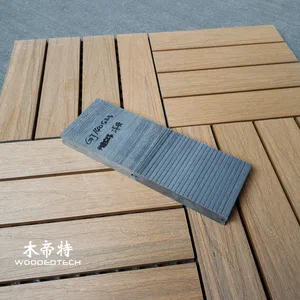 GD14023S Composite Deck Materials Feature a Solid Structure and Side Grooves for Better Adaptability in Extremely Cold Climates
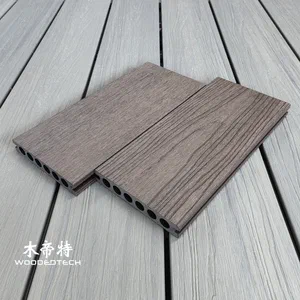 3DGD13823 Second Generation 3D Embossed Rosewood Composite Balcony Decking Delivers Ultra Realistic Wood Grain Texture and a Premium Natural Wood Experience
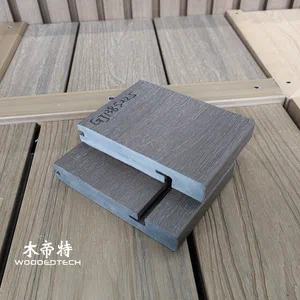 GD13822.5S Fully Capped Solid Starter Wood Polymer Composite Decking Provides a Stable Starting Structure for the First Decking Board