
Composite Deck Lifespan: Key Factors Affecting Durability and Long-Term Performance
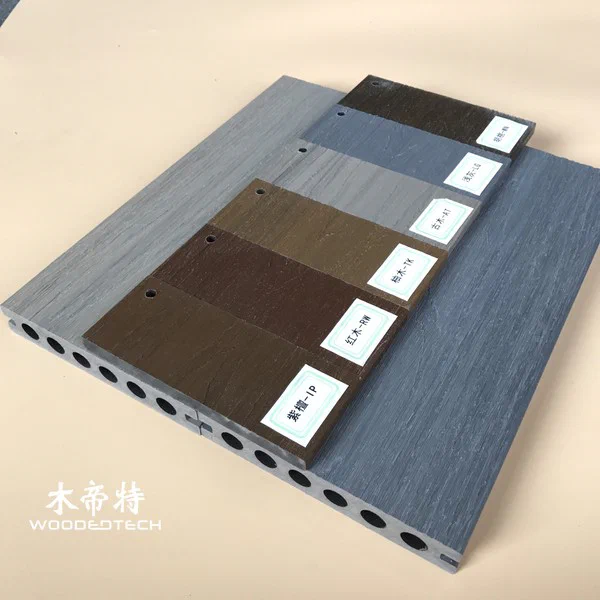
Composite deck lifespan depends on more than the quality of the raw materials. The balance between wood fiber, plastic content, coupling agents, UV stabilizers, and processing conditions determines how well decking performs under long-term exposure to sunlight, rain, temperature changes, and everyday use. A properly engineered wood plastic composite (WPC) formulation can deliver reliable outdoor performance, low maintenance requirements, and a longer service life without unnecessary material costs.
1. Wood Fiber and Plastic Ratio: The Foundation of Durability
The wood fiber-to-plastic ratio is one of the most important variables in WPC decking formulation. Wood fiber provides rigidity, natural texture, and dimensional stability, while plastic acts as the binding matrix that protects the fibers and gives the composite its resistance to moisture and environmental exposure.
For many outdoor decking applications, a practical starting formulation contains approximately 50–60% wood fiber and 30–40% thermoplastic polymer, with the remaining percentage allocated to additives. These figures are development guidelines rather than fixed specifications. The ideal ratio depends on the polymer type, fiber characteristics, extrusion equipment, product geometry, and required performance.
Increasing wood fiber content can reduce raw material costs and improve stiffness. However, excessive fiber loading makes the material more sensitive to moisture absorption, swelling, and surface degradation. It also increases melt viscosity, making extrusion more difficult. If the plastic phase cannot adequately coat and bind the fibers, the finished boards may develop internal voids, weak interfaces, or inconsistent mechanical properties.
Increasing the plastic proportion generally improves water resistance and fiber encapsulation. However, excessive polymer content can increase material costs, reduce the natural wood-like appearance, and affect stiffness. Formulation engineers should therefore establish a balanced composition based on mechanical testing, water absorption, dimensional stability, and production efficiency.
2. Additives That Extend Composite Deck Lifespan
Even a well-balanced wood and plastic mixture cannot guarantee long-term outdoor durability without a suitable additive package. Additives protect the composite structure, improve processing consistency, and reduce degradation caused by environmental exposure.
The main additives to consider include:
- Coupling agents: Maleic anhydride-grafted polyethylene (MAPE) or polypropylene (MAPP) improves compatibility between hydrophilic wood fibers and hydrophobic plastics. Better interfacial bonding helps increase flexural strength, reduce fiber pullout, and improve resistance to moisture-related deterioration.
- UV stabilizers: UV absorbers and hindered amine light stabilizers (HALS) help limit polymer degradation and color changes caused by prolonged sunlight exposure.
- Antioxidants: Primary and secondary antioxidants protect polymers against thermal oxidation during extrusion and long-term outdoor service.
- Lubricants: Internal and external lubricants improve melt flow, reduce friction, and support stable extrusion. Excessive lubrication should be avoided because it can weaken bonding between material components.
- Moisture protection additives: Hydrophobic agents and suitable surface treatments can help reduce water penetration and improve dimensional stability.
- Pigments: Weather-resistant pigments help maintain consistent colors and reduce visible fading during outdoor exposure.
The additive package should be designed around the actual operating environment. Decking installed near swimming pools, coastal properties, or regions with intense sunlight may require different performance priorities from products used in mild climates.
3. Co-Extrusion and Surface Protection
Surface protection is another major factor affecting composite deck lifespan. Conventional uncapped WPC decking relies on its bulk formulation to resist environmental exposure. Although this approach can be cost-effective, repeated contact with moisture, dirt, sunlight, and organic materials may gradually affect its appearance.
Co-extrusion technology provides an additional protective layer around the composite core. The outer polymer-rich cap is designed to improve resistance to moisture penetration, UV exposure, staining, and surface wear.
A high-performance co-extrusion decking structure typically combines:
- A structural WPC core for stiffness and load-bearing performance.
- A weather-resistant outer layer for improved environmental protection.
- Compatible materials and controlled processing conditions to maintain strong interlayer adhesion.
The core and cap must be engineered as a compatible system. Poor material compatibility, inadequate bonding, or inconsistent extrusion temperatures can lead to delamination and premature surface failure.
For projects requiring extended outdoor service, capped composite decking can be a worthwhile investment. However, a protective cap cannot compensate for a poorly formulated core or inadequate structural design.
4. Processing Quality and Product Structure

A durable formulation must also be supported by consistent manufacturing processes. Even high-quality raw materials can produce unreliable decking if moisture control, mixing, compounding, or extrusion parameters are poorly managed.
Wood flour should be thoroughly dried before processing. Excessive moisture can generate steam and internal voids, resulting in weak areas and inconsistent board density. Particle size distribution also matters: overly coarse fibers may create surface defects, while excessively fine particles can increase processing demands.
During extrusion, temperature profiles, screw configuration, feeding stability, and cooling conditions must be carefully controlled. Excessive processing temperatures can degrade wood fibers, while insufficient plasticization may prevent proper encapsulation and bonding.
Product structure also affects service life. Hollow decking profiles offer material savings and reduced weight, but require appropriate wall thickness, internal rib design, and support spacing. Solid profiles provide greater material mass but are not automatically more durable. Both designs must meet the intended load requirements and installation conditions.
Manufacturers should evaluate flexural strength, impact resistance, water absorption, thickness swelling, dimensional stability, and thermal expansion. Accelerated weathering and outdoor exposure testing can provide additional evidence of long-term performance.
5. Balancing Formulation Costs Against Service Life
Reducing formulation costs should never mean simply replacing expensive polymers with more wood fiber or removing essential additives. Such changes may lower initial production costs while increasing the risk of cracking, fading, moisture damage, and customer complaints.
A more effective cost-control strategy considers the total service-life value of the finished product.
| Formulation strategy | Cost impact | Durability consideration |
|---|---|---|
| Higher wood fiber loading | Lower material cost | Requires stronger moisture protection |
| Higher polymer content | Higher material cost | Can improve fiber encapsulation |
| Optimized coupling agent | Moderate additive cost | Improves interfacial bonding |
| UV stabilizer package | Additional cost | Reduces weathering-related degradation |
| Co-extruded protective cap | Higher processing cost | Improves surface protection |
| Controlled fiber moisture | Lower production waste | Reduces internal defects |
Manufacturers should also consider local climate, installation quality, maintenance expectations, and warranty requirements when selecting a formulation. A product designed for a dry residential garden may not be suitable for a commercial poolside installation or a coastal environment.
The most economical formula is not necessarily the one with the lowest raw material cost. It is the one that consistently meets performance requirements, minimizes production defects, and delivers an acceptable service life at a competitive price.
6. Applying Durability Principles Across Outdoor WPC Products
Although decking is a common application, the same formulation principles can be adapted to other outdoor wood plastic composite products.
- Wall cladding: Prioritize UV resistance, dimensional stability, moisture protection, and reliable fixing performance.
- Fencing: Focus on impact resistance, stiffness, weather resistance, and long-term color stability.
- Pergolas: Optimize structural strength, thermal stability, and resistance to outdoor weathering.
- Landscape products: Balance moisture resistance, mechanical strength, and cost efficiency according to their intended use.
Each application requires its own formulation and profile design. A decking formula should not automatically be transferred to fencing or pergola components because their mechanical loads, cross-sectional structures, and exposure conditions differ.
Composite deck lifespan is ultimately determined by the interaction between material selection, formulation design, manufacturing consistency, and installation quality. For WPC manufacturers, the most reliable development approach is to optimize the wood-plastic ratio, select an effective additive package, validate the extrusion process, and test finished products under realistic environmental conditions. Investing in these areas helps produce outdoor composite materials that maintain their structural performance and appearance over years of service while keeping manufacturing costs under control.
Related Articles
 Composite Decking with Pool Applications: Performance, Safety, and Durability
 Wood Polymer Composite Manufacturing: Material Selection and Production Optimization
 Plastic Wood Composite Sheets Provide Versatile Materials For Outdoor Construction And Decoration
 core decking wpc provides a stable outdoor flooring solution with reliable composite performance
Related Products
 GD13820 M Shape Co Extruded Composite Deck Planks Feature a Special Profile Design for Distinctive Outdoor Decking Applications
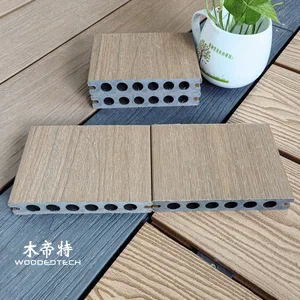 GD13823 Double Sided Flat Surface Co Extruded WPC Decking Features a Popular Width and Thickness with Round Hollow Structure
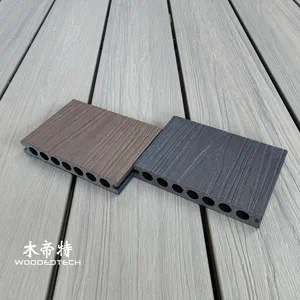 GD14521 Two Tone Co Extruded Decking Composite Wood in Rosewood IP and Dark Grey HG Offers Two Installation Options