
Composite Deck Floor Solutions: Performance Standards and Industrial Applications
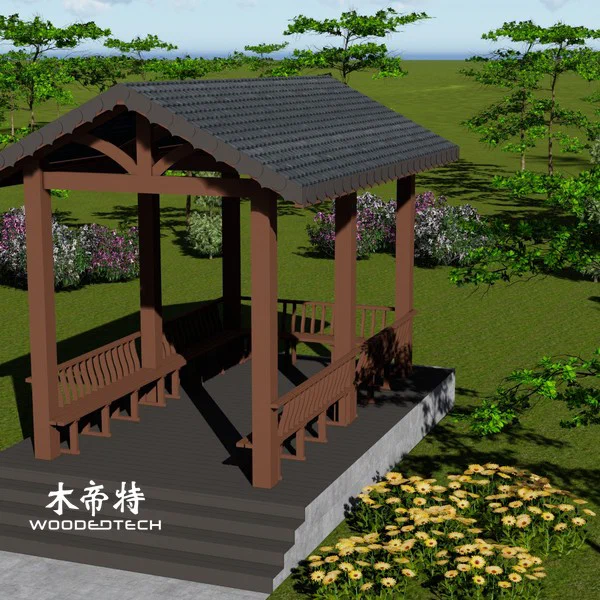
Composite deck flooring is a versatile outdoor surfacing solution for residential, commercial, and public environments. Made from wood plastic composite (WPC), it combines the natural appearance of wood with improved moisture resistance, dimensional stability, and reduced maintenance requirements. Selecting the right composite decking system requires considering application conditions, load requirements, slip resistance, drainage, UV exposure, and installation standards.
Performance Standards for Outdoor Composite Deck Flooring
The performance of composite decking depends on its material formulation, manufacturing process, surface treatment, and structural design. For outdoor applications, buyers and project contractors should evaluate several key performance factors before selecting a product.
- Weather resistance: Outdoor WPC decking should withstand rain, humidity, temperature changes, and prolonged sunlight exposure. UV-resistant formulations and protective co-extruded surfaces can help maintain color and surface quality.
- Slip resistance: Decking used around swimming pools, public walkways, and hotel terraces should provide suitable slip resistance, particularly when wet. Textured or embossed surfaces can improve underfoot traction.
- Load-bearing capacity: Board thickness, internal structure, joist spacing, and installation methods all affect the deck’s ability to support furniture, pedestrians, and commercial traffic.
- Water resistance: WPC materials generally absorb less moisture than conventional timber, reducing the risk of swelling, decay, and moisture-related damage.
- Dimensional stability: Quality composite boards should accommodate normal thermal expansion and contraction without excessive warping or deformation.
- Maintenance requirements: Unlike traditional timber, WPC decking generally does not require routine staining, painting, or wood preservatives.
Project specifications should reference applicable testing standards, including ASTM D7032 for wood-plastic composite decking and guardrail systems, ASTM D6109 for flexural properties, and relevant slip-resistance testing methods. Compliance should be verified through product-specific test reports rather than assumed from the material category alone.
Residential Garden and Landscape Applications
Residential gardens are among the most common applications for outdoor WPC decking. Composite deck boards can create comfortable outdoor living areas around lawns, flower beds, patios, and landscaped courtyards. Their wood-like appearance complements natural surroundings while reducing the maintenance associated with traditional timber.
For garden projects, hollow composite decking is suitable for many standard residential applications where the supporting substructure is properly designed. Solid composite decking may be preferable for areas requiring additional rigidity or more demanding structural performance.
Professional installation recommendations include:
- Install decking over a stable, level, and well-drained substructure.
- Maintain manufacturer-specified expansion gaps between boards.
- Use compatible joists, clips, and stainless-steel fasteners.
- Provide adequate ventilation beneath the decking.
- Avoid direct contact between boards and standing water or soil.
For multi-level gardens, composite decking can also be used for outdoor steps, raised platforms, and transitions between different landscape zones.
Commercial Landscapes, Hotels, and Resorts
Commercial landscapes require decking materials that balance appearance, durability, and long-term operating costs. Shopping centers, office developments, restaurants, and hospitality properties frequently use composite decking for outdoor seating areas, pedestrian platforms, rooftop terraces, and landscaped walkways.
Hotels and resorts have additional design considerations. Poolside lounges, outdoor dining terraces, garden pathways, and waterfront relaxation areas need materials that maintain an attractive appearance under frequent use.
For these environments, co-extrusion WPC decking is worth considering. Its protective outer layer can improve resistance to staining, moisture, and surface fading compared with many conventional uncapped products. However, the actual performance depends on the specific product formulation and test results.
For commercial projects, specify:
- Decking designed and tested for the expected pedestrian traffic.
- Appropriate slip-resistance performance for wet and dry conditions.
- Structural support based on calculated design loads.
- Consistent board dimensions and color across large installation areas.
- Accessible inspection and replacement arrangements.
Large hotels and resorts should also consider matching WPC railing, outdoor furniture, privacy screens, and decorative wall panels to create a coordinated exterior design.

Balconies, Rooftop Terraces, and Swimming Pool Areas
Balconies and rooftop terraces are ideal applications for composite deck tiles and lightweight decking systems. They provide a wood-inspired finish without the frequent maintenance associated with natural timber.
Before installation, contractors should assess the existing waterproofing membrane, drainage outlets, available installation height, and structural loading capacity. Decking supports must not damage the underlying waterproofing system. For elevated balconies, drainage and ventilation beneath the boards are particularly important.
Swimming pool surroundings require more specialized product selection. Poolside decking is regularly exposed to water, cleaning chemicals, sunlight, and wet footwear. A suitable WPC pool decking system should feature:
- A textured surface designed for wet-area applications.
- Verified slip-resistance performance.
- Good resistance to moisture and outdoor weathering.
- Appropriate resistance to poolside cleaning agents.
- Adequate drainage and ventilation beneath the boards.
Avoid assuming that every composite decking product is suitable for swimming pool applications. Product-specific testing and manufacturer installation recommendations should guide the final selection.
Parks, Public Walkways, and Public Facilities
Public infrastructure projects place greater demands on outdoor flooring because of continuous pedestrian use, changing weather conditions, and limited maintenance budgets.
WPC decking can be used for park boardwalks, garden bridges, waterfront viewing platforms, recreational areas, outdoor seating zones, and pedestrian paths. It can also complement public facilities such as community centers, educational campuses, exhibition spaces, and transport-related outdoor areas.
For parks and public walkways, solid or structurally reinforced composite decking may be appropriate where higher loads or more demanding support conditions are expected. Engineers should calculate the required load capacity rather than selecting boards based only on thickness or appearance.
Additional design considerations include:
- Anti-slip surface profiles for exposed pedestrian routes.
- Sufficient board spacing for drainage and debris removal.
- Corrosion-resistant substructures and fixing accessories.
- Secure edge details and suitable transitions.
- Compliance with local accessibility, fire-safety, and structural requirements.
For wheelchair-accessible routes, maintain suitable surface continuity, controlled gaps, and compliant ramp gradients. Public projects should also establish an inspection schedule to identify loose fasteners, damaged boards, or drainage problems.
Selecting the Right Composite Decking System for Each Project
Choosing the correct composite deck floor involves matching product specifications to actual site conditions. Residential gardens may prioritize appearance and easy maintenance, while commercial landscapes require greater attention to traffic levels, structural performance, and lifecycle costs.
A professional WPC supplier should provide technical data covering board dimensions, material composition, recommended joist spacing, installation accessories, expansion allowances, fire performance where applicable, and relevant test reports.
For developers, landscape contractors, architects, and building material distributors, customized composite decking solutions can also help meet specific project requirements. Options include different surface textures, colors, board profiles, solid or hollow structures, and co-extruded protective layers.
With appropriate product selection, engineering calculations, and installation practices, composite deck flooring can serve a wide range of outdoor environments, from private garden patios and hotel pool terraces to commercial landscapes and public pedestrian facilities.
Related Articles
 WPC Deck Panel: Technical Guide to Industrial Applications and Selection
 Composite for Decking: Material Selection, Performance, and Industry Applications
 Composite Deck Wood: Industrial Applications, Benefits, and Material Selection
 Composite Decking Lengths Provide Flexible Options For Different Outdoor Project Requirements
Related Products
 GD13820 M Shape Co Extruded Composite Deck Planks Feature a Special Profile Design for Distinctive Outdoor Decking Applications
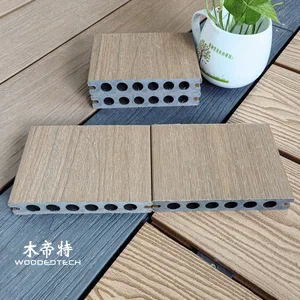 GD13823 Double Sided Flat Surface Co Extruded WPC Decking Features a Popular Width and Thickness with Round Hollow Structure
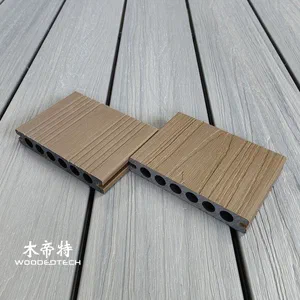 GD13823-3 Teak TK Co Extruded Decking Is a Popular Choice from Composite Decking Suppliers for Outdoor Flooring Projects