
Composite Deck Estimator: Accurate Material and Cost Planning for B2B Projects
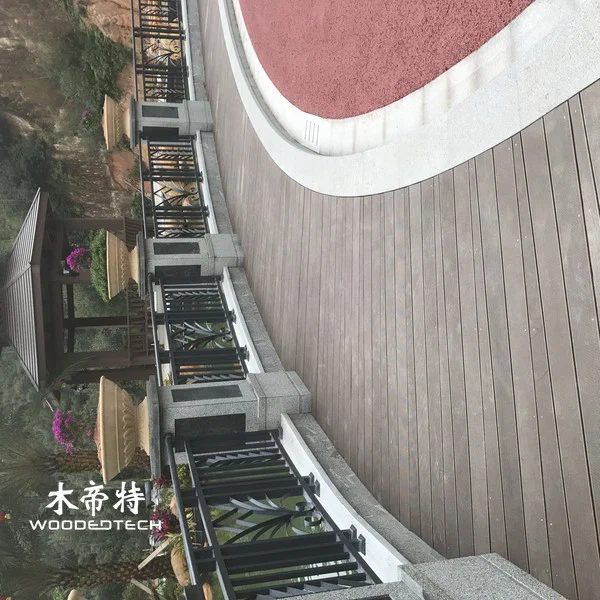
A composite deck estimator helps contractors, distributors, developers, and project planners calculate the materials and budget required for commercial and residential decking projects. By estimating deck board quantities, substructure components, accessories, and installation costs before ordering, buyers can reduce material waste, control procurement expenses, and improve project scheduling.
What a Composite Deck Estimator Should Include
An accurate composite decking estimate involves more than measuring the total deck area. Buyers should account for the deck layout, board dimensions, installation direction, joist spacing, and additional components required for a complete installation.
The main information needed for a reliable estimate includes:
- Deck length and width: Determine the total installation area in square meters or square feet.
- Board dimensions: Confirm the actual width, thickness, and standard length of the selected composite deck boards.
- Installation pattern: Consider straight, diagonal, or other custom layouts, as cutting requirements affect material consumption.
- Joist spacing: Follow the manufacturer’s installation specifications to determine the required substructure.
- Accessories: Include clips, starter fasteners, screws, fascia boards, stair components, and edge finishing profiles.
- Waste allowance: Add extra material for cutting, trimming, and installation adjustments.
For example, a rectangular deck measuring 10 m × 8 m has a surface area of 80 m². However, the final order quantity should also reflect board coverage, installation gaps, cutting losses, and the selected decking system.

How to Calculate Composite Deck Board Quantities
The basic calculation starts with the total deck area divided by the effective coverage area of one board.
The formula is:
Deck board quantity = Total deck area ÷ Effective coverage area per board
The effective coverage area is calculated using the board’s actual installation width, including the required spacing between adjacent boards.
For example, consider a WPC decking board with the following specifications:
- Board length: 3.6 m
- Board installation width: 0.15 m
- Installation gap: 0.005 m
- Project area: 80 m²
The effective coverage area per board is:
3.6 × (0.15 + 0.005) = 0.558 m²
The estimated quantity is:
80 ÷ 0.558 ≈ 144 boards
If the project requires a 5% cutting allowance, the estimated order quantity becomes approximately 152 boards.
This calculation provides a starting point for procurement. Actual quantities may vary depending on deck geometry, board orientation, perimeter finishing, and installation conditions. For large commercial projects, preparing a detailed layout drawing before finalizing the order helps prevent shortages and unnecessary surplus.
Estimating Substructure and Installation Accessories
Composite decking requires a suitable supporting structure. Even when the surface area calculation is accurate, overlooking joists and fastening accessories can result in incomplete material orders.
For B2B procurement, the estimator should include the following components:
- Joists: Calculate the number and total length according to the specified joist spacing and deck dimensions.
- Decking clips: Estimate the required quantity based on the number of board connections and the selected fastening system.
- Starter clips: Include additional fasteners for the first board row.
- Screws: Confirm compatibility with the joists and fastening accessories.
- Fascia boards: Measure exposed deck edges that require finishing.
- Stair components: Calculate additional decking boards, stair treads, and riser profiles where applicable.
Joist spacing is particularly important because it affects structural support, material consumption, and installation performance. Different WPC decking profiles may have different support requirements. Buyers should follow the manufacturer’s technical documentation rather than applying one universal spacing specification.
For projects involving balconies, swimming pool surrounds, public walkways, or commercial outdoor spaces, additional attention should be given to drainage, ventilation, load requirements, and local building regulations.
Understanding Composite Deck Cost Estimation
A reliable composite deck cost estimate should separate material expenses from transportation and installation costs. This makes it easier for importers, wholesalers, contractors, and developers to compare supplier quotations.
The total project budget generally includes:
| Cost category | Main considerations |
|---|---|
| Decking boards | Profile, dimensions, surface treatment, and quantity |
| Substructure | Joists, support materials, and accessories |
| Fastening system | Clips, screws, and installation hardware |
| Finishing materials | Fascia boards, stair profiles, and edge trims |
| Transportation | Packaging, shipping volume, freight, and import duties |
| Installation | Labor, equipment, and site preparation |
Composite decking prices vary according to material formulation, manufacturing technology, profile structure, and surface finish. Hollow and solid boards may have different material requirements and price levels. Co-extrusion decking, which features a protective outer layer, may also carry a different cost structure from conventional uncapped WPC products.
For international buyers, comparing quotations based only on the price per board can be misleading. A better approach is to compare the cost per square meter of installed decking, using equivalent specifications, accessories, packaging, and delivery terms.
Factors That Affect Estimating Accuracy
Several project details can significantly change the final material and cost calculation.
First, board dimensions must be confirmed using actual product specifications. Nominal dimensions and effective coverage dimensions are not always identical. Installation gaps, profile shapes, and fastening systems influence the amount of surface area covered by each board.
Second, the deck layout should be reviewed carefully. Irregular shapes, curved edges, multiple levels, and diagonal installation patterns generally require more cutting and generate additional offcuts.
Third, environmental conditions must be considered. WPC decking expands and contracts with temperature changes, so appropriate expansion gaps and installation clearances are necessary. These requirements should follow the manufacturer’s technical guidelines.
Finally, product consistency matters when calculating large orders. Buyers should confirm profile tolerances, color availability, board lengths, packaging quantities, and production lead times before placing bulk orders.
Working with a Reliable WPC Decking Manufacturer
For distributors and contractors handling multiple projects, working directly with an experienced wood plastic composite decking manufacturer can improve both estimating accuracy and procurement efficiency.
A professional manufacturer should provide detailed product specifications, installation instructions, technical drawings, and accessory recommendations. These resources help buyers calculate material quantities using actual product dimensions rather than general assumptions.
OEM and wholesale buyers may also need customized board lengths, colors, surface textures, or packaging configurations. Discussing these requirements during the quotation stage helps manufacturers assess production feasibility and provide more accurate pricing.
Before confirming a bulk order, buyers should request a complete material breakdown covering decking boards, joists, clips, screws, fascia profiles, and other installation components. A sample-based evaluation can also help verify color, surface texture, dimensional consistency, and product quality.
Accurate estimating begins with reliable product data and a clear understanding of installation requirements. By combining precise measurements, realistic waste allowances, complete accessory calculations, and manufacturer support, B2B buyers can prepare more dependable composite decking budgets and make better purchasing decisions for projects of different sizes.
Related Articles


Related Products
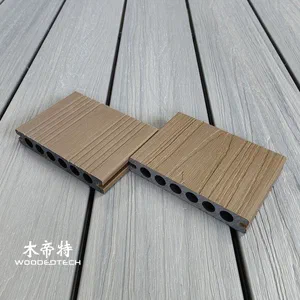 GD13823-3 Teak TK Co Extruded Decking Is a Popular Choice from Composite Decking Suppliers for Outdoor Flooring Projects
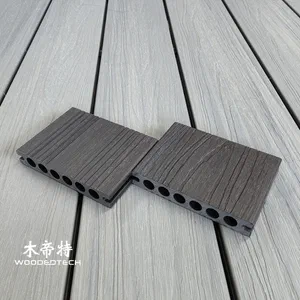 GD13823-3 Walnut WN Co Extruded Decking Features a Dark Rich Color That Helps Resist Visible Dirt and Stains
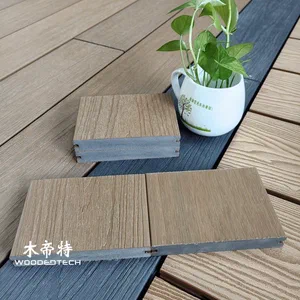 The GD14020S Composite Decking on Sale Features a Solid Core Structure Designed to Withstand Extreme Outdoor Temperature Changes and Freezing Conditions