
Composite Deck Estimate Calculator: A Practical Guide for Industrial Projects
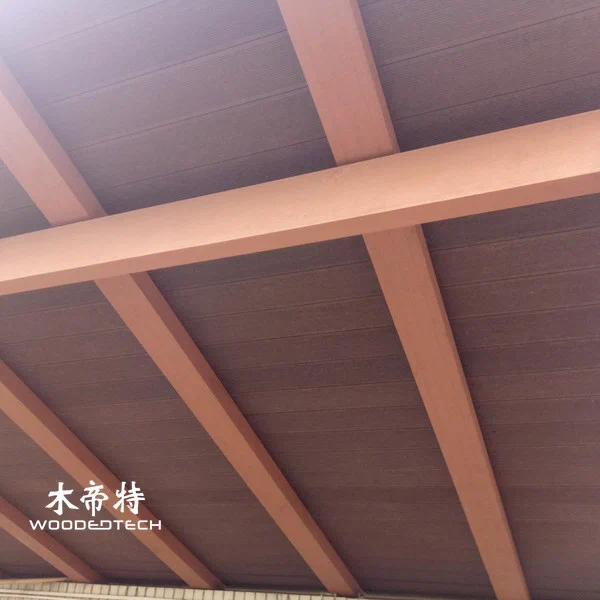
A composite deck estimate calculator helps industrial buyers forecast the material quantities and project costs required for commercial decking installations. By calculating deck area, composite decking boards, substructure components, accessories, and installation allowances, procurement teams can prepare more accurate budgets and compare supplier quotations before placing bulk orders.
What Does a Composite Deck Estimate Calculator Include?
For industrial and commercial projects, a reliable composite decking cost estimate should cover more than the price per board. Buyers need to evaluate the complete material package, including decking boards, joists, clips, screws, edge trims, fascia boards, and other installation accessories.
The main inputs typically include:
- Deck dimensions: total length, width, and usable surface area.
- Board specifications: board width, length, thickness, and profile type.
- Installation layout: board direction, spacing, and joint arrangement.
- Substructure requirements: joist spacing, support conditions, and fixing systems.
- Waste allowance: additional materials for cutting, offcuts, and installation adjustments.
These details help buyers estimate material demand and reduce the risk of ordering insufficient quantities or carrying excess inventory.
How to Calculate Composite Decking Material Quantities
Start by multiplying the deck length by its width to determine the total surface area. For irregular commercial platforms, divide the layout into smaller rectangles, calculate each section separately, and add the results.
For example, a rectangular deck measuring 30 meters by 20 meters has a surface area of 600 square meters. If the project requires a 7% cutting and installation allowance, the estimated material coverage becomes 642 square meters.
The next step is to calculate the number of boards. If each board provides an effective coverage width of 0.14 meters, including the specified installation gap, and measures 3 meters long, its approximate coverage is 0.42 square meters. Dividing 642 square meters by 0.42 gives approximately 1,529 boards.
This calculation is an initial estimate, not a final bill of materials. Actual quantities depend on board dimensions, usable coverage, deck geometry, joint placement, and manufacturer installation instructions. Joists and fasteners should be calculated separately according to the selected decking system and engineering requirements.
Estimating Costs for Large-Scale WPC Decking Projects
A practical composite deck cost estimate separates material costs from logistics and installation expenses. The basic formula is:
Estimated project cost = decking materials + substructure + accessories + freight + installation + contingency.

For international buyers, quotations should identify the pricing basis, such as EXW, FOB, or CIF, where applicable. Freight, import duties, customs clearance, local taxes, and inland transportation can significantly affect the landed cost. Confirm whether the supplier’s quotation includes clips, screws, trims, and packaging.
Product specifications also influence pricing. Standard WPC decking, capped composite decking, and co-extrusion decking can differ in surface protection, appearance, and maintenance requirements. Compare products with equivalent dimensions, performance specifications, warranty terms, and intended applications rather than selecting a supplier based on unit price alone.
Improving Estimate Accuracy Before Bulk Purchasing
Before confirming an order, provide the manufacturer with project drawings, deck dimensions, preferred colors, board profiles, installation conditions, and destination port. A qualified wood plastic composite decking manufacturer can review the layout, recommend suitable profiles, and prepare a detailed bill of materials.
For repeat commercial projects, ask suppliers to confirm production tolerances, packaging quantities, minimum order requirements, lead times, and batch consistency. Request samples and technical documentation where necessary, particularly for public walkways, pool decks, and other demanding outdoor applications.
A calculator establishes a useful budget baseline, while a manufacturer-reviewed material schedule helps translate that estimate into a practical procurement plan.
FAQ
Q: How much extra composite decking should I order?
A: A preliminary allowance of 5–10% is often used for straightforward layouts, but complex shapes, diagonal installation, and extensive cutting may require more. Confirm the appropriate allowance with the installer or manufacturer.
Q: Does a composite deck estimate include joists and fasteners?
A: Not necessarily. Check whether the calculator covers only decking boards or includes the complete installation system, including joists, clips, screws, and finishing accessories.
Q: How can international buyers obtain an accurate bulk quotation?
A: Send the supplier project drawings, required quantities, board specifications, destination port, and preferred delivery terms. Request an itemized quotation that clearly identifies product costs and excluded charges.
Related Articles
Related Products
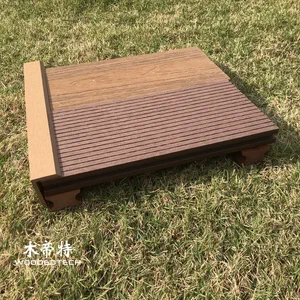
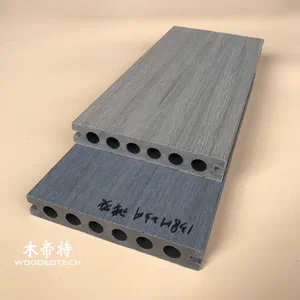 GD13823 Composite Decking Material Features Six Small Round Holes to Reduce Weight While Maintaining Structural Strength
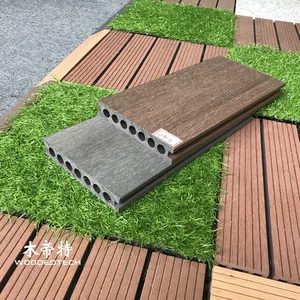 GD13823-2 Wood Versus Composite Decking Features Seven Round Holes with Wood Grain and Brushed Textures on Opposite Sides
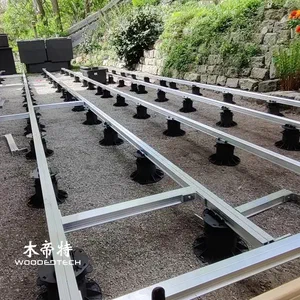
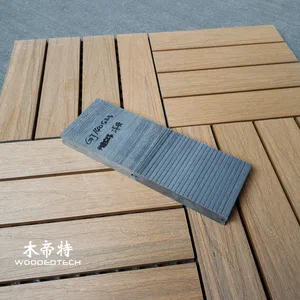 GD14023S Composite Deck Materials Feature a Solid Structure and Side Grooves for Better Adaptability in Extremely Cold Climates