
Composite Deck Boards Tongue and Groove: Benefits and Applications

Tongue-and-groove composite deck boards use interlocking edges to create a consistent surface with concealed fasteners and clean joints. For WPC extrusion mold designers and decking manufacturers, the right combination of profile geometry, hollow or solid construction, internal ribs, and surface patterns determines board strength, material consumption, installation efficiency, and long-term performance.
How Tongue-and-Groove Profile Design Affects Performance
The tongue-and-groove connection allows adjacent boards to fit together through a projecting tongue and a matching groove. Compared with conventional exposed-fastener layouts, this design can create a more uniform appearance while reducing visible screws and simplifying alignment. However, the connection must withstand installation forces, thermal movement, and repeated loading without cracking or loosening.
From an extrusion mold design perspective, the tongue thickness, groove depth, engagement clearance, and edge-wall thickness require careful coordination. A tongue that is too thin may break during installation, while an excessively tight fit can make assembly difficult and restrict expansion. Consistent dimensions along the full board length are essential for reliable interlocking and efficient installation across large decking projects.
Hollow vs. Solid Composite Deck Boards
Hollow and solid structures serve different performance and cost requirements. Hollow WPC decking uses internal cavities to reduce material consumption and board weight, making long boards easier to handle and transport. It can also reduce extrusion material costs, although cavity geometry and wall thickness must be carefully designed to prevent excessive deflection or local crushing.

Solid composite decking provides greater material continuity and can offer better resistance to concentrated loads, impact, and edge damage. However, its higher material consumption increases weight, shipping costs, and potentially the overall product price. Solid profiles may be suitable for demanding applications, while hollow profiles are often attractive for residential decks, balconies, and projects where weight and cost control are priorities.
Rib Design and Structural Reinforcement
Internal ribs improve the stability of hollow decking profiles by supporting the upper and lower walls and limiting deformation under load. Well-positioned ribs can increase bending stiffness without requiring a fully solid cross-section. Their number, thickness, spacing, and connection to the outer walls influence structural performance and extrusion quality.
Too few ribs may leave broad unsupported areas, while excessive rib thickness increases material use and can create uneven cooling or residual stress. During mold development, designers should balance structural requirements with melt flow, die pressure, cooling behavior, and production speed. Prototype testing and load evaluation help confirm whether the selected rib arrangement meets the intended application requirements.
Surface Patterns and Installation Applications
Surface texture affects appearance, traction, cleaning, and the perceived quality of composite decking. Wood-grain embossing creates a natural timber appearance, while brushed or grooved textures offer alternative visual styles. Deeper patterns may improve grip under certain conditions, but slip resistance must be verified through appropriate testing rather than judged by appearance alone.
Tongue-and-groove WPC decking is suitable for residential patios, garden walkways, balconies, and selected commercial outdoor areas. Successful installation depends on compatible substructures, correct joist spacing, adequate drainage, and allowance for temperature-related expansion. Manufacturers should also verify that surface treatments do not interfere with profile dimensions or interlocking tolerances. Matching the profile structure to the intended load, climate, and installation method helps deliver a practical balance of durability, weight, cost, and appearance.
FAQ
Q: Are hollow tongue-and-groove composite deck boards strong enough for outdoor use?
A: Yes, when the profile walls and internal ribs are properly designed and the finished board meets the required load and span specifications.
Q: What is the main advantage of tongue-and-groove composite decking?
A: Its interlocking edges support consistent board alignment and concealed fastening, creating a cleaner surface with an efficient installation process.
Q: How does extrusion mold design affect composite decking quality?
A: Mold design controls profile dimensions, wall thickness, rib formation, and dimensional consistency, all of which influence strength, material efficiency, and installation fit.
Related Articles
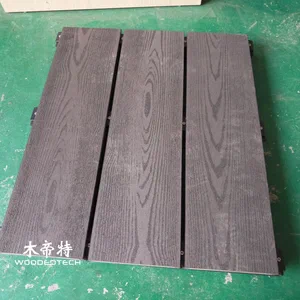 Composite Decking Accessories: Industrial Solutions for 2026
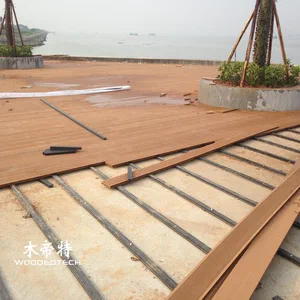 Composite Decking Square Edge: Industrial Applications and 2026 Trends
 len("Composite Board for Decking: B2B Supply Trends and Performance Guide")
 0.5 Composite Deck Board Provides a Compact Profile Choice for Specific Outdoor Flooring Designs
Related Products
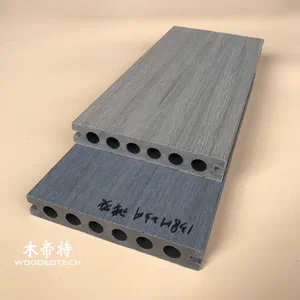 GD13823 Composite Decking Material Features Six Small Round Holes to Reduce Weight While Maintaining Structural Strength
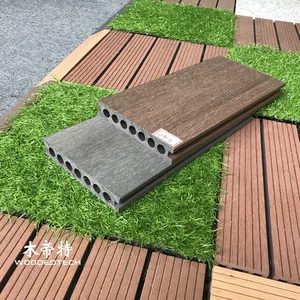 GD13823-2 Wood Versus Composite Decking Features Seven Round Holes with Wood Grain and Brushed Textures on Opposite Sides
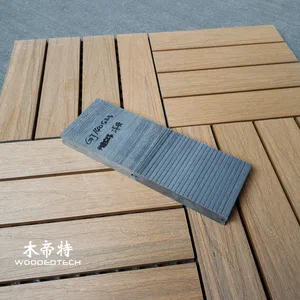 GD14023S Composite Deck Materials Feature a Solid Structure and Side Grooves for Better Adaptability in Extremely Cold Climates