Composite Cladding Boards: A B2B Guide to Performance, Quality and Selection
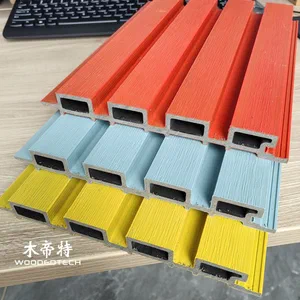
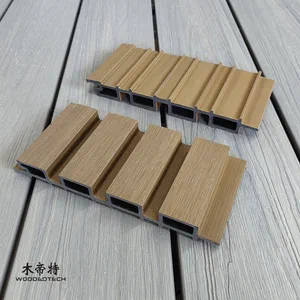
Composite cladding boards are engineered wood-plastic composite (WPC) products designed to provide durable exterior wall protection, consistent appearance, and reduced maintenance compared with traditional timber. For B2B buyers, selecting the right composite cladding requires more than comparing surface finishes and prices. Material composition, mechanical performance, dimensional accuracy, weather resistance, and factory quality control all influence the product’s service life and suitability for outdoor projects.
Understanding Composite Cladding Board Performance
WPC cladding combines wood fiber or wood flour with thermoplastics and functional additives. Depending on the manufacturing process and product design, the formulation may include HDPE, PVC, or other polymers, along with coupling agents, stabilizers, pigments, and processing aids.
The quality of the finished board depends on the consistency of these ingredients, extrusion conditions, cooling procedures, and surface treatment. Poorly controlled production can lead to uneven density, internal voids, dimensional variations, weak edges, or inconsistent colors.
For importers, distributors, contractors, and construction material wholesalers, it is important to evaluate the complete product rather than relying on a manufacturer’s appearance samples. A reliable supplier should provide technical specifications, production standards, inspection records, and representative test samples before bulk orders are approved.
Essential WPC Quality Tests Before Shipment
A professional factory inspection should cover both physical properties and visual quality. Testing should follow agreed product specifications and, where applicable, relevant ASTM, EN, or ISO methods. The same sampling procedures and acceptance criteria should be used throughout production.
1. Dimensional Accuracy Inspection
Dimensional accuracy directly affects installation efficiency and the finished appearance of exterior walls. Inspectors measure board length, width, thickness, profile geometry, and straightness using calibrated measuring instruments.
Measurements should be taken from multiple positions along the board to identify variations caused by extrusion or cooling. Inspectors also check tongue-and-groove connections, clip grooves, and other installation features where applicable.
Typical inspection points include:
- Length and width deviations against approved specifications.
- Thickness consistency across different positions.
- Profile shape and connection dimensions.
- Board straightness and edge alignment.
- Surface flatness and twisting.
Dimensional tolerances should be agreed upon before production rather than established after manufacturing. Consistent dimensions help reduce installation adjustments, material waste, and project delays.
2. Density Testing
Density is an important indicator of material consistency and manufacturing stability. Variations may indicate inconsistent raw material feeding, excessive foaming, internal voids, or changes in extrusion conditions.
Inspectors select representative samples, measure their dimensions, and determine their mass using a calibrated balance. Density is calculated by dividing mass by volume.
For hollow composite cladding boards, the actual material volume should be distinguished from the overall external volume. The calculation method must remain consistent when comparing production batches.
Density alone does not determine product quality. A heavier board is not automatically stronger or more durable. Buyers should evaluate density alongside bending strength, impact resistance, and water absorption results.
3. Impact Resistance Testing
Composite cladding may experience impacts during transportation, installation, and normal outdoor use. Impact testing helps assess the material’s resistance to sudden mechanical forces.
Depending on the product specification, factories may use falling-weight impact tests or other agreed impact-testing methods. Samples are subjected to a controlled impact, after which inspectors examine the surface and internal structure for cracking, chipping, deformation, or breakage.
Testing may also be performed at different temperatures because polymer-based materials can respond differently to impact under cold and warm conditions.

For commercial projects, impact resistance is particularly important when boards are installed in accessible exterior areas, public buildings, balconies, or locations exposed to frequent contact.
4. Water Absorption Testing
Although WPC cladding is designed for outdoor applications, it should not automatically be considered completely waterproof. Water can enter through exposed edges, damaged surfaces, cut ends, or poorly protected internal structures.
Water absorption testing measures the change in sample mass after exposure to water under specified conditions. Samples are weighed before and after immersion, following the agreed test procedure.
The absorption rate is calculated as:
Water absorption (%) = [(Wet mass - Dry mass) / Dry mass] × 100
Lower water absorption generally indicates better resistance to moisture penetration. However, the test method, immersion period, temperature, and sample preparation must be standardized to make results comparable.
For exterior applications, buyers should also consider drainage design, installation gaps, ventilation, and protection of cut edges. These factors influence long-term moisture performance.
Weather Resistance and Mechanical Performance
5. Color Stability and UV Resistance
Long-term sunlight exposure can cause fading, discoloration, and surface degradation. Color stability testing evaluates how well composite cladding maintains its original appearance under simulated weathering conditions.
Factories may use UV accelerated weathering equipment to expose samples to controlled ultraviolet radiation, moisture, and temperature cycles. Color changes can then be assessed using a colorimeter, with results expressed through a color difference value such as ΔE.
Inspectors should compare tested samples with approved reference samples and record changes in color, gloss, and surface condition.
For outdoor WPC cladding, UV stabilizers, pigments, polymer selection, and surface protection all influence color retention. Co-extruded products may offer an additional protective outer layer, depending on the quality of the cap material and manufacturing process.
Buyers should request weathering test reports that specify exposure conditions and testing duration instead of relying on general claims such as UV resistant or fade resistant.
6. Bending Strength Testing
Bending strength indicates how well a cladding board withstands loads applied perpendicular to its length. It is particularly relevant during handling, installation, and service.
A typical factory test uses a universal testing machine with the sample supported at two points. A controlled force is applied at the center until the specified deflection or failure point is reached.
The inspection record should include:
- Maximum applied load.
- Flexural strength.
- Flexural modulus, where required.
- Deflection under load.
- Failure condition and sample appearance.
For hollow profiles, wall thickness, internal rib structure, and cross-sectional design significantly influence bending performance. Solid and hollow boards should therefore be assessed against their own product specifications rather than compared using weight alone.
Bending results help buyers determine whether a particular profile is suitable for its intended installation system and support spacing.
7. Appearance Inspection and Surface Quality
Visual inspection is one of the most important steps in pre-shipment quality control because surface defects can affect both installation results and customer satisfaction.
Inspectors should examine boards under consistent lighting conditions and compare them with approved color and texture samples.
Common inspection points include:
- Color consistency between boards and production batches.
- Wood grain, embossing, and surface texture uniformity.
- Scratches, dents, cracks, and chipped edges.
- Bubbles, exposed fibers, and surface contamination.
- Extrusion lines, uneven gloss, and visible deformation.
- Co-extrusion layer coverage and edge integrity.
- Packaging condition and product identification labels.
For products with wood grain or embossed finishes, the inspection should also check pattern consistency and surface definition. Minor natural-looking variations may be acceptable if they fall within the agreed appearance standard.
A clear defect classification system helps distinguish critical, major, and minor defects. This makes acceptance decisions more objective and reduces disputes between manufacturers and overseas buyers.
Building a Reliable Pre-Shipment Quality Control Process
Testing individual properties is only one part of quality management. A complete inspection process should begin with raw material verification, continue through in-process production checks, and finish with final product inspection before shipment.
For B2B orders, buyers should establish an approved sample, technical data sheet, inspection checklist, and acceptance criteria before mass production. Random sampling should cover different production batches, board profiles, and packaging units rather than selecting only convenient samples.
The final inspection report should record product specifications, sampling quantities, test methods, measured results, equipment calibration status, photographs, and any nonconformities. Failed products should be segregated, reworked where appropriate, or rejected according to the agreed quality requirements.
Packaging also deserves attention. Composite cladding boards should be protected against abrasion, deformation, moisture exposure, and handling damage during transportation. Inspectors should verify bundle quantities, protective materials, labels, and shipping marks against the purchase order.
For importers and distributors, a manufacturer’s testing capability is an important part of supplier evaluation. Consistent production records, transparent test results, and documented corrective actions provide stronger evidence of manufacturing reliability than marketing claims alone.
Choosing composite cladding boards should therefore involve a balanced assessment of mechanical strength, dimensional consistency, moisture resistance, color stability, and surface quality. When these properties are verified through a structured pre-shipment inspection process, B2B buyers can reduce quality risks, protect project schedules, and build more dependable long-term supply relationships.
Related Articles
 WPC Wood Cladding: Performance, Applications, and Benefits for Industrial Projects
 Teak Composite Cladding: Performance, Durability, and Industrial Applications
 Composite Cladding Material: A B2B Guide to Performance and Applications
 Composite Cladding Oak Solutions for Commercial Building Projects 2026