
Composite Bench Installation and Maintenance: Key Considerations for Industrial Buyers
Composite benches made from wood plastic composite (WPC) offer a durable, low-maintenance seating solution for commercial landscapes, public spaces, parks, resorts, and outdoor facilities. For industrial buyers, successful installation depends on selecting suitable materials, preparing a stable supporting structure, using the correct fixing methods, and following a practical maintenance schedule.
1. Check the Site and Prepare the Installation Area
Before installing a composite bench, inspect the installation site and confirm that the ground can support the expected load. Commercial applications such as parks, shopping centers, public gardens, and outdoor leisure areas often experience heavier use than residential settings, so structural stability should be a priority.
For ground-level installations, prepare a firm, level base using concrete, compacted gravel, or another suitable foundation. Where the bench will be installed on an existing deck or paved surface, check that the supporting structure is strong enough to carry the combined weight of the bench and its users.
Measure the installation area and mark the fixing positions before assembly. Allow sufficient clearance around the bench for pedestrian movement, cleaning, and future maintenance. For outdoor installations, consider drainage, sunlight exposure, and proximity to irrigation systems.
2. Prepare the Supporting Frame
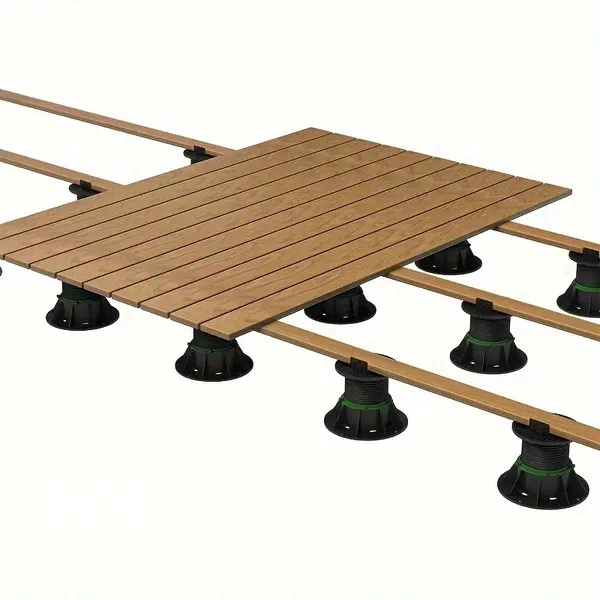
The subframe provides the structural support for the composite seating boards. Depending on the bench design, it may consist of galvanized steel, powder-coated aluminum, or treated timber. For commercial outdoor projects, metal frames are often preferred because they provide reliable load-bearing performance and resistance to moisture-related deterioration.
Check that all frame components are straight, securely connected, and correctly aligned. Install cross supports at the intervals specified by the bench manufacturer. Insufficient support can cause excessive board deflection, loose connections, or premature damage under repeated use.
If the bench is assembled from WPC profiles, ensure that the frame dimensions match the specified board dimensions and fixing positions. Avoid forcing boards into an incorrectly sized frame, as this can create unnecessary stress around screw holes and connection points.
3. Cut and Fit the Composite Boards
Accurate cutting is important for achieving clean edges and consistent spacing. WPC boards can generally be cut using standard woodworking tools, including circular saws and miter saws fitted with suitable carbide-tipped blades.
Before cutting, measure each board carefully and mark the cutting line. Secure the material firmly to prevent movement during operation. Wear appropriate eye protection and respiratory protection when cutting, as machining can generate dust and small particles.
After cutting, remove burrs and sharp edges using suitable finishing tools. Test-fit each board on the supporting frame before final installation.
For commercial composite benches, pay particular attention to the following details:
- Keep seat boards evenly aligned to maintain a consistent appearance.
- Avoid excessive pressure when tightening screws.
- Use compatible stainless steel or corrosion-resistant fasteners.
- Check that board ends are properly supported.
- Follow the manufacturer’s recommendations for drilling and fastening.
These measures help reduce installation errors and improve the finished bench’s appearance.
4. Choose the Correct Fixing Method and Allow Expansion Gaps
Composite bench components can be secured using concealed clips, stainless steel screws, or manufacturer-designed mechanical connectors. The appropriate method depends on the bench structure, board profile, and intended application.
Concealed fixing systems provide a cleaner appearance and reduce visible fasteners. Direct screw fixing is often practical for commercial furniture because it allows individual boards to be inspected or replaced when necessary.
When using screws, pre-drill holes where recommended by the manufacturer. Avoid overtightening, particularly near board ends, because excessive fastening pressure can contribute to cracking or deformation.
Temperature changes can cause WPC materials to expand and contract. Leave the specified clearance between adjacent boards and at board ends. The required expansion gap depends on board length, temperature during installation, material formulation, and manufacturer specifications.
Do not assume that all composite products require the same spacing. Follow the product installation manual and maintain consistent gaps throughout the assembly. Adequate clearance helps prevent boards from pressing against one another during hot weather.
5. Complete Assembly and Check Structural Stability
Once the boards and supporting frame have been installed, inspect every connection before putting the bench into service.
Check that:
- All seat boards are securely fastened.
- The supporting frame is level and stable.
- No sharp edges or protruding screws remain.
- Board spacing is consistent.
- The bench does not rock or shift under normal loading.
- All exposed metal components have suitable corrosion protection.
For public and commercial projects, the completed bench should also be checked against the specified load requirements and relevant local safety standards. Where benches are installed in high-traffic areas, additional attention should be given to anchoring, vandal resistance, and the accessibility of surrounding walkways.
If the bench is designed to be anchored to a concrete foundation, use suitable anchors and follow the structural installation specifications. Do not rely on the weight of the bench alone where the project requires permanent ground fixing.
6. Maintenance Tips for Long-Term Performance
One of the main advantages of WPC outdoor furniture is its relatively low maintenance requirement compared with traditional timber. However, regular cleaning and inspection are still necessary, especially in commercial environments.
A basic maintenance routine should include:
- Cleaning the seat surface with water and mild detergent to remove dust, dirt, and organic deposits.
- Using a soft brush or cloth instead of abrasive cleaning equipment.
- Removing leaves and standing debris from gaps and underneath the bench.
- Checking screws, clips, anchors, and frame connections periodically.
- Inspecting for unusual movement, surface damage, or loose components.
- Cleaning stains promptly to reduce the risk of permanent discoloration.
Avoid aggressive solvents, strong acids, and unsuitable chemical cleaners unless the manufacturer confirms compatibility. Pressure washing should only be used within the product manufacturer’s recommended pressure and distance limits.
In coastal or industrial environments, inspect metal fasteners and supporting frames more frequently because salt exposure, humidity, and airborne pollutants can accelerate corrosion.
Unlike natural timber, most WPC products do not require regular painting, staining, or protective oiling. Nevertheless, prolonged exposure to intense sunlight and changing weather conditions may gradually affect surface appearance. Following the recommended cleaning and inspection schedule helps maintain the bench’s appearance and serviceability.
7. Key Purchasing Considerations for Industrial Buyers

For distributors, contractors, landscape designers, and project procurement teams, installation requirements should be considered before placing a bulk order. A suitable composite bench should combine structural reliability, weather resistance, consistent manufacturing quality, and straightforward maintenance.
When evaluating a WPC bench supplier, review the following specifications:
- Material composition: Check the wood fiber and polymer formulation, surface treatment, and product consistency.
- Structural design: Confirm frame material, board thickness, support spacing, and load-bearing specifications.
- Environmental performance: Review resistance to moisture, UV exposure, temperature changes, and outdoor weathering.
- Installation compatibility: Confirm available fixing accessories, assembly instructions, and replacement component options.
- Customization: Check available colors, dimensions, surface textures, and branding options.
- Quality control: Request relevant test reports, product samples, and inspection documentation.
For large-scale developments, it is also worth confirming packaging methods, spare-part availability, production lead times, and container loading efficiency. These factors can influence the total project cost as much as the initial product price.
A well-designed composite bench should be easy to assemble, stable during daily use, and straightforward to maintain. By checking the supporting structure, selecting suitable fixing accessories, allowing for material expansion, and following routine inspection procedures, industrial buyers can reduce installation problems and achieve dependable long-term performance across commercial outdoor projects.
Related Articles
Related Products
 F10050 Extra Thick WPC Outdoor Panel Provides Waterproof Moisture Resistant and Rot Proof Material for Outdoor Benches
 F5732 WPC Panel Uses Include One of the Common Low Thickness Materials for Outdoor Bench Manufacturing
 F9040 Four Sides Flat Solid WPC Outdoor Panel Is Commonly Used for Durable Outdoor Bench Applications