
China WPC Flooring: A Comprehensive Guide for Global B2B Buyers
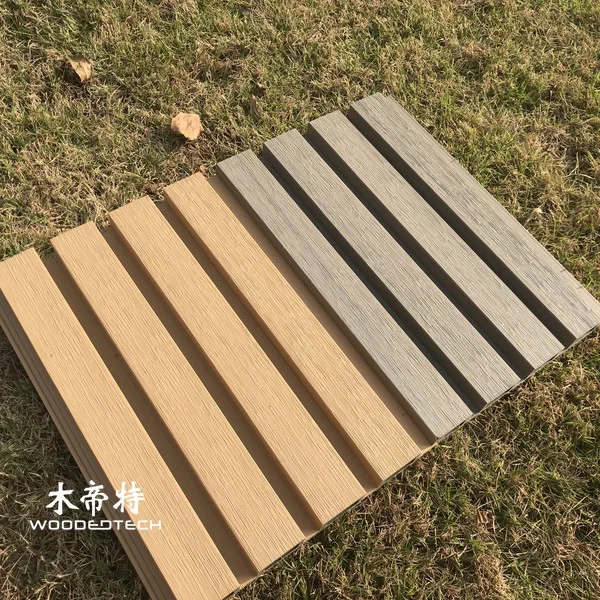
China WPC flooring is a wood-plastic composite flooring solution designed for outdoor applications such as gardens, patios, balconies, pool surrounds, terraces, and commercial landscapes. For international buyers, sourcing from a Chinese WPC flooring manufacturer offers access to competitive production costs, flexible product customization, and scalable manufacturing capacity. Understanding material composition, product specifications, quality standards, and supplier capabilities is essential when selecting the right product for your market.
What Is WPC Flooring?
WPC flooring, or wood-plastic composite flooring, is manufactured by combining wood fibers or wood flour with thermoplastic materials, processing additives, and stabilizers. The resulting composite material combines the natural appearance of wood with the practical advantages of plastic.
Unlike traditional timber flooring, outdoor WPC flooring does not require regular painting, staining, or preservative treatment. It is designed to withstand changing weather conditions while maintaining its appearance and structural performance.
Common outdoor applications include:
- Residential gardens and backyard patios
- Hotel terraces and resort walkways
- Swimming pool surrounds and outdoor leisure areas
- Commercial balconies and rooftop spaces
- Public parks, pedestrian pathways, and landscape projects
For distributors, contractors, and building material importers, WPC flooring provides an alternative to natural wood that can reduce long-term maintenance requirements.

Why Source WPC Flooring from China?
China has developed a mature wood plastic composite manufacturing industry, supported by established raw material supply chains, extrusion technology, and large-scale production facilities.
Working directly with a China WPC flooring factory can offer several advantages. Manufacturers often provide different board profiles, surface finishes, dimensions, colors, and packaging options. This flexibility allows importers to develop product ranges that match local market preferences.
Another advantage is manufacturing scalability. Established factories can support wholesale orders, OEM production, private-label packaging, and customized product development. Buyers serving multiple markets can also work with suppliers to adjust product specifications according to climate conditions, installation practices, and project requirements.
However, not every supplier has the same production capabilities. Buyers should distinguish between actual manufacturers and trading companies by checking factory facilities, extrusion equipment, quality control procedures, and production experience.
Types of Outdoor WPC Flooring
Different WPC flooring structures are designed for different applications, budgets, and performance requirements.
Hollow WPC Flooring
Hollow WPC boards contain internal cavities that reduce material consumption and product weight. They are generally suitable for residential outdoor areas and projects where cost efficiency and easier handling are important.
The internal structure, wall thickness, and reinforcement design should be evaluated carefully. Poorly designed hollow boards may have insufficient load-bearing capacity for demanding applications.
Solid WPC Flooring
Solid composite boards contain a more substantial material structure and generally offer greater resistance to localized impact and heavy loads. They are commonly considered for commercial walkways, public spaces, and other applications requiring additional structural strength.
Their higher material consumption can result in a higher purchasing cost compared with hollow alternatives.
Co-Extrusion WPC Flooring
Co-extrusion WPC flooring features a protective polymer layer surrounding the composite core. This outer layer is designed to improve resistance to moisture, staining, UV exposure, and everyday surface wear.
It is particularly attractive for premium outdoor projects, hospitality developments, and markets where customers prioritize appearance retention and reduced maintenance.
Surface treatments such as wood-grain embossing and brushed textures can further enhance the finished product.
Key Quality Factors International Buyers Should Evaluate
When purchasing WPC flooring from China, product appearance alone is not enough to determine quality. Buyers should examine the material formulation, manufacturing consistency, and finished-board performance.
Important evaluation criteria include:
- Raw material composition: Check the wood fiber, polymer, and additive formulation. Consistent material ratios help maintain product stability.
- Density and structure: Evaluate board density, wall thickness, and internal profile design according to the intended application.
- Weather resistance: Request evidence of UV resistance, moisture resistance, and performance under temperature fluctuations.
- Slip resistance: Check surface texture and relevant test results, especially for swimming pool surrounds and public walkways.
- Dimensional stability: Assess expansion, contraction, and deformation under changing environmental conditions.
- Color consistency: Confirm that production batches maintain consistent colors and surface finishes.
Buyers should request technical data sheets, product samples, and applicable laboratory test reports before placing large orders. Relevant testing may include water absorption, flexural strength, impact resistance, slip resistance, and accelerated weathering.
It is also important to confirm whether the manufacturer has experience supplying products to the destination market and can provide documentation required for local building projects.
Understanding WPC Flooring Prices in China
China WPC flooring prices vary depending on material formulation, board dimensions, structural design, surface treatment, and order quantity.
Hollow boards are generally more economical because they use less material, while solid boards and co-extrusion products usually involve higher material and processing costs.
Several factors influence wholesale pricing:
- Raw material costs, including wood flour and polymer resins
- Board thickness, width, length, and density
- Surface finishes and protective coating technology
- Customized colors, profiles, and packaging
- Minimum order quantities and production volume
- Shipping arrangements and destination port requirements
When comparing quotations, buyers should avoid evaluating suppliers solely by price per square meter or per board. Differences in thickness, weight, formulation, accessories, and packaging can significantly affect the actual purchasing value.
A reliable quotation should clearly identify product specifications, unit pricing, minimum order quantity, production lead time, payment terms, and shipping conditions. Importers should also calculate total landed costs, including freight, customs duties, insurance, and local transportation.
How to Choose a Reliable China WPC Flooring Manufacturer
Supplier evaluation is one of the most important stages of international procurement. A competitive quotation is useful, but long-term cooperation depends on consistent quality, production reliability, and communication.
Start by checking the manufacturer’s production facilities. An established WPC factory should have suitable extrusion lines, material mixing equipment, surface treatment facilities, and inspection procedures. Ask whether the company controls its own production or outsources manufacturing.
Next, request samples and compare them against the technical specifications. Examine surface finish, color uniformity, dimensions, edge quality, and structural consistency. For larger projects, consider arranging third-party inspections before shipment.
Manufacturing experience also matters. Suppliers familiar with export markets are more likely to understand international packaging requirements, container loading, documentation, and communication expectations.
For importers developing their own brands, OEM and private-label services can provide additional value. Discuss custom dimensions, exclusive colors, branded packaging, and product development capabilities before confirming the order.
Installation and Long-Term Performance
Even high-quality WPC flooring requires correct installation to achieve its expected service life. Proper substructure design, drainage, ventilation, and expansion allowances are essential for outdoor applications.
Most outdoor WPC systems use supporting joists and concealed or visible fastening systems. Installation spacing should follow the manufacturer’s technical guidelines and account for local temperature variations.
Boards should not be installed directly on an uneven or poorly drained surface. Adequate ventilation beneath the flooring helps prevent moisture accumulation, while suitable expansion gaps accommodate natural thermal movement.
For distributors and contractors, providing clear installation instructions and compatible accessories can improve customer satisfaction and reduce after-sales issues.
Selecting a China WPC flooring supplier is not simply a matter of finding the lowest wholesale price. The right manufacturing partner should combine stable raw material sourcing, reliable extrusion technology, documented product performance, flexible customization, and dependable export services. By evaluating these factors before ordering, international buyers can build a more competitive outdoor flooring product range and establish sustainable long-term supply relationships.
Related Articles


Related Products
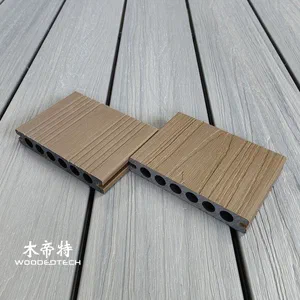 GD13823-3 Teak TK Co Extruded Decking Is a Popular Choice from Composite Decking Suppliers for Outdoor Flooring Projects
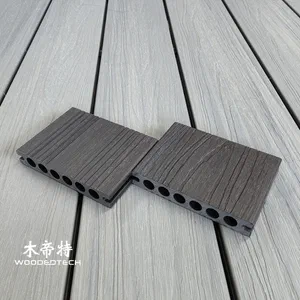 GD13823-3 Walnut WN Co Extruded Decking Features a Dark Rich Color That Helps Resist Visible Dirt and Stains
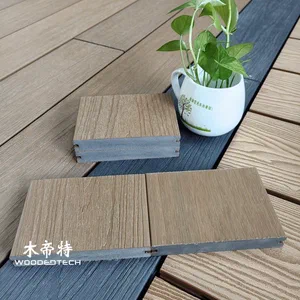 The GD14020S Composite Decking on Sale Features a Solid Core Structure Designed to Withstand Extreme Outdoor Temperature Changes and Freezing Conditions