
China WPC: A Comprehensive Guide to Manufacturers, Products, and Industry Trends
China has become one of the world’s major manufacturing bases for wood plastic composite (WPC) products, supplying decking, wall cladding, fencing, pergolas, and other outdoor building materials to international markets. As an outdoor WPC manufacturer based in Guangdong, China, with more than 10 years of production experience, we believe that choosing the right supplier involves more than comparing prices. Manufacturing consistency, material formulation, extrusion technology, quality control, and long-term cooperation all play important roles in determining the success of a WPC project.
Understanding China’s WPC Manufacturing Industry
Wood plastic composite is a manufactured material that combines wood fiber or wood powder with thermoplastics, typically HDPE, PP, or PVC, along with additives that improve processing and performance. The result is a material that offers a wood-like appearance with reduced maintenance requirements compared with traditional timber.
China’s WPC industry has developed significantly over the past decade. Manufacturers have invested in automated extrusion lines, improved material formulations, surface treatment equipment, and product testing facilities. Guangdong, Zhejiang, Jiangsu, and other industrial regions have established strong manufacturing networks, making it easier for factories to source raw materials, develop new products, and serve overseas customers.
Guangdong has particular advantages in international trade, logistics, and manufacturing support. For export-oriented WPC factories, proximity to major ports and established supply chains helps improve production coordination and shipping efficiency.
However, not every company advertising itself as a WPC manufacturer operates its own production facility. Some businesses focus primarily on trading, while others outsource extrusion and surface treatment. Buyers should understand the actual manufacturing capabilities behind a supplier before placing large-volume orders.
Main WPC Products Manufactured in China

Chinese WPC manufacturers generally offer a broad selection of outdoor products for residential, commercial, and landscaping applications.
- WPC decking: Used for gardens, patios, balconies, swimming pool surroundings, boardwalks, and outdoor entertainment areas.
- WPC wall panels and cladding: Designed for exterior facades, garden walls, balconies, and decorative architectural applications.
- WPC fencing: Provides privacy and boundary solutions for residential properties, commercial buildings, and public spaces.
- WPC pergolas and gazebos: Suitable for outdoor shading, garden structures, and leisure areas.
- WPC louvers and decorative screens: Used for privacy partitions, exterior decoration, sun protection, and architectural detailing.
- WPC outdoor furniture: Includes benches, planter boxes, and other landscaping products.
Product selection should always consider the intended application. For example, decking installed around swimming pools requires appropriate slip resistance, drainage, and resistance to moisture exposure. Exterior wall cladding needs suitable weather resistance, fastening systems, and installation clearances.
A capable manufacturer should offer more than standard product dimensions. Custom colors, surface textures, cross-sectional profiles, lengths, and packaging options can make a significant difference for distributors, contractors, and private-label brands.
How Experienced WPC Manufacturers Control Production Quality
After more than 10 years in outdoor WPC manufacturing, we have learned that finished-product quality starts long before the extrusion process. The selection and preparation of raw materials directly influence product consistency, mechanical properties, appearance, and service life.
Our production approach focuses on several important stages.
First, raw materials must be carefully selected. Wood powder needs controlled particle size and moisture content, while plastic materials must meet the formulation requirements of the intended product. Additives such as coupling agents, UV stabilizers, lubricants, and pigments help improve processing and outdoor performance.
Second, material mixing must remain consistent. An inaccurate formulation can result in uneven colors, weak bonding between wood and plastic components, poor surface quality, or inconsistent mechanical performance.
Third, extrusion parameters require close attention. Temperature, screw speed, feeding rate, cooling conditions, and extrusion pressure all influence the final profile. Experienced production technicians understand that changing one parameter can affect several other product characteristics.
Finally, every batch should undergo appropriate quality inspections. Depending on the product and customer requirements, these may include dimensional checks, visual inspections, density measurements, bending or impact tests, water absorption tests, and weathering evaluations.
We do not believe quality control should happen only when products are ready for shipment. Monitoring production at different stages makes it easier to identify problems early and reduce unnecessary material waste.
Industry Trends: Co-Extrusion, Sustainability, and Customization
The Chinese WPC industry continues to evolve as overseas buyers demand better appearance, improved durability, and more specialized product solutions.
One important development is co-extrusion technology. Unlike conventional single-layer extrusion, co-extrusion produces a protective outer layer around a composite core. This cap layer can improve resistance to staining, fading, moisture penetration, and surface wear, depending on its formulation and construction.
Co-extrusion decking has become increasingly popular in markets where customers expect premium outdoor flooring with reduced maintenance requirements. Manufacturers are also applying similar technology to selected wall cladding and other exterior profiles.
Sustainability is another important industry trend. WPC products can incorporate recycled plastics and wood-based by-products, helping make productive use of materials that might otherwise become waste. However, buyers should not assume that every WPC product is automatically environmentally friendly. Responsible sourcing, material traceability, production waste management, and reliable product documentation are important considerations.
Customization is also becoming more important. Distributors and project developers increasingly look for distinctive colors, realistic wood-grain textures, 3D embossed surfaces, special extrusion profiles, and coordinated outdoor product collections. Manufacturers with in-house product development and extrusion capabilities are better positioned to respond to these requirements.
Choosing the Right China WPC Manufacturer
Finding a suitable supplier requires evaluating both manufacturing strength and business reliability. A competitive quotation is useful, but it should never be the only deciding factor.
We recommend that international buyers pay attention to the following points:
- Factory ownership: Confirm whether the supplier operates its own extrusion lines and production facilities.
- Manufacturing experience: Review its experience with the specific WPC products you intend to purchase.
- Product consistency: Request samples and compare dimensions, color, surface finish, and structural quality.
- Quality management: Ask about incoming material inspections, in-process checks, and finished-product testing.
- Customization capabilities: Confirm whether the factory can develop customized profiles, colors, textures, and packaging.
- Export experience: Check its familiarity with international shipping, export documentation, packaging standards, and destination-market requirements.
- Communication: Evaluate how efficiently the supplier handles technical questions, sample requests, production updates, and after-sales issues.
It is also worth asking for technical data sheets and relevant test reports. These documents help buyers compare products based on measurable performance rather than marketing descriptions alone.
For larger projects, arranging a factory audit or independent product inspection can provide additional confidence before shipment.
Building Long-Term Cooperation with a Chinese WPC Factory
Successful international sourcing is not simply about purchasing products at the lowest possible price. It is about establishing a manufacturing partnership that can support consistent supply, product development, and changing market requirements.
As a Guangdong-based outdoor WPC manufacturer, we value clear communication from the beginning of every project. Buyers should provide their target applications, preferred dimensions, color references, estimated order quantities, and destination-market requirements. This information allows our technical and production teams to evaluate feasibility and recommend suitable solutions.
For OEM and private-label customers, we can work around customized product specifications, packaging designs, and branding requirements. For distributors, stable product specifications and repeatable production quality are particularly important because differences between batches can affect customer satisfaction and inventory management.
We also encourage buyers to discuss realistic production lead times, sample approval procedures, quality acceptance criteria, payment arrangements, and shipping schedules before confirming an order. Establishing these details early helps both sides avoid misunderstandings.
China’s WPC manufacturing industry offers considerable opportunities for overseas importers, wholesalers, contractors, and building-material brands. The best supplier is not necessarily the factory offering the lowest quotation, but the one that combines dependable production capabilities, practical technical knowledge, consistent quality management, and a willingness to grow alongside its customers.
Related Articles
Related Products
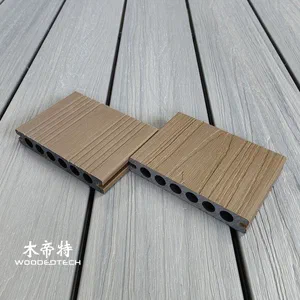 GD13823-3 Teak TK Co Extruded Decking Is a Popular Choice from Composite Decking Suppliers for Outdoor Flooring Projects
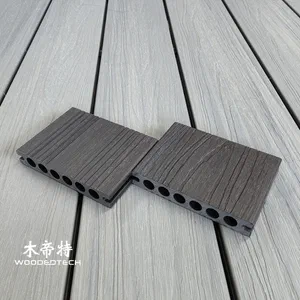 GD13823-3 Walnut WN Co Extruded Decking Features a Dark Rich Color That Helps Resist Visible Dirt and Stains
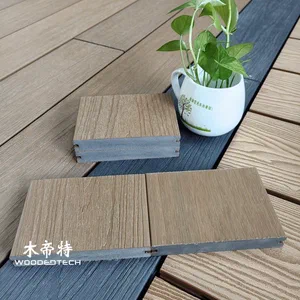 The GD14020S Composite Decking on Sale Features a Solid Core Structure Designed to Withstand Extreme Outdoor Temperature Changes and Freezing Conditions