
Cheap Composite Decking 4m: Cost-Effective Solutions for B2B Projects
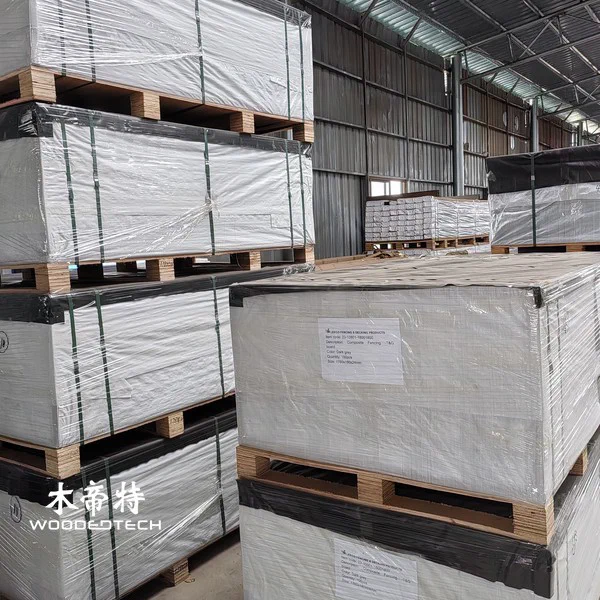
Cheap composite decking in 4m lengths offers a practical balance between material cost, installation efficiency, and transportation requirements for commercial outdoor projects. For distributors, contractors, wholesalers, and building material importers, sourcing affordable 4-meter composite decking boards directly from a reliable WPC manufacturer can help control project budgets without compromising essential product performance.
Why Choose 4m Composite Decking for B2B Projects?
Standardized 4m composite decking boards are widely used in residential developments, commercial landscaping, hotels, resorts, balconies, garden terraces, and public outdoor spaces. Their length provides good coverage while reducing the number of joints required across many decking layouts.
For contractors, fewer board joints can mean a cleaner finished appearance and potentially less installation labor. For wholesalers and distributors, a standard 4m specification also simplifies product planning, inventory management, and order consolidation.
Compared with shorter boards, 4m lengths can reduce the number of individual pieces required for a project. However, the actual savings depend on the deck layout, cutting waste, container loading plan, and local transportation costs. Buyers should evaluate the delivered cost per usable square meter rather than comparing the unit price of individual boards alone.
What Determines the Price of Cheap Composite Decking?
The price of cheap composite decking depends on several manufacturing and purchasing factors. Understanding these variables helps international buyers identify genuine cost-saving opportunities rather than selecting products based only on the lowest quotation.
- Raw material composition: WPC decking typically combines wood powder, recycled or virgin plastic, and functional additives. The quality and proportion of these materials influence strength, dimensional stability, and weather resistance.
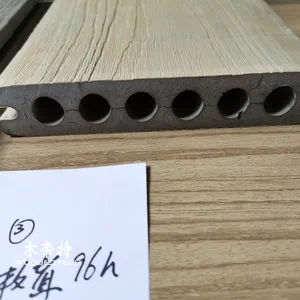
- Board structure: Hollow decking boards generally require less material than solid boards, which can reduce manufacturing costs and product weight. Solid profiles may be more suitable for applications requiring additional structural support.
- Surface treatment: Standard brushed, wood-grain embossed, and co-extruded surfaces involve different production processes and costs.
- Production volume: Larger wholesale orders can improve production efficiency and reduce per-unit manufacturing expenses.
- Packaging and shipping: Board dimensions, bundle quantities, container loading efficiency, and destination port charges all affect the final landed cost.
A competitive quotation should clearly identify the board dimensions, thickness, weight per meter, material composition, surface finish, and packaging specifications. This information allows buyers to compare suppliers on an equivalent basis.
How to Balance Low Cost and Product Quality
Low-cost outdoor WPC decking should still meet the performance requirements of its intended application. Products exposed to sunlight, rainfall, temperature fluctuations, and frequent foot traffic need appropriate material formulations and manufacturing controls.

At the factory level, raw material inspection is an important part of quality management. Wood powder should have controlled particle size and moisture content, while plastic materials should maintain consistent processing characteristics. Additives, pigments, UV stabilizers, and coupling agents also influence the finished board’s appearance and durability.
During extrusion, manufacturers need to control processing temperature, screw speed, cooling conditions, and profile dimensions. Inconsistent production parameters can cause uneven surfaces, dimensional variations, internal defects, or differences between production batches.
Quality inspections should cover:
- Board width, thickness, and length tolerances.
- Surface appearance, color consistency, and texture.
- Flexural strength and load-bearing performance.
- Water absorption and dimensional stability.
- Weathering and UV resistance.
- Slip resistance under relevant testing conditions.
Buyers should request available test reports and product samples before confirming large-volume orders. A lower purchase price is only commercially attractive when the decking performs reliably under the expected installation and environmental conditions.
Hollow vs. Solid 4m Composite Decking
Choosing the right board structure is another effective way to control project costs.
Hollow composite decking is often preferred for large-scale residential and commercial projects where reducing material consumption, product weight, and transportation expenses is important. Its internal cavities reduce the amount of raw material required, making it a cost-effective option for many standard outdoor applications.
Solid composite decking contains more material and generally has greater weight per meter. It may be appropriate for projects with specific structural or installation requirements, although the supporting joist system and installation spacing must still follow the manufacturer’s recommendations.
For both structures, proper installation is essential. Buyers should check the recommended joist spacing, fastening system, expansion gaps, drainage requirements, and edge finishing accessories. Composite decking expands and contracts with temperature changes, so installation allowances should reflect the manufacturer’s technical guidance.
Buying Cheap 4m Composite Decking Directly from a Manufacturer
Working directly with an experienced wood plastic composite decking manufacturer can provide B2B buyers with better control over product specifications, order quantities, customization, and long-term supply arrangements.
A factory-direct supplier can typically offer different board profiles, colors, surface textures, and packaging options. For importers developing their own product ranges, OEM and private-label services can also support customized branding and market positioning.
Before placing a wholesale order, buyers should evaluate several factors:
- Manufacturing capacity and experience with outdoor WPC products.
- Availability of 4m standard decking profiles and customized specifications.
- Consistency of raw materials and production batches.
- Quality inspection procedures and supporting test documentation.
- Export packaging suitable for long-distance transportation.
- Lead times, minimum order quantities, and after-sales support.
It is also useful to request a detailed quotation based on the required volume and destination market. Comparing FOB and CIF pricing, where applicable, helps buyers understand the overall purchasing cost and avoid unexpected expenses.
Reducing Total Project Costs with the Right WPC Supplier
For distributors, contractors, and construction material wholesalers, cheap composite decking should be evaluated as a long-term purchasing decision rather than simply the lowest available board price. Consistent quality, efficient installation, suitable technical specifications, and dependable factory supply all contribute to project profitability.
A reliable manufacturer should help buyers select the appropriate hollow or solid 4m profile, optimize board quantities, minimize cutting waste, and choose a suitable surface finish for the target application. By combining competitive factory pricing with controlled production and practical technical support, international buyers can develop a cost-effective composite decking supply chain for residential and commercial projects.
Related Articles
Related Products
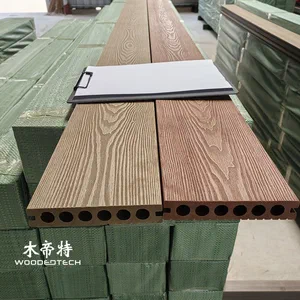
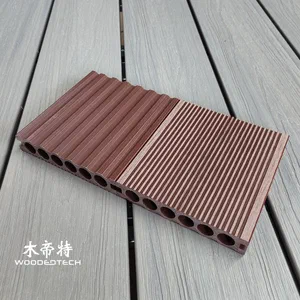 140-25 Double Wave Round Hole E Red Sandalwood Color Wood Polymer Decking Board With Affordable Price For Budget Engineering Projects
 D14021.5 cheap outdoor wpc decking offers affordable pricing with strong quality and reliable durability for outdoor spaces
 D14025-3 cheapest composite decking with classic redwood color provides reliable outdoor flooring performance proven over time