
capped composite decking problems can be evaluated through material structure installation and maintenance factors

Capped composite decking problems are usually traced to three areas: the material structure, the installation method, and day-to-day maintenance. When a customer reports color variation, gap movement, surface marks, or warped boards, the first step is to check whether the deck was installed and serviced within the product’s working limits.
Material structure and color differences
Capped composite boards use a protective outer layer over a composite core, so their appearance and movement behavior are different from wood. Small color shifts between boards or batches can happen because pigments, cap thickness, and production timing are never perfectly identical, especially if material comes from different lots.
This is usually not a defect. The practical check is whether the color change is uniform, whether boards were mixed from multiple cartons, and whether the deck has been exposed to uneven sunlight or drainage patterns. A simple site inspection often shows that what looks like a product issue is actually a batch-mixing or weathering issue.
Installation errors that trigger complaints
Many service calls come from installation mistakes rather than the deck boards themselves. Common examples include missing expansion gaps, over-tightened fasteners, poor joist spacing, unsupported board ends, and failure to keep the substructure level and dry.
If the deck is clicking, lifting, or showing edge stress, measure the gaps at board ends and along the perimeter. Capped composite decking moves with temperature, so tight framing, blocked airflow, or fixed constraints around walls and posts can cause buckling. Correct spacing and proper fastening usually solve the problem without replacing the whole surface.
Expansion, movement, and surface scratches

Expansion issues are most visible in hot weather or on dark-colored boards. If the installer ignored the manufacturer’s gap requirements, the deck may push against trims, rails, or adjoining structures and create ripples or compression marks. The fix depends on whether the board has room to move or whether the layout needs to be reworked.
Surface scratches are another common complaint. The cap layer improves stain resistance, but it does not make the surface scratch-proof. Chairs with metal feet, dragged planters, sand, and improper cleaning tools can leave marks. Light scratches often improve visually after washing, while deeper gouges may need board replacement.
Maintenance requirements
Capped composite decking is low-maintenance, not no-maintenance. It should be cleaned regularly with water, mild soap, and a soft brush to remove dirt, pollen, and organic buildup. Leaves and standing moisture should not be left in place for long periods, because they can create stains or surface dulling.
Avoid harsh solvents, steel wool, pressure washing too close to the surface, and sharp-edged scraping tools. For long service life, inspect fasteners, clear drainage paths, and check that furniture feet and planters are fitted with protective pads.
FAQ
Q: Why does my capped composite decking look different from one board to another? A: Slight variation can come from different production batches, lighting, or weather exposure. If the difference is strong, check whether the boards were mixed from multiple cartons.
Q: What causes capped composite decking to buckle or lift? A: The usual causes are missing expansion gaps, poor joist spacing, or restricted movement at the edges. Once the deck has room to expand and contract, the issue usually stops.
Q: How should I clean capped composite decking? A: Use water, mild soap, and a soft brush, then rinse well. Avoid abrasive pads, strong chemicals, and aggressive pressure washing.
Related Articles
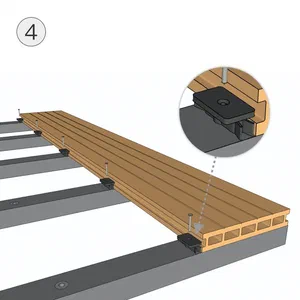 Step-by-Step Guide on how to install capped composite decking
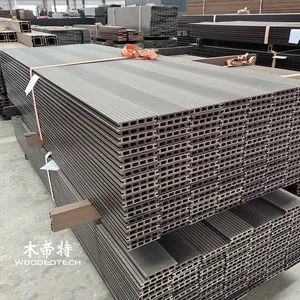 What are the disadvantages of composite decking? An Honest Guide
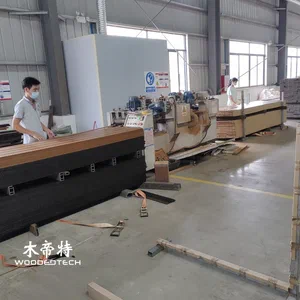 Composite wood deck sealer helps maintain the appearance and performance of outdoor decking
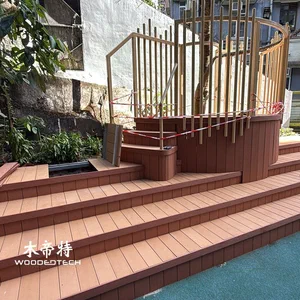 capped decking composite decking board offers enhanced surface protection for outdoor applications
Related Products
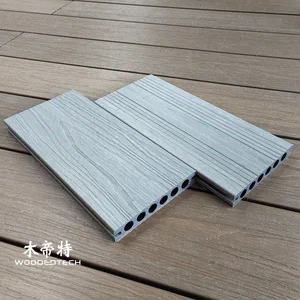 Antique Wood GD13823-3 Co Extruded Composite Wood Decking Boards with Round Holes Are Available in Stock in 3 Meter Lengths Year Round
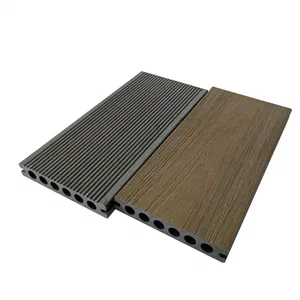 GD14023 Composite Decking Versus Wood Decking Features a Round Hole Structure with Semi Capped Co Extrusion
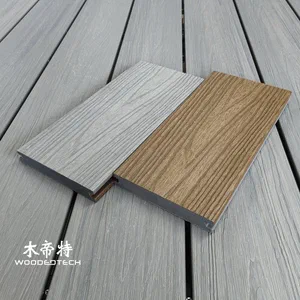 Second Generation Two Color Co Extruded 3D Embossed 3DGD14023S Composite Wood Deck Boards Feature an Extremely Realistic Antique Wood and Teak Grain Texture