Buy WPC Board: A Complete Guide to Quality, Specifications, and Bulk Sourcing
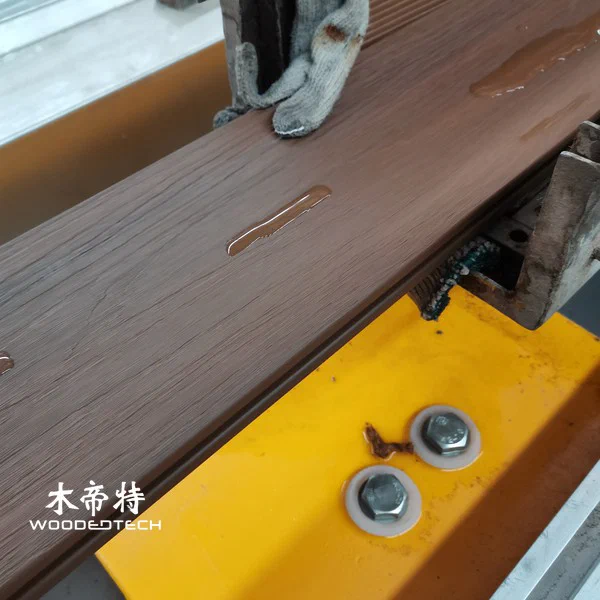
WPC board is a versatile building material made from a combination of wood fiber and thermoplastic polymers, offering an alternative to traditional timber for outdoor and indoor applications. For overseas buyers, purchasing WPC board in bulk requires more than comparing prices. Material composition, manufacturing capabilities, product specifications, quality control, and supplier reliability all play an important role in securing consistent quality and long-term value.
1. Understand WPC Board Quality Before Purchasing
Not all WPC boards are manufactured to the same standard. Differences in raw materials, production processes, and surface treatments can significantly affect product performance.
A typical WPC formulation combines wood flour or wood fiber with plastic materials such as HDPE, PVC, or PP, together with additives that improve processing and product performance. The exact formulation depends on the intended application.
When evaluating WPC board quality, pay attention to the following factors:
- Raw material composition: Ask about the type and proportion of wood fiber and plastic used.
- Density: Consistent density helps indicate stable material processing and product structure.
- Surface quality: Check for uniform color, texture, smoothness, and consistent finishing.
- Structural strength: Evaluate bending performance, impact resistance, and load-bearing capacity where relevant.
- Moisture resistance: Confirm that the product is suitable for the intended indoor or outdoor environment.
- UV resistance: Outdoor boards should have appropriate protection against prolonged sunlight exposure.
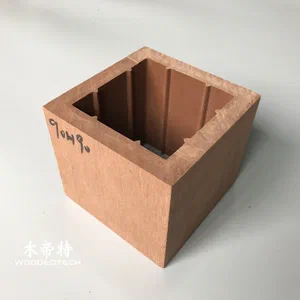
Buyers should also distinguish between solid and hollow WPC profiles. Solid boards are generally selected where greater material strength or impact resistance is required, while hollow profiles can reduce product weight and material consumption. Neither option is automatically better; the right choice depends on installation conditions and application requirements.
2. How to Evaluate a WPC Factory and Supplier
Choosing a reliable WPC supplier is one of the most important steps in international bulk sourcing. A competitive quotation means little if the factory cannot maintain consistent quality or deliver orders on schedule.
Start by checking whether the supplier operates its own manufacturing facility or acts primarily as a trading company. A factory-direct supplier may offer better communication with production teams, greater customization flexibility, and more direct control over manufacturing arrangements.
During supplier evaluation, consider these points:
- Factory production capacity: Review the number of extrusion lines, production equipment, and monthly output.
- Manufacturing experience: Ask how long the factory has produced WPC products and which overseas markets it serves.
- Quality management: Check whether incoming materials, production processes, and finished products are inspected.
- Product development: Determine whether the factory can develop custom dimensions, colors, textures, and extrusion profiles.
- Export experience: Confirm familiarity with export packaging, shipping documents, container loading, and international trade procedures.
Request factory photographs, production videos, and examples of previous projects. If the order value is substantial, arrange a factory audit or appoint a third-party inspection company to verify the manufacturing facility.
A professional manufacturer should be able to explain its production process clearly and provide technical information rather than relying only on marketing claims.
3. Confirm Specifications Before Placing a Bulk Order
One common purchasing mistake is approving a quotation without establishing complete product specifications. Small differences in dimensions, material formulation, or surface treatment can lead to problems when the goods arrive.
Before confirming an order, prepare a detailed specification sheet covering the following information:
| Specification | What buyers should confirm |
|---|---|
| Product dimensions | Length, width, and thickness |
| Material composition | Wood fiber, plastic type, and additives |
| Structure | Solid, hollow, or customized profile |
| Density | Agreed density range |
| Surface treatment | Brushed, embossed, sanding, or co-extrusion |
| Color | Standard color or customized color reference |
| Tolerance | Permitted dimensional variations |
| Packaging | Protective film, bundles, cartons, or pallets |
| Application | Indoor, outdoor, decking, cladding, or other uses |
For outdoor applications, buyers should pay particular attention to UV resistance, water absorption, temperature changes, and dimensional stability.
If purchasing co-extrusion WPC boards, confirm the thickness and coverage of the protective outer layer. Also clarify whether the surface finish and color must match an approved physical sample.
Never rely entirely on product descriptions or catalog photographs. Request physical samples and compare them with the final production specifications. Keep an approved sample as a reference for mass production and pre-shipment inspection.
4. Compare WPC Board Prices Beyond the Unit Cost
Price is important in bulk purchasing, but the lowest quotation does not necessarily represent the lowest total purchasing cost.

WPC board prices can vary according to raw material quality, profile dimensions, density, surface technology, production volume, customization requirements, and packaging arrangements.
When comparing quotations from different manufacturers, make sure they are based on equivalent specifications.
For example, two suppliers may quote the same board dimensions but use different material formulations, production standards, or surface treatments. Their prices may therefore differ considerably.
Ask suppliers to clarify:
- Whether the quotation is based on EXW, FOB, CIF, or another Incoterm.
- Minimum order quantities and available volume discounts.
- Whether customized colors or profiles involve additional tooling costs.
- Sample, mold, and packaging charges.
- Production lead time and payment terms.
- Estimated loading quantity per 20-foot or 40-foot container.
For overseas buyers, calculating the landed cost is more useful than comparing factory prices alone. Include international freight, insurance, customs duties, import taxes, local transportation, and potential inspection expenses.
A transparent quotation should clearly identify what is included and what may generate additional costs.
5. Control Quality Risks Before Shipment
Even when working with an experienced WPC manufacturer, buyers should establish a clear inspection process before production begins.
Quality control should cover three main stages.
First, incoming material inspection checks whether the raw materials meet the agreed formulation and quality requirements. Variations in wood fiber, polymer, and additives can influence the consistency of finished products.
Second, production inspection monitors dimensions, appearance, extrusion stability, color consistency, and surface quality. Identifying problems during production is generally less expensive than discovering them after container loading.
Third, pre-shipment inspection verifies the finished goods against the approved specifications and purchase order.
For bulk orders, buyers can request an independent inspection based on an agreed sampling plan. Relevant tests may include dimensional measurements, density checks, water absorption, bending performance, and other application-specific requirements.
Also confirm that the factory uses suitable packaging to prevent scratches, deformation, and damage during long-distance transportation. Container loading photographs and a final packing list provide additional shipment records.
6. Avoid Common Risks in International WPC Sourcing
Overseas buyers often encounter several avoidable problems when purchasing WPC boards from unfamiliar suppliers.
One common risk is choosing a supplier based solely on a low price. Extremely low quotations may indicate differences in raw materials, product dimensions, quality control, or actual specifications. Always compare samples and technical data before making a purchasing decision.
Another risk is unclear contractual documentation. The purchase agreement should specify product descriptions, dimensions, tolerances, approved samples, quantities, delivery schedules, payment conditions, inspection standards, and procedures for handling quality disputes.
Buyers should also avoid making full payment before receiving appropriate production and shipment verification. Agree on a payment structure that provides reasonable protection for both parties.
Finally, do not overlook communication. A dependable WPC manufacturer should respond clearly to technical questions, provide realistic production schedules, and inform buyers promptly if any manufacturing or shipping issue arises.
7. Build a Long-Term Partnership with the Right WPC Manufacturer
For distributors, wholesalers, contractors, and building material importers, WPC sourcing should be approached as a long-term business relationship rather than a one-time transaction.
A capable Chinese WPC manufacturer can support overseas buyers with factory-direct pricing, OEM and ODM services, customized product development, stable production arrangements, and export coordination.
Before placing your first container order, start with samples, verify the factory’s production capabilities, finalize technical specifications, and establish clear quality inspection procedures. Once the first shipment meets expectations, gradually develop a purchasing plan based on actual market demand.
Reliable bulk sourcing comes from matching the right product with the right manufacturing partner. Careful supplier evaluation and clear technical agreements help overseas buyers reduce purchasing risks, maintain consistent product quality, and build a more competitive WPC business.