
Best Solid Composite Decking: A B2B Guide to Quality and Performance
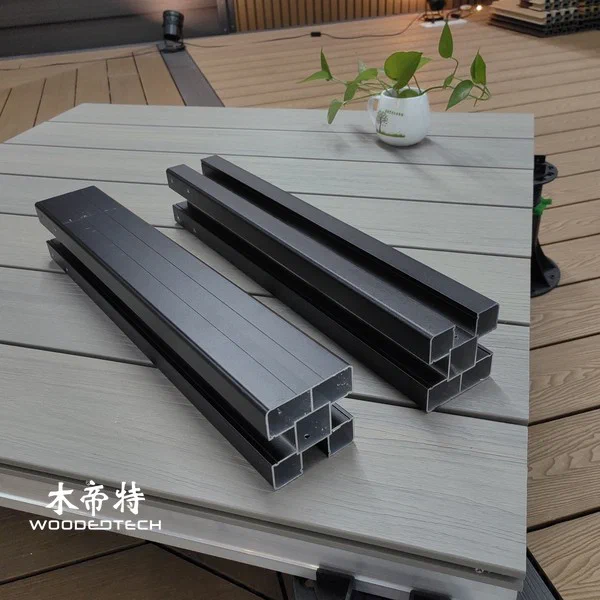
Solid composite decking is a practical choice for commercial and residential outdoor projects where consistent appearance, dimensional stability, and reduced maintenance matter. Compared with natural wood, traditional timber, aluminum, and other exterior materials, it offers a balance of durability and long-term operating costs, provided buyers select the right material composition, manufacturing quality, and surface treatment.
What Makes Solid Composite Decking Different?
Solid composite decking is typically manufactured from a blend of wood fibers or wood flour, thermoplastic polymers, and additives. Unlike hollow decking profiles, solid boards have a relatively dense cross-section, making them suitable for applications where board rigidity, impact resistance, and a substantial underfoot feel are important.

However, solid construction alone does not guarantee superior performance. Resin quality, wood fiber content, extrusion consistency, board density, UV stabilizers, and moisture resistance all influence the finished product. Buyers should evaluate these factors together rather than relying solely on product descriptions such as heavy-duty or premium grade.
For commercial developments, hotels, public walkways, pool surrounds, and landscaped terraces, the board’s load capacity and installation system deserve particular attention. Solid boards can provide a robust decking surface, but joist spacing, fixing methods, drainage, and substructure design must still follow the manufacturer’s engineering specifications.
Another consideration is capped versus uncapped construction. Uncapped composite decking exposes the composite core, while capped products feature a protective polymer layer around some or all exterior surfaces. A properly manufactured capped board can offer improved resistance to staining, moisture penetration, and surface fading. Co-extruded products are particularly relevant for projects exposed to demanding weather conditions, although cap thickness and bonding quality should be verified.
Outdoor WPC Compared With Other Exterior Materials
Material selection should reflect the project’s climate, expected traffic, appearance requirements, maintenance budget, and intended service life.
| Material | Main advantages | Main disadvantages | Maintenance requirements |
|---|---|---|---|
| Solid composite decking | Low routine maintenance, consistent appearance, moisture resistance | Higher initial cost than some basic timber options; thermal expansion | Regular cleaning and periodic inspection |
| Natural hardwood | Authentic grain, premium appearance, natural character | Weathering, potential cracking, variable quality | Sealing, oiling, sanding, and board replacement when needed |
| Pressure-treated timber | Relatively low purchase cost, easy to cut and install | Moisture movement, possible splintering, chemical treatment considerations | Regular staining, sealing, and inspections |
| Aluminum decking | Lightweight, corrosion-resistant when correctly specified, non-combustible | Higher initial investment, metallic appearance, heat transfer and noise considerations | Cleaning and checking coatings and connections |
| PVC decking | Low water absorption, resistance to rot and insects | Can expand significantly with temperature changes; plastic appearance varies | Washing and periodic inspection |
| Natural stone or porcelain | Hard-wearing surface, strong visual options, good resistance to weather | Heavy construction, potentially complex installation, slip and breakage considerations | Joint, drainage, and surface maintenance |
Natural hardwood remains attractive for projects where authentic timber character is a central design requirement. However, outdoor exposure gradually changes its color and surface condition. Depending on the species and environment, regular oiling or sealing may be necessary to maintain the desired appearance.
Pressure-treated timber offers a lower entry price, making it appealing for projects with tight procurement budgets. Its lifecycle cost can increase when boards require repeated protective treatments or replacement. Moisture exposure, poor ventilation, and inadequate installation can accelerate deterioration.
Aluminum is a different type of investment. It is particularly useful where fire performance, low structural weight, or specific architectural requirements take priority. Nevertheless, its purchase price and surface temperature characteristics may make it less suitable for some pedestrian environments.
WPC occupies a middle position between conventional timber and fully synthetic alternatives. It provides a wood-like appearance without requiring the same routine protective treatments as most exposed timber products.
Advantages and Limitations of Solid Composite Decking
One of the strongest advantages of solid composite decking is its relatively predictable performance. Manufacturers can control the material formulation and extrusion process to produce consistent dimensions, colors, and surface textures. This helps contractors working on projects that require repeatable specifications across multiple installation areas.
Moisture resistance is another important benefit. Unlike untreated wood, a properly formulated WPC board does not depend on natural wood fibers alone for its structural integrity. It is less susceptible to rot and insect damage, although prolonged water exposure, poor drainage, and unsuitable substructures can still create installation problems.
Other advantages include:
- Reduced need for painting, staining, and routine sealing.
- Available wood-grain textures and multiple color options.
- Resistance to common outdoor biological deterioration.
- Consistent board dimensions when manufacturing quality is controlled.
- Compatibility with concealed fastening systems and matching accessories.
- Potential use of recycled polymer and reclaimed wood materials.
There are also limitations buyers should understand. Solid boards are generally heavier than hollow profiles, which can increase transportation costs and handling requirements. Their dense structure does not automatically mean they can span longer distances without support.
Thermal expansion is another important consideration. WPC contains thermoplastic materials, so board dimensions can change with temperature. Installers must allow for manufacturer-specified expansion gaps, appropriate end spacing, and suitable fastening arrangements.
Surface temperature can also become an issue in direct sunlight, particularly with darker colors. Slip resistance varies according to surface texture, moisture, contamination, and product formulation. Buyers specifying decking around swimming pools or public walkways should request relevant wet-slip test results rather than assuming every textured composite board provides adequate grip.
Understanding Lifecycle Costs and Maintenance
The initial purchase price is only one part of the cost of an outdoor decking system. A meaningful comparison should include material procurement, transportation, installation, cleaning, protective treatments, repairs, replacement, and disposal.
Timber may have a lower initial material cost, but its maintenance requirements can create recurring expenses. Cleaning, sanding, staining, and sealing add labor costs, while damaged boards may require replacement. These expenses can be particularly significant for commercial properties with large outdoor areas.
Solid composite decking usually requires less intensive maintenance. Routine care generally involves sweeping away debris, washing with water and an appropriate cleaning product, and inspecting boards and fasteners. Specific cleaning methods should follow the manufacturer’s instructions, especially for capped surfaces.
For lifecycle budgeting, buyers should compare materials over the same evaluation period and use realistic assumptions about service conditions.
A useful calculation is:
Lifecycle cost = Initial material cost + Installation cost + Maintenance cost + Repair cost + Replacement cost.
For example, a hotel purchasing decking for a large terrace should consider not only the board price but also the cost of closing sections for maintenance, arranging replacement materials, and paying contractors to complete repairs. Reduced maintenance can provide operational value even when the initial WPC investment is higher.
However, buyers should avoid assuming that all composite decking lasts equally long. Product formulation, installation quality, UV exposure, drainage, traffic levels, and local climate can significantly affect actual service life. Warranty periods should be reviewed alongside exclusions, testing evidence, and maintenance conditions.
How B2B Buyers Should Evaluate Product Quality
For distributors, contractors, developers, and architectural material suppliers, product evaluation should begin with technical documentation rather than appearance alone.
Important specifications include:
- Board dimensions, weight, density, and dimensional tolerances.
- Wood fiber and polymer composition.
- Water absorption and moisture-related dimensional changes.
- Flexural strength, stiffness, and impact resistance.
- UV and weathering performance.
- Surface slip resistance under relevant conditions.
- Fire classification where required by local building regulations.
- Applicable environmental and recycled-content documentation.
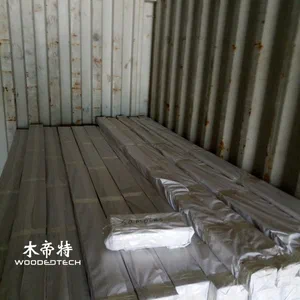
Manufacturing consistency is equally important. Buyers sourcing container quantities should request production samples and verify that color, texture, dimensions, and surface quality remain consistent across batches.
For large projects, it is also worth checking the complete installation system. Joists, clips, screws, edge trims, stair components, and expansion details should be compatible with the selected decking boards. A competitive board price offers limited value if essential accessories are difficult to source or installation instructions are incomplete.
Suppliers should also demonstrate quality-control procedures, production capacity, packaging standards, and the ability to support repeat orders. These considerations are especially important for OEM buyers and international distributors who need stable product specifications across different shipments.
Selecting the Right Solid Composite Decking for Your Project
The best solid composite decking is not necessarily the heaviest or most expensive product. It is the material that meets the project’s structural, environmental, aesthetic, and financial requirements without creating unnecessary installation or maintenance costs.
For commercial terraces and high-traffic outdoor spaces, buyers should prioritize verified mechanical performance, consistent extrusion quality, suitable slip resistance, and a reliable fastening system. For coastal or frequently wet environments, moisture resistance, corrosion-resistant accessories, and effective drainage deserve additional attention. For premium residential developments, surface realism, color stability, and compatibility with architectural finishes may carry greater weight.
WPC is particularly competitive when a project requires the visual warmth of wood with less routine maintenance. Natural timber remains appropriate when authentic material character justifies ongoing care, while aluminum, PVC, and stone can be better choices for specific technical or architectural requirements.
A well-specified decking system should be assessed as a complete exterior building material solution, not simply as a price per board. By comparing verified performance data, installation requirements, maintenance expectations, and lifecycle costs, B2B buyers can make more reliable procurement decisions and select products that deliver consistent value throughout their intended service life.
Related Articles
Related Products
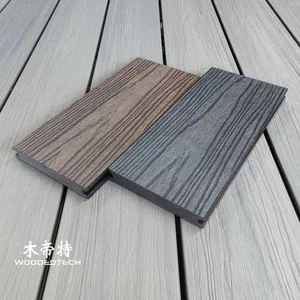 The 3DGD14023S Wood WPC Decking Combines Dual-Tone Rosewood and Dark Grey Colors with a Solid Core and Realistic 3D Embossed Wood Grain
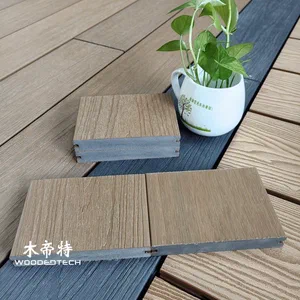 The GD14020S Composite Decking on Sale Features a Solid Core Structure Designed to Withstand Extreme Outdoor Temperature Changes and Freezing Conditions
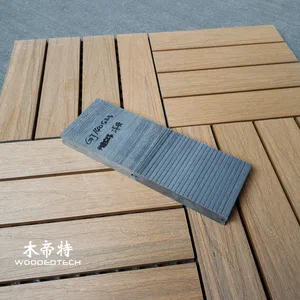 GD14023S Composite Deck Materials Feature a Solid Structure and Side Grooves for Better Adaptability in Extremely Cold Climates