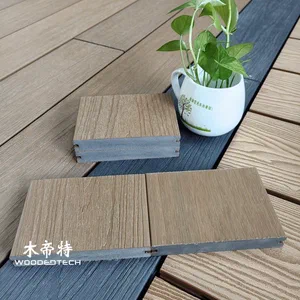
Best Composite Decking Brands: Evaluating Quality, Performance, and Value
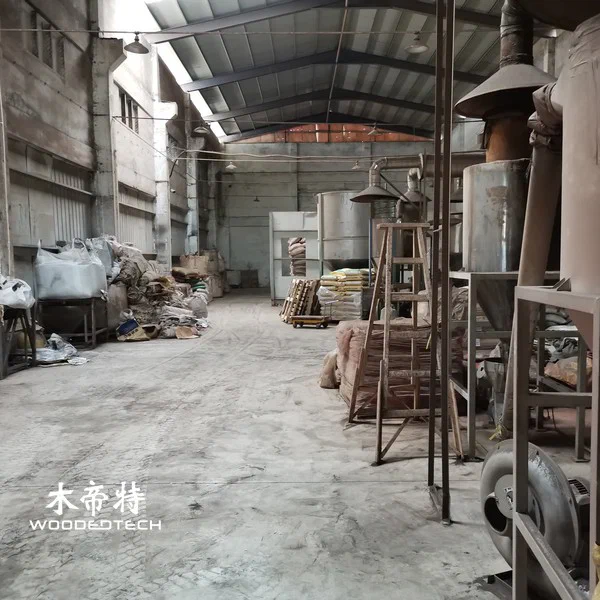
Choosing the best composite decking brand requires more than comparing appearance and purchase prices. Buyers should evaluate material composition, manufacturing quality, weather resistance, structural performance, warranty coverage, and long-term maintenance costs. Outdoor WPC decking offers a practical alternative to natural wood, traditional timber, and aluminum, but product quality varies significantly between manufacturers and product ranges.
What Defines a High-Quality Composite Decking Brand?
The quality of composite decking depends on its raw materials, production technology, formulation, and quality control. Most wood plastic composite decking combines wood fibers or wood flour with thermoplastics such as polyethylene, polypropylene, or PVC, together with stabilizers, pigments, and processing additives.
Leading manufacturers distinguish their products through consistent material formulations and advanced surface treatments. Buyers should pay attention to several factors:
- Material composition: A balanced formulation helps achieve suitable strength, dimensional stability, and weather resistance.
- Surface protection: Capped composite decking features a protective polymer layer that helps reduce moisture absorption, staining, and fading.
- Structural design: Solid and hollow boards offer different load capacities, weights, and installation requirements.
- Surface texture: Embossed and brushed finishes improve appearance and can contribute to slip resistance.
- Color stability: Quality UV stabilizers and pigments help maintain a consistent appearance under prolonged sunlight exposure.
- Manufacturing consistency: Accurate dimensions, uniform density, and reliable extrusion quality reduce installation difficulties.
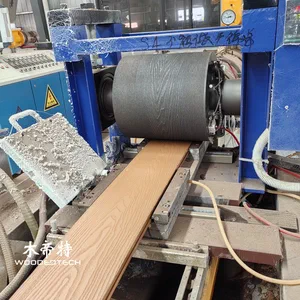
Co-extrusion technology is another important consideration. It creates a protective outer layer around the composite core, providing additional resistance to moisture, stains, and everyday wear. However, buyers should still evaluate the thickness, bonding quality, and performance of the protective layer rather than assuming every co-extruded product offers the same protection.
Comparing Composite Decking with Other Exterior Materials
Different decking materials suit different project requirements. Comparing their initial costs, maintenance demands, and expected service life helps buyers identify the most economical solution.
| Material | Main advantages | Main disadvantages | Maintenance |
|---|---|---|---|
| WPC composite | Low maintenance, consistent appearance, moisture resistance | Can expand with temperature changes; quality varies | Routine cleaning |
| Natural hardwood | Authentic grain, natural appearance, good strength | Expensive, susceptible to weathering and biological damage | Regular oiling or sealing |
| Traditional softwood timber | Lower initial cost, easy to cut and install | Prone to rot, splintering, and insect damage | Frequent treatment and repainting |
| Aluminum decking | Lightweight, corrosion-resistant, noncombustible | Higher purchase cost, metallic appearance, heat retention | Occasional cleaning |
| PVC decking | Excellent moisture resistance, no wood fibers | Plastic appearance and potential thermal movement | Routine cleaning |
| Natural stone or porcelain | High durability, attractive finishes, excellent dimensional stability | Heavy, potentially expensive installation, hard surface | Periodic cleaning |
Natural hardwood remains attractive for premium residential projects where authentic wood grain and traditional aesthetics are priorities. However, exposure to rain, humidity, and sunlight can cause fading, cracking, and surface deterioration. Regular sealing or oiling adds to its lifetime ownership costs.

Traditional timber is often more affordable initially, making it suitable for budget-conscious projects. Nevertheless, maintenance requirements can become substantial, particularly in coastal, tropical, or high-humidity environments.
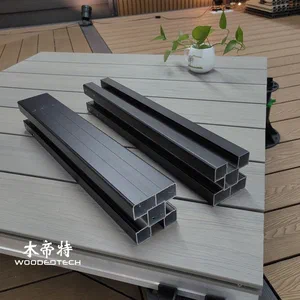
Aluminum offers excellent structural durability and fire performance, making it suitable for certain commercial and contemporary architectural applications. Its higher initial investment and different underfoot characteristics may limit its appeal for residential outdoor spaces.
WPC decking provides a middle ground between natural aesthetics and practical performance. It offers a wood-like appearance without requiring the same level of routine surface treatment as conventional timber.
How to Evaluate Composite Decking Brands
When comparing composite decking brands, buyers should look beyond marketing claims and examine measurable product specifications. A reliable supplier should provide technical data covering water absorption, flexural strength, density, thermal expansion, slip resistance, UV resistance, and relevant fire classifications.
Warranty conditions also deserve careful attention. Some manufacturers offer extended warranties, but coverage may exclude improper installation, inadequate ventilation, structural movement, or damage caused by unsuitable cleaning products. A longer warranty is valuable only when its terms are clear and supported by a manufacturer capable of honoring its commitments.
Product range is another consideration. Established manufacturers often provide multiple surface textures, colors, board profiles, and matching accessories. This flexibility is particularly useful for distributors, contractors, and developers managing different architectural projects.
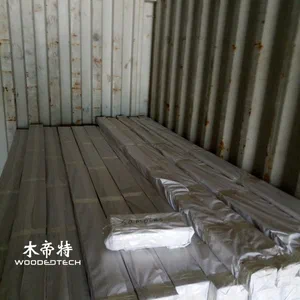
For wholesale buyers, production capacity, minimum order quantities, packaging standards, lead times, and export experience can be just as important as the decking itself. Consistent batch quality and dependable delivery help reduce project delays and replacement costs.
Lifecycle Costs: Looking Beyond the Purchase Price
The initial purchase price represents only part of the total cost of an outdoor decking installation. A more useful comparison includes materials, installation, cleaning, repairs, replacement, and ongoing maintenance over the expected service life.
Natural timber may have a lower upfront cost, but repeated sanding, staining, sealing, and board replacement can increase long-term expenditure. Premium hardwood can also involve higher material and labor costs.
WPC decking generally requires less intensive maintenance. Routine washing with water and a suitable cleaning solution is usually sufficient for ordinary dirt and surface contamination. Individual damaged boards can often be replaced without rebuilding the entire deck, provided the original installation allows access.
Aluminum has relatively low maintenance requirements and can offer a long service life, although its initial purchase and installation costs may be higher. PVC and porcelain also have relatively low routine maintenance requirements, but their suitability depends on structural design, surface temperature, installation conditions, and project aesthetics.
A practical lifecycle cost assessment should consider:
- Initial board and accessory prices.
- Subframe, fastener, and installation expenses.
- Cleaning and maintenance frequency.
- Expected replacement intervals.
- Availability of matching replacement boards.
- Warranty coverage and potential repair costs.
Buyers should compare products over the same assessment period and use realistic local labor and maintenance costs. A cheaper board is not necessarily more economical if it requires earlier replacement or creates additional installation expenses.
Choosing the Right Brand for Different Projects
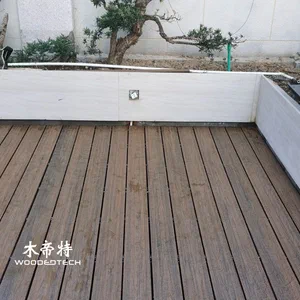
For residential gardens, balconies, and patios, appearance, comfort, slip resistance, and easy cleaning are important selection criteria. Capped composite decking is often worth considering where exposure to moisture and staining is expected.
For swimming pool surrounds, buyers should prioritize tested wet-surface slip performance, drainage, barefoot comfort, and resistance to pool chemicals. No decking material should be considered automatically slip-proof simply because it has a textured surface.
Commercial terraces, hospitality projects, and public outdoor spaces require additional attention to load-bearing performance, fire regulations, installation systems, and maintenance access. Solid composite boards may be appropriate for some demanding applications, while properly engineered hollow profiles can reduce material weight and overall structural loads.
For distributors and construction material wholesalers, choosing a manufacturer with OEM and private-label capabilities can provide additional commercial flexibility. Custom colors, dimensions, embossing patterns, packaging, and product profiles can help businesses develop differentiated product ranges. Factory quality control, sample testing, technical documentation, and export support should all form part of supplier evaluation.
The best composite decking brand is ultimately the one that delivers consistent material quality, reliable outdoor performance, suitable technical specifications, and competitive lifecycle costs for the intended application. Comparing WPC with timber, aluminum, PVC, and other exterior materials helps buyers make decisions based on actual project requirements rather than purchase price or appearance alone.