
Advancing Material Performance and Manufacturing Standards in Composite Decking Decks
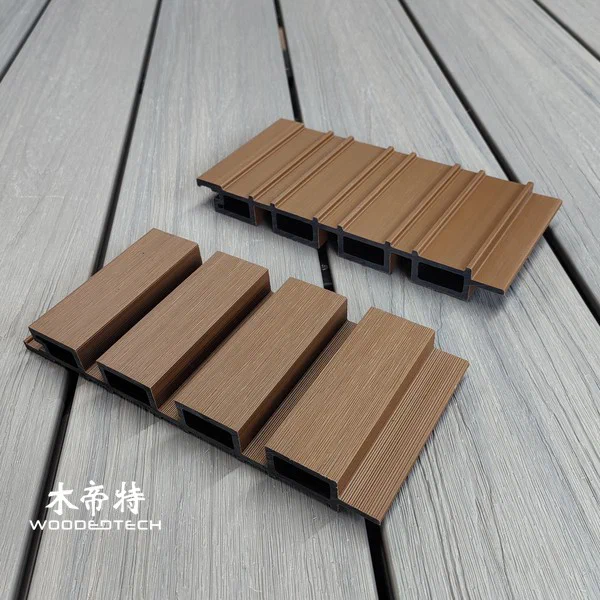
Wood plastic composite (WPC) decking performance depends on more than the quality of its raw materials. A well-engineered formulation must balance wood fiber content, polymer selection, additive packages, processing conditions, and production costs to deliver reliable outdoor performance. For manufacturers, improving composite decking standards means developing materials that resist moisture, UV exposure, temperature changes, and mechanical wear while maintaining consistent quality across different applications.
Understanding the Core WPC Formulation
The foundation of high-performance outdoor WPC decking is the relationship between wood fiber and plastic. Wood fiber provides stiffness, natural texture, and dimensional structure, while the polymer matrix binds the fibers together and protects them from environmental exposure.
Typical outdoor WPC formulations contain approximately 50–70% wood fiber and 25–40% thermoplastic polymer, with the remaining percentage allocated to additives. These ranges are starting points rather than fixed specifications. The ideal ratio depends on the intended application, polymer type, extrusion equipment, and required mechanical properties.
Common polymer choices include high-density polyethylene (HDPE), polypropylene (PP), and polyvinyl chloride (PVC). HDPE is widely used for outdoor decking because of its moisture resistance, impact performance, and processing flexibility. PP offers higher stiffness and heat resistance, while PVC-based formulations can provide good dimensional stability and fire-performance options when properly designed.

Increasing wood fiber content can reduce raw material costs and improve rigidity, but excessive fiber loading may increase water absorption, brittleness, and processing difficulty. Conversely, increasing the plastic ratio generally improves fiber encapsulation and moisture resistance but raises material costs. The objective is to achieve sufficient polymer coverage without sacrificing stiffness or economic efficiency.
Selecting Additives for Outdoor Durability
Additives play a critical role in determining how well WPC products perform throughout their service life. Even a carefully balanced wood-to-plastic ratio may deliver inconsistent results without the correct additive package.
A typical outdoor decking formulation may include:
- Coupling agents: Maleic anhydride-grafted polyethylene (MAPE) or similar compatibilizers improve bonding between hydrophilic wood fibers and hydrophobic polymers.
- Lubricants: Internal and external lubricants help control melt flow, reduce processing friction, and improve extrusion stability.
- UV stabilizers: UV absorbers and hindered amine light stabilizers (HALS) help reduce surface fading, polymer degradation, and long-term weathering damage.
- Antioxidants: These protect the polymer against thermal oxidation during processing and outdoor exposure.
- Moisture-management additives: Appropriate processing aids and hydrophobic components help reduce water-related degradation.
- Pigments: Weather-resistant colorants provide consistent appearance and help maintain color stability.
- Impact modifiers: These improve toughness and reduce the risk of cracking, particularly in colder environments.
The additive package should be selected according to the polymer system and the product’s expected operating conditions. Adding more additives does not automatically produce better performance. Excessive lubricant, for example, may weaken interfacial bonding, while unsuitable stabilizer combinations can increase costs without delivering meaningful improvements.
Designing Formulations for Different Outdoor Applications
Different WPC products require different mechanical and environmental properties. A formulation optimized for decking may not be suitable for fencing, wall cladding, pergolas, or landscape structures.
For composite decking, manufacturers should prioritize bending strength, stiffness, slip resistance, impact performance, and resistance to moisture. Solid and hollow profiles may require different formulations because their structural designs and cooling characteristics differ.
For outdoor wall cladding, dimensional stability, UV resistance, color retention, and low water absorption are particularly important. Co-extrusion technology can provide an additional protective outer layer, improving resistance to stains, moisture, and surface weathering.
WPC fencing requires sufficient impact strength, rigidity, and resistance to temperature fluctuations. For long fence panels and privacy screens, controlling thermal expansion and reducing long-term deformation are important formulation considerations.
Pergolas and other outdoor structural products need greater attention to load-bearing performance, stiffness, creep resistance, and connection strength. Depending on the structural design, manufacturers may need reinforced profiles or metal support components rather than relying on the WPC material alone.
Landscape products such as planters, garden benches, edging, and decorative structures should be formulated according to their exposure conditions. Products in continuous contact with soil or standing water need particularly effective moisture management and durable surface protection.
Improving Manufacturing Standards and Extrusion Consistency
A high-quality formulation must also be compatible with the manufacturing process. Even premium raw materials can produce inconsistent decking boards when moisture levels, mixing conditions, or extrusion parameters are poorly controlled.
Wood flour should be dried to a controlled moisture level before compounding. Excessive moisture can cause bubbles, voids, surface defects, and reduced mechanical strength. Particle size distribution should also remain consistent because variations can affect melt flow, surface finish, and mechanical properties.
During extrusion, manufacturers should carefully manage temperature profiles, screw speed, feeding rates, and cooling conditions. Excessive processing temperatures can degrade wood fibers, while insufficient melting or poor dispersion may result in weak bonding and inconsistent product appearance.
Quality control should extend beyond visual inspection. Recommended testing includes:
- Flexural strength and modulus testing.
- Water absorption and thickness swelling.
- Density and dimensional stability measurements.
- Impact resistance and hardness testing.
- UV and accelerated weathering tests.
- Slip resistance and abrasion testing where relevant.
Standards such as ASTM D7032 and EN 15534 provide useful testing frameworks for evaluating wood-plastic composite products. Manufacturers should select applicable requirements according to the product category and target market.
Controlling Costs Without Compromising Product Lifespan
Raw material selection is one of the largest cost factors in WPC manufacturing, but focusing only on the lowest material price can create higher long-term expenses through product failures, warranty claims, and customer complaints.
A more effective approach is to optimize the formulation around the required performance level. Manufacturers can evaluate different recycled polymer sources, wood fiber grades, coupling agent concentrations, and stabilizer packages through controlled trials. Recycled HDPE and PP can help reduce material costs, provided their composition, contamination levels, and melt flow characteristics are properly controlled.
Another strategy is to use co-extrusion technology. A cost-effective core can provide most of the board’s structural strength, while a specially formulated outer layer delivers improved weather resistance, stain resistance, and appearance. This approach can reduce the need to use premium materials throughout the entire profile.
However, cost reduction should never come at the expense of essential durability requirements. Insufficient coupling agents may increase water absorption, while inadequate UV stabilization can accelerate surface degradation. Both problems can shorten product lifespan and increase maintenance or replacement costs.
Building Long-Term Performance into WPC Product Development
Advancing composite decking manufacturing requires a systematic approach that connects formulation development, extrusion technology, product design, and quality assurance. Manufacturers should establish performance targets before selecting material ratios, then validate each formulation through laboratory testing and real-world exposure trials.
For outdoor WPC applications, long-term reliability comes from maintaining a stable polymer matrix, effective fiber bonding, controlled moisture absorption, and sufficient resistance to environmental aging. These principles apply across decking boards, exterior cladding, fencing, pergolas, and landscape products.
By combining optimized formulations with consistent manufacturing standards, WPC producers can develop products that offer a competitive balance of material cost, processing efficiency, structural performance, and service life. The strongest manufacturing strategy is not simply to produce more economical composite boards, but to deliver dependable outdoor materials that perform consistently throughout their intended lifespan.
Related Articles
Related Products
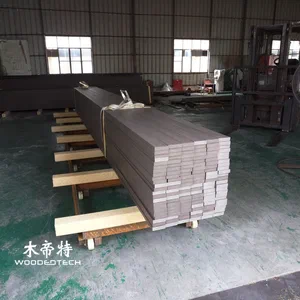
 GD13823-3 Composite Boards for Decking Are Available in Multiple Stock Colors with 3 Meter Lengths and Single Piece Delivery
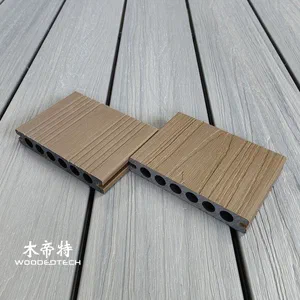 GD13823-3 Teak TK Co Extruded Decking Is a Popular Choice from Composite Decking Suppliers for Outdoor Flooring Projects
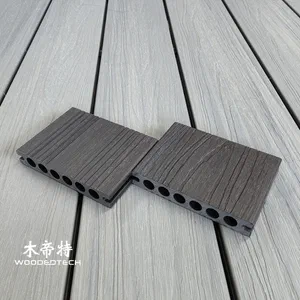 GD13823-3 Walnut WN Co Extruded Decking Features a Dark Rich Color That Helps Resist Visible Dirt and Stains