
2x6 composite decking provides a practical size option for residential and commercial outdoor decks
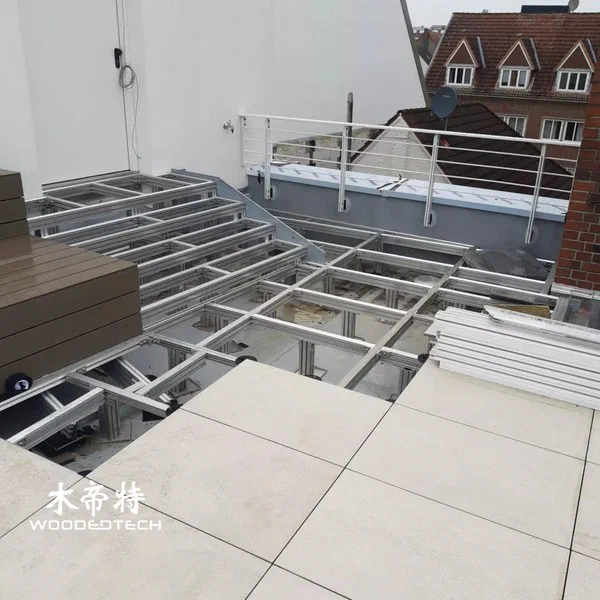
2x6 composite decking provides a practical size option for residential and commercial outdoor decks because it balances structural capacity, handling efficiency, and material use. For WPC extrusion design, the real performance comes from the profile geometry behind the board: wall thickness, hollow layout, rib placement, and surface treatment all affect how the deck behaves in service.
Profile design and structural behavior
A 2x6 format gives designers more room to tune the cross-section than narrower boards. In wood plastic composite decking, that extra width can support a more stable walking surface, but only if the profile is engineered correctly. A flat-looking board with weak internal geometry may still flex too much, while a well-designed profile can improve span performance without adding unnecessary weight.
For residential decks, the main goal is comfort and reliable installation. For commercial decks, the priorities shift toward load distribution, long-term dimensional stability, and efficient use of labor. The same nominal size can serve both, but the internal profile must be matched to the expected traffic and framing spacing.
Hollow versus solid structures
Hollow profiles reduce resin and fiber usage, which lowers weight and cost. They also make transport and handling easier, especially on larger projects. The tradeoff is reduced section mass, so the wall thickness and internal chamber layout must be controlled carefully to prevent crushing, local buckling, or excessive deflection.
Solid composite decking offers higher density and a more rigid feel underfoot. It is often preferred where impact resistance, edge strength, or simpler fastening is important. The downside is higher material consumption, greater board weight, and higher shipping cost. In practice, many projects use hollow boards for general decking fields and solid profiles for stair treads, borders, or areas with concentrated loads.
Rib design and installation performance
Internal ribs are one of the most important parts of a WPC extrusion mold. They reinforce the top and bottom skins, improve load transfer, and help keep the profile straight during cooling. Good rib design also supports screw holding and clip retention, which matters for fast, consistent installation.

Ribs that are too thin can warp or collapse during extrusion. Ribs that are too heavy add material without delivering proportional strength. The best designs use balanced rib spacing, smooth transitions, and enough support near fastening zones to reduce splitting and improve field performance. This is where custom composite extrusion profile work makes a measurable difference.
Surface patterns and real-world use
Surface texture affects more than appearance. Embossed or grooved patterns can improve slip resistance and help disguise wear in outdoor use. A co-extrusion decking surface adds another layer of protection against stains, moisture, and UV exposure, which is useful for commercial sites where maintenance intervals are longer.
Pattern depth also matters. Deep texture can improve traction, but it may trap dirt if overdone. Shallow, controlled embossing usually gives a better balance between grip, cleanability, and consistent visual quality. For deck boards, the surface should complement the structural profile rather than forcing the extrusion process into an unstable shape.
The practical advantage of a 2x6 composite decking format is that it can be engineered for multiple market needs without changing the basic installation workflow. By adjusting hollow sections, solid reinforcement, rib geometry, and surface pattern, manufacturers can target different budgets, spans, and performance levels while keeping the product efficient to produce.
FAQ
Q: Why choose a 2x6 composite decking profile instead of a narrower board? A: A wider profile can improve visual coverage and reduce board count, while giving the designer more room for internal reinforcement. It is useful when the application needs a balance of strength, cost, and installation speed.
Q: Are hollow composite boards strong enough for commercial decks? A: Yes, if the wall thickness, ribs, and framing spacing are engineered correctly. For heavy-duty or high-impact zones, solid or reinforced profiles are often the better choice.
Q: Does surface embossing affect durability? A: It can. A well-controlled pattern improves slip resistance and helps hide wear, while an overly deep pattern may hold dirt and complicate cleaning.
Related Articles

Related Products
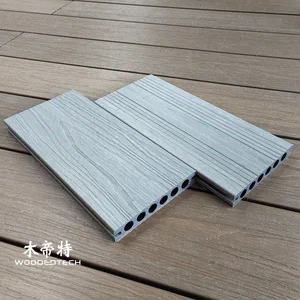 Antique Wood GD13823-3 Co Extruded Composite Wood Decking Boards with Round Holes Are Available in Stock in 3 Meter Lengths Year Round
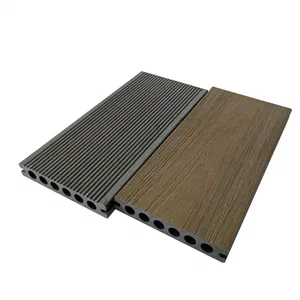 GD14023 Composite Decking Versus Wood Decking Features a Round Hole Structure with Semi Capped Co Extrusion
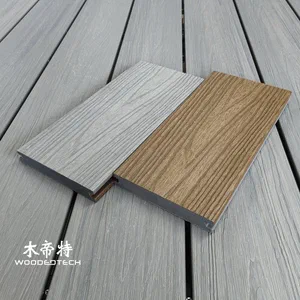 Second Generation Two Color Co Extruded 3D Embossed 3DGD14023S Composite Wood Deck Boards Feature an Extremely Realistic Antique Wood and Teak Grain Texture